

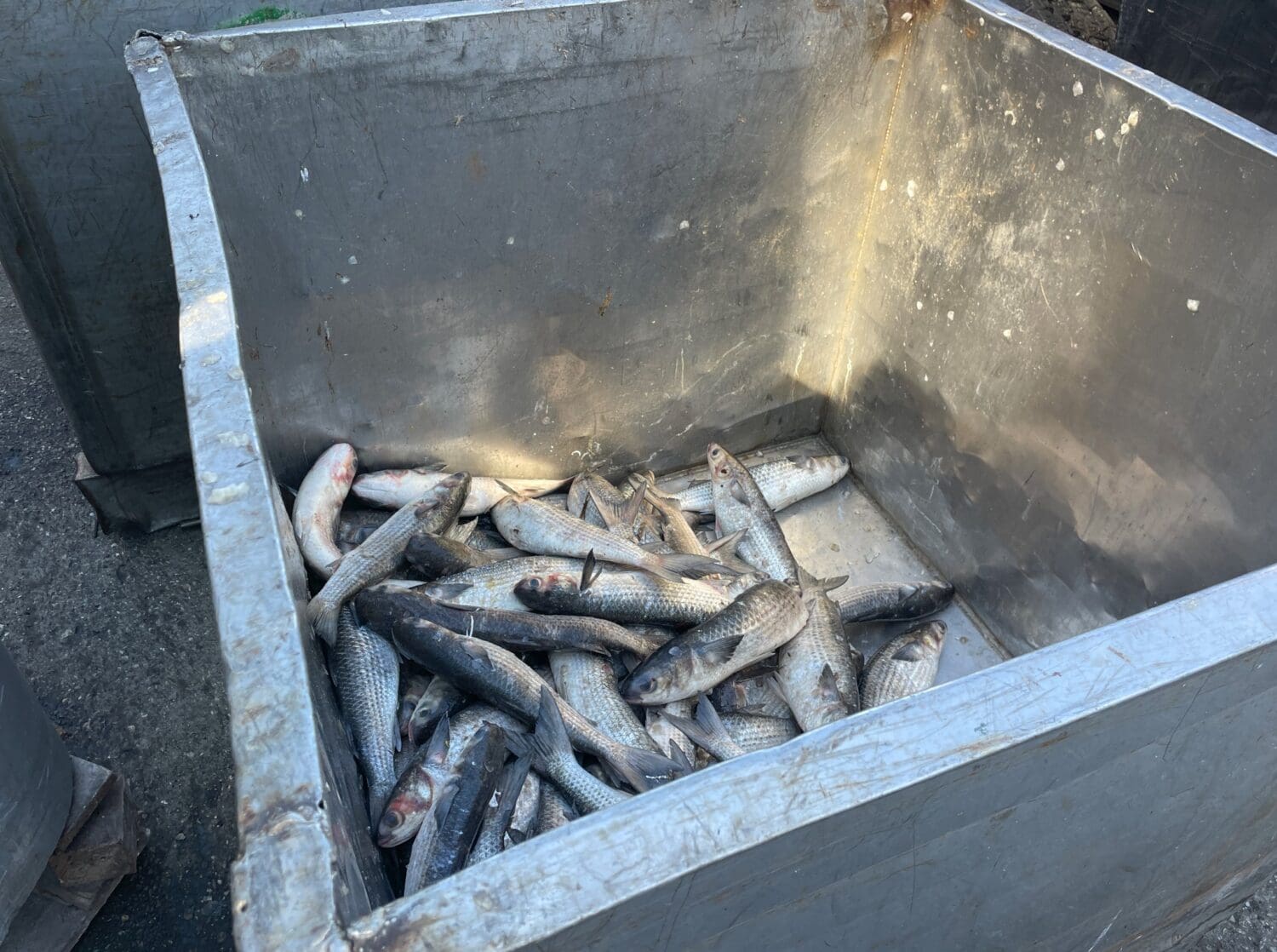
CORTEZ – With peak mullet season winding down, local fishermen hoping to cash in by selling their catches at the fish houses are reporting a lesser harvest than in recent years.
“We’ve had one good day in the last two weeks,” said one fisherman, who asked not to be identified. “I don’t know what it is that’s killing the seagrass, but the three of us have been everywhere and the fish just aren’t there.”
According to the University of Florida IFAS website, “Mullet can tolerate a wide range of salinities and can be found in fresh or saltwater. Their diet consists of bacteria and single-celled algae found attached to plants. They pick at the bottom, and scrape seagrasses consuming these.
Sarasota Bay Estuary Program Executive Director Dave Tomasko weighed in on possible factors that could account for a slow fishing season.
“There have been quite a few recent hits to our water quality along with those living resources that depend on adequate water quality,” Tomasko wrote in a Dec. 26 email to The Sun.
He said Sarasota Bay was impacted by four events that adversely affected the bay.
“In June, we had the highest amount of hourly rainfall on record (going back 50 years) due to a tropical wave (not even an organized storm),” he wrote. “The amount of rainfall was thought to be so rare as to only occur every 500 years or so.”
Tomasko wrote that in August there was another “one in 100-year” rainfall event during Hurricane Debby, which caused widespread flooding in Manatee and Sarasota counties.
“In September, we had Hurricane Helene, which gave us the biggest storm surge recorded in Sarasota and Tampa Bay’s history – in most places,” he wrote. “Then, in October, we had a Category 3 hurricane (Milton) hit us. Those storms brought us massive amounts of stormwater runoff, particularly that June rain event, and then with Debby.”
Tomasko noted that in 2024, there was more rainfall than average in a series of intense storms.
“That may be indicative of conditions that are more likely to occur over the next 30 years than was the case in the last 30 years,” he wrote. “Our air is warmer now and so is our water temperature. Both of those are expected to produce conditions that are more likely to cause intensification of tropical weather. Which means we need to get our wastewater and stormwater infrastructure to be more resilient to a changing climate, because summers like 2024 are more likely to occur over the next few decades than was the case in the last few decades.”