ANNA MARIA – City commissioners adopted a 60-day emergency ordinance that addresses existing city code that’s been preventing property owners from repairing their seawalls.
On Thursday, Jan. 8, the commissioners unanimously supported Mayor Mark Short’s request to adopt the emergency ordinance that’s now in effect and will later be replaced by a regular city ordinance.
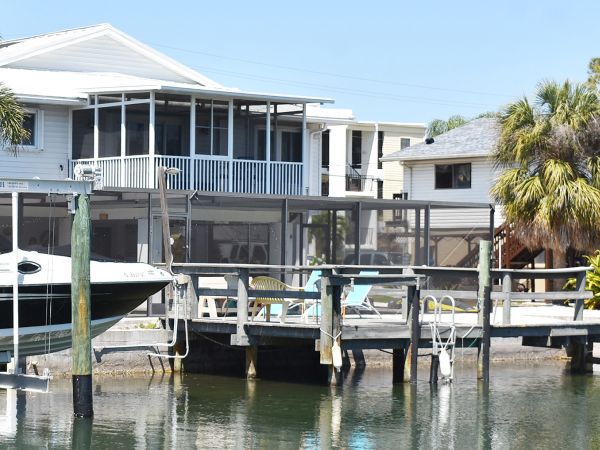
The emergency ordinance allows impacted property owners to begin or resume seawall repair projects that had been on hold due to the ordinance language contained in the current city code.
When presenting his requested emergency ordinance, Short told commissioners the current ordinance stipulates that if there are three seawalls evenly aligned side-by-side and the middle seawall requires repair, the middle seawall cannot be extended further out into the canal than the other two canals.
“What you have in front of you is an emergency ordinance to allow repairs to seawalls” he told the commission.
Short referenced the current seawall ordinance that says, “Construction, inclusive of a buttress and seawall cap, shall not protrude more than 12 inches seaward of the existing seawall or seawall cap. Notwithstanding the foregoing, if there are two existing seawalls abutting the subject replacement seawall of differing seaward projections, then the subject replacement seawall shall be further limited to a seaward projection distance of no more than either equal to the immediately abutting seawall with the least projection or total seaward projection of 12 inches, whichever is more restrictive.”
“This changes one word: the word ‘more’ to ‘less,’” Short said. “Which means that seawall could be extended up to 12 inches out.”
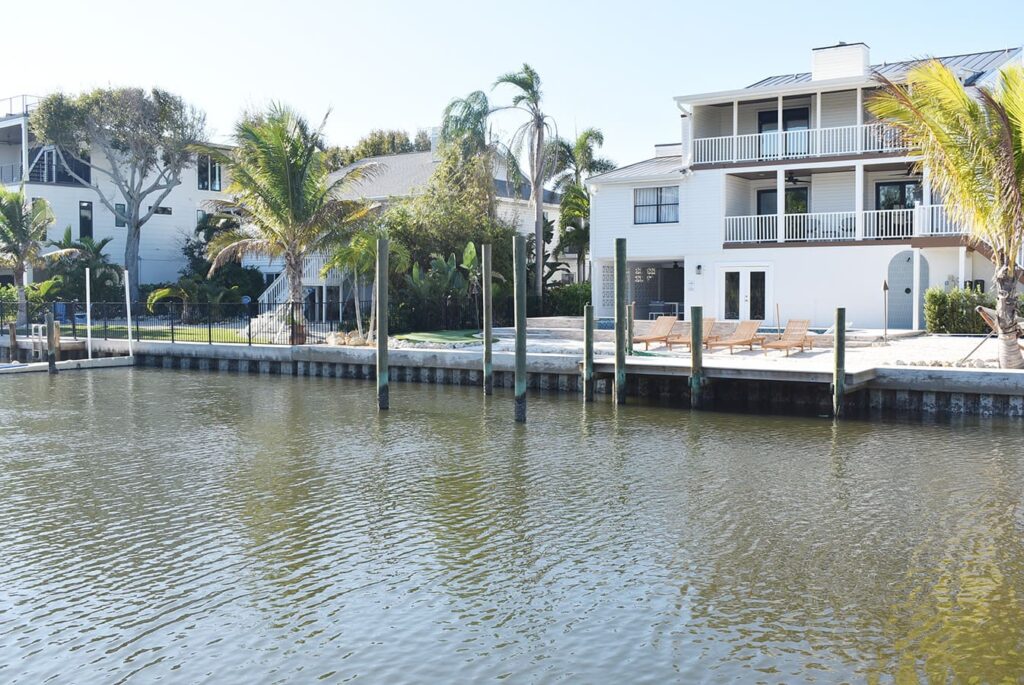
During the commission’s Nov. 13 meeting, Commissioner Chris Arendt brought the seawall ordinance concerns to the city commission’s attention. He was joined in doing so by Duncan Seawall, Dock & Boat Lift owner and vice-president Mark Liebel.
Liebel said he’s owned Duncan Seawalls for 29 years and doesn’t recall the city amending its seawall ordinance during the time. He said the code might be outdated and the city may have changed how it interprets the long-standing seawall regulations.
He mentioned one project in particular that was being delayed by the existing city code.
During the Jan. 8 meeting, Arendt said, “I have a lot of people that were very interested in this issue. If we vote on this today, will it take immediate effect?”
“It will take immediate effect,” Short replied.
Short noted the planning and zoning board was scheduled to review and discuss a proposed permanent seawall ordinance in December but that meeting was cancelled. The board is now expected to review the proposed non-emergency seawall ordinance at its Jan. 21 meeting.
The adoption of a regular city ordinance requires two advertised city commission public hearings that allow for public input. Short said the 60-day temporary ordinance provides time for the planning board and the city commission to review and discuss the proposed regular ordinance that he referred to as the “permanent fix.”