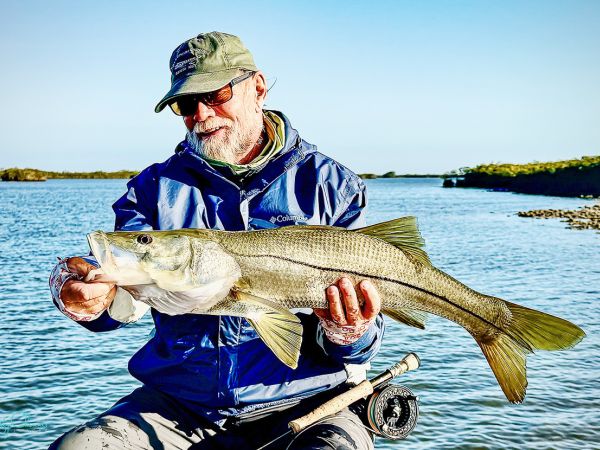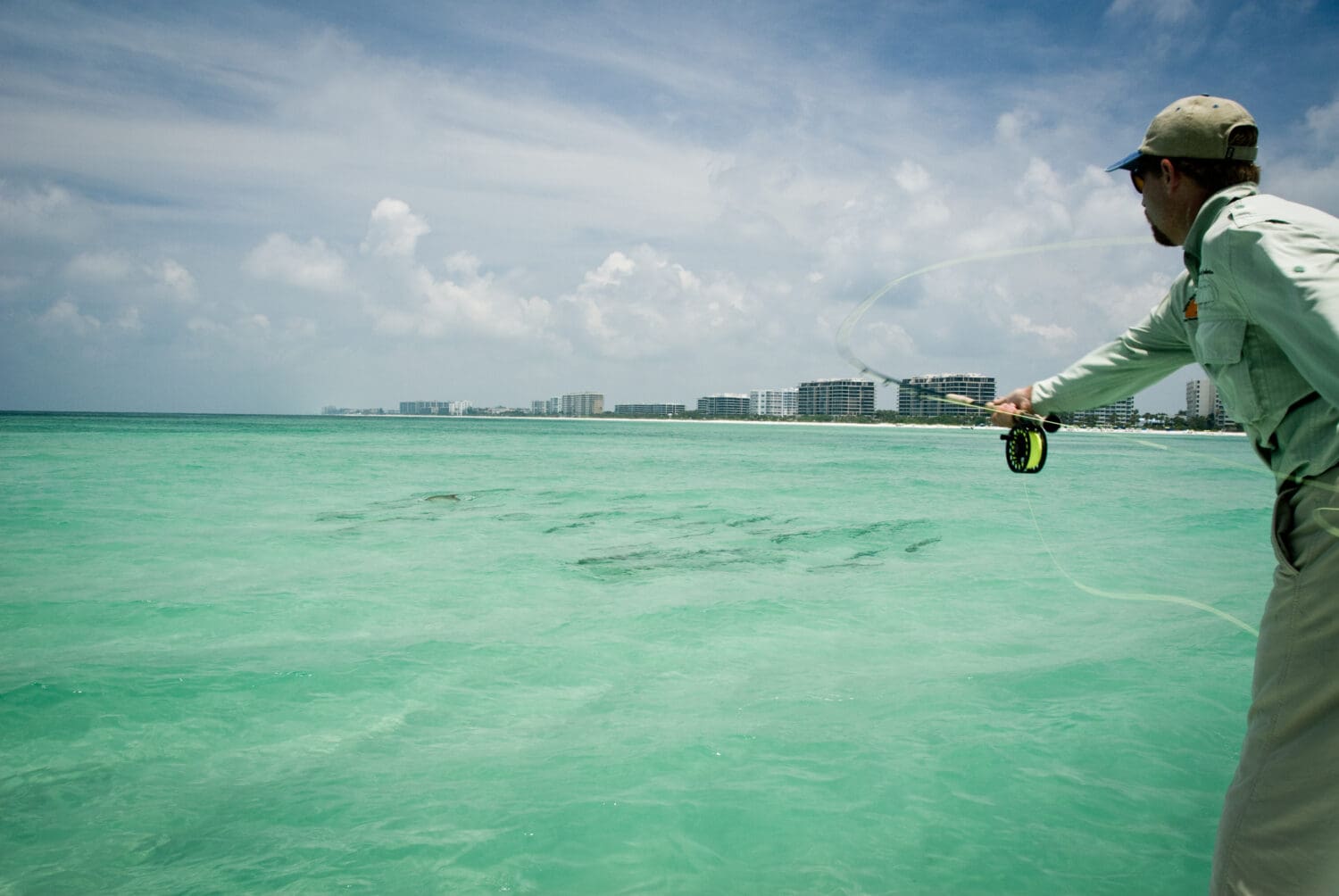
Tarpon, the premier gamefish that swim local waters in late spring and summer, can weigh over 200 pounds and average from 80-100 pounds. While most anglers pursue them on conventional tackle, a growing number of fly fishers are targeting them in Tampa Bay along the shallow Gulf coast and the local sandbars that bookend the local passes. Tarpon on fly tackle isn’t a game of numbers and the anglers who pursue them often spend hours on the bow in the hot summer sun for a chance at a hookup.
Fly tackle should be stout enough to challenge these powerful gamefish that are renowned for their spectacular aerial acrobatics and long fast runs. Serious anglers hoping to land one opt for an 11- or 12-weight outfit and carefully tied leaders with 60- to 80-pound bite tippet. While it might seem like a difficult task to land a tarpon on the fly, someone who knows the limits of their tackle can actually land a tarpon in a surprisingly short time. The key is to apply maximum pressure from the hookup and never let up. Too many anglers “baby” their tarpon in a misguided attempt to land them. The truth is that the longer you fight a tarpon the better chance you have of losing them.
A properly tied tarpon leader usually runs between 10-12 feet and is tapered. It includes a class tippet from 16-20 pounds that is doubled at both ends to soften the (shock) impact of the larger leader (40-60 pounds) it’s tied to. Flies vary from the classic splayed feather “Key’s” style to more complex designs like the “Toad,” and the wildly popular Palolo worm fly. Although the worm hatch is a Florida Keys phenomenon, tarpon everywhere seem attracted to them. This fly and many others are best presented to a tarpon with a two-handed strip. Some fly anglers are not concerned with actually landing a tarpon, preferring to just enjoy the hunt, the hook up and the jumps that usually follow the hook set. They use light bite tippets which allow the tarpon to work through the leader with their abrasive mouths. The key to getting the bite is a properly tied fly that tracks naturally and the accuracy of the cast. The fly must be placed perfectly, move in a precise direction relative to the fish and be at the proper (fishes’) depth. Even when all of these factors come together, there’s still about a 50% chance that the tarpon will reject the fly.
Patience is another critical factor when fly fishing for tarpon. The most successful anglers find the edge of a sandbar or other underwater feature that tarpon track, deploy a release anchor in casting range and wait. Sometimes tarpon come at a steady rate, but just as often there are long periods of time when the only thing to look at is the water and the bottom. This really separates the great anglers from the good anglers. There are times when you need to move but knowing when and where is a skill that is developed, if ever mastered. There are times when poling might be more effective but experience has taught me to only move when a school of fish requires a short distance off anchor for a shot. Next week: Part Two.