


Divided Holmes Beach Commission increases stormwater fee
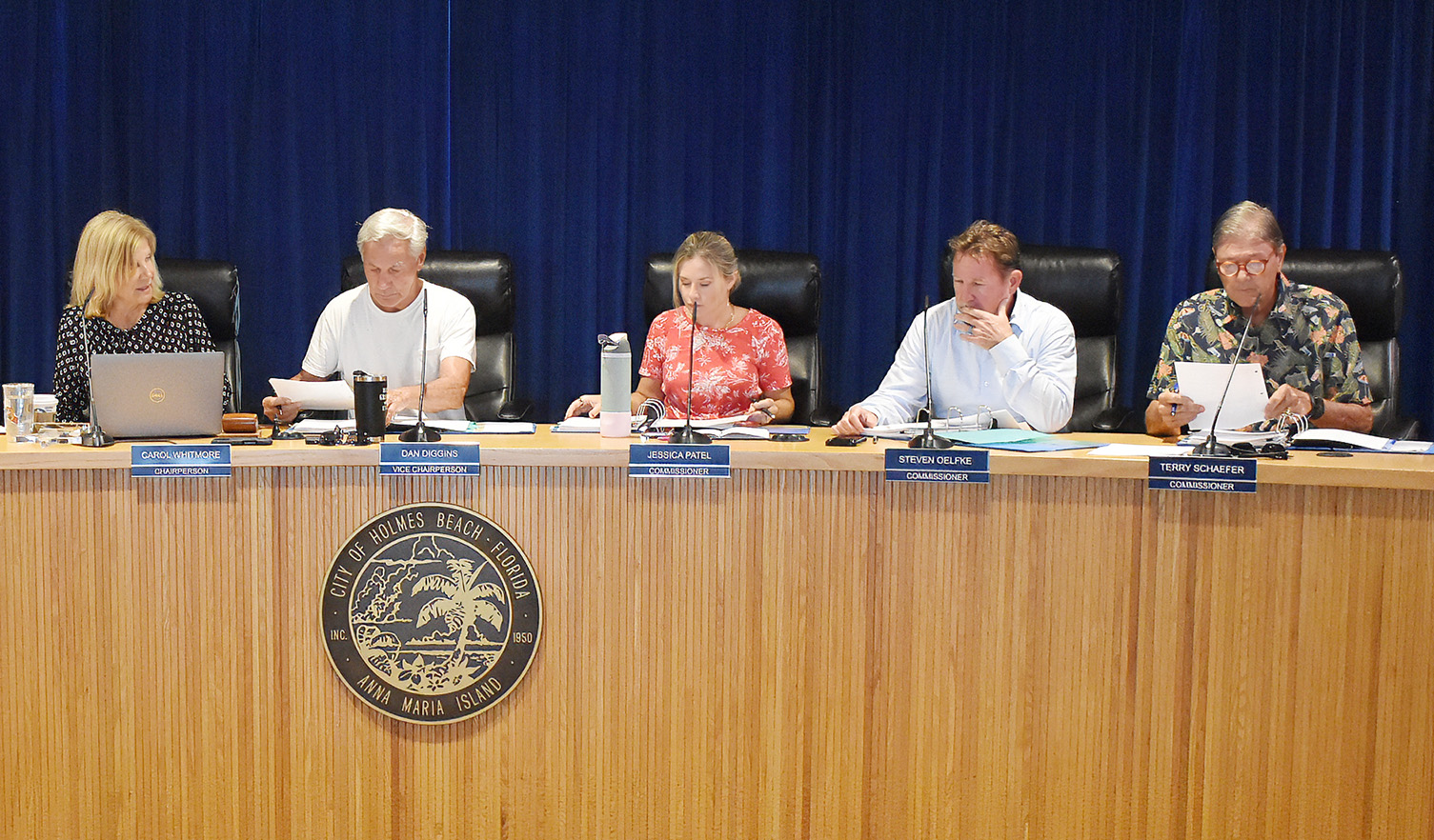
HOLMES BEACH – By a 3-2 vote, the Holmes Beach City Commission approved increasing the stormwater assessment rate from $2.95 per 100 square feet of property to $4.45 per 100 square feet.
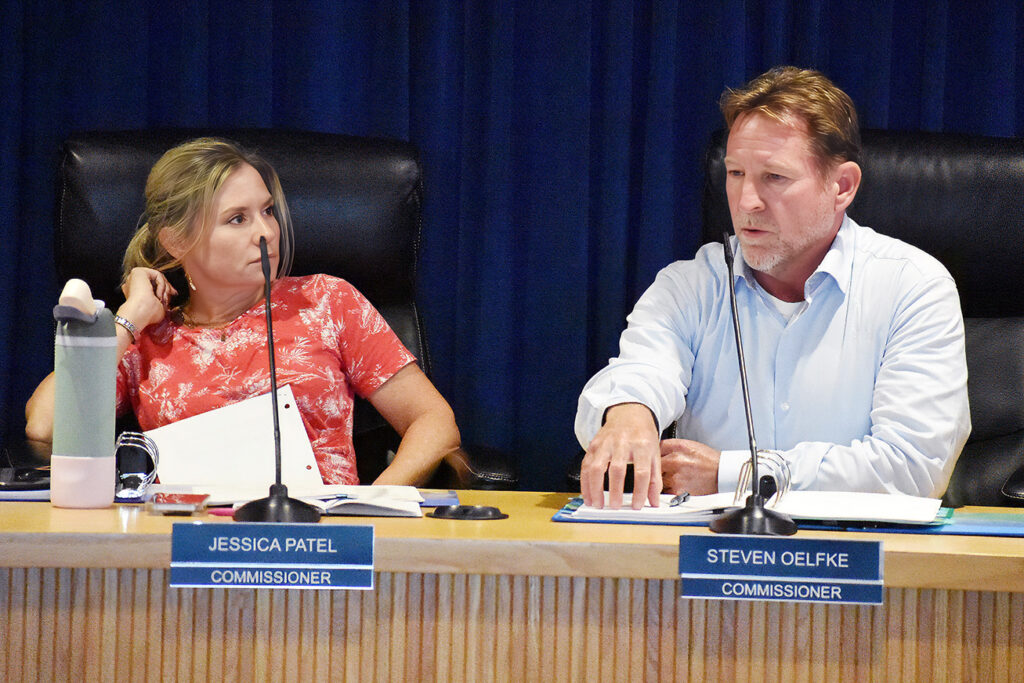
On June 23, after multiple recent discussions, the commission was asked to vote on the city resolution based on Commissioner Terry Schaefer’s previous proposal to increase the stormwater rate by $1.50. Commissioners Dan Diggins and Steve Oelfke joined Schaefer in supporting the $1.50 increase. Commissioners Jessica Patel and Carol Whitmore opposed the increase.
The previous $2.95 rate was adopted in 2019 and has not been increased since then. The increased fee will take effect after the 2026-27 fiscal year begins on Oct. 1. The city’s current square-footage-based calculation method applies equally to residential, vacation rental and commercial properties.
At the $2.95 rate, the owner of a 5,000-square-foot property was assessed a $147.50 annual stormwater fee. At the new $4.45 rate, the owner of a 5,000-square-foot property will be assessed a $222.50 fee, which is a $75 increase.
At the $2.95 rate, the owner of a 7,500-square-foot property was assessed a $221.25 stormwater fee. At the new $4.45 rate, that property owner will be assessed a $333.75 fee, which is a $112.50 increase.
During all of the recent stormwater fee discussions, the commission has expressed unanimous support for changing the fee calculation method to account for the amount of impervious, non-draining surface each property has. A property owner with a greater amount of impervious surfaces and greater lot coverage would pay a higher stormwater fee than a property owner who has more pervious surfaces and more open space that allow for drainage. The commission unanimously agrees that properties that provide less drainage and stormwater retention capacity should pay higher stormwater assessment fees.
During the June 23 commission meeting, Public Works Director Herb Raybourn said he and his staff would begin working on revised stormwater fee calculation methods early next year and a new calculation method or methods will be presented to the commission before the 2027-28 stormwater fee rate is adopted next summer.
Patel was elected in November and this was her first time participating in the city’s stormwater fee discussions.
In early May, Raybourn suggested increasing the fee by 40 cents per 100 square feet each year for the next 10 years to help fund the city’s immediate and long-term drainage and stormwater needs. In late May, after further discussion, Schaefer proposed increasing the rate by $1 or $2 for the coming fiscal year and he later settled on $1.50 as a compromise.
During the June 23 discussion, Raybourn referenced a memo he provided the commissioners prior to the meeting. The memo provided additional details on the grants already awarded to the city and the additional grants that are currently under review by the grantor agencies.
According to the memo, $135,000 purchase of a city hall generator will require the city to provide $33,750 and the grantor will provide $101,250. The $2.12 million Resilient Florida Stormwater Improvement project grant requires the city to provide $1.06 million to cover 50% of the applicable project costs.
The $430,000 Watershed Master Plan grant requires the city to provide $130,000 and the grantor to provide $300,000. The development of a Watershed Master Plan will earn Holmes Beach property owners an additional 5% flood insurance discount to be provided through FEMA’s merit-based Community Rating System program.
The three awarded grants total $2.55 million, with the city providing $1.19 million and the various grantors providing $1.36 million.
Raybourn noted that the city must cover the upfront costs for grant-funded projects and then seek reimbursement from grantors, which takes about six months.
Raybourn’s memo listed eight more grant applications that are currently under review. Those potential stormwater projects total $9.67 million and of that the city would have to provide $2.41 million in matching funds.
Raybourn said if the city is awarded a grant but doesn’t have the needed matching funds, the application can be withdrawn and the state and federal grant money becomes available to other municipalities.
Commission discussion
Schaefer referenced the information Raybourn provided and said maintaining the $2.95 rate would generate about $860,000 in stormwater revenues for the 2026-27 fiscal year. Schaefer said raising the stormwater rate from $2.95 to $4.45 would generate an additional $430,000 in stormwater revenues during the coming fiscal year.
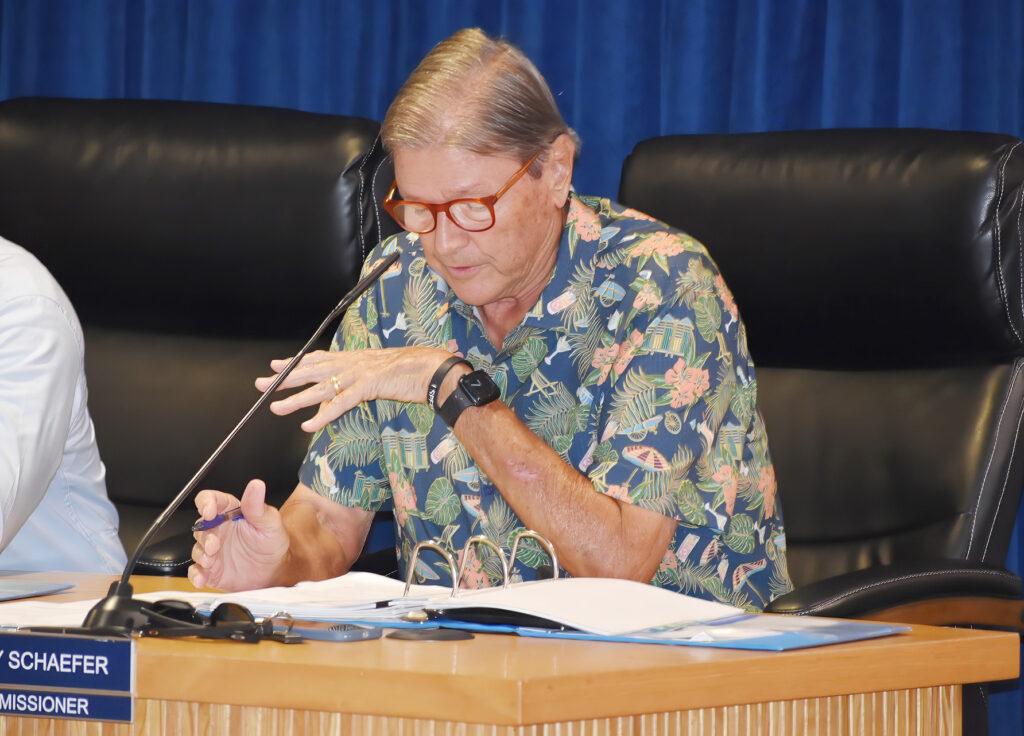
“That amount is still deficient of a need of approximately $580,000 to qualify for these grants,” Schaefer said. “We’re terribly underfunded. We have been for eight years. We need to do something now. This is middle ground.”
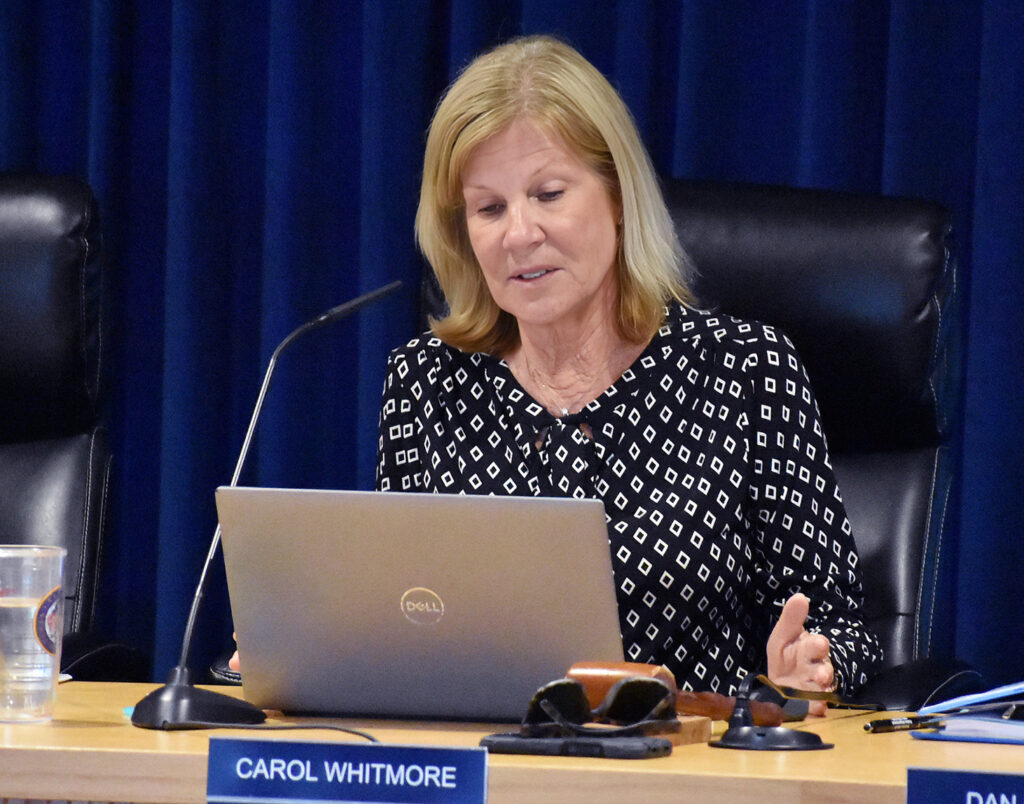
Whitmore suggested using some of the city’s reserve funds to help pay for stormwater and drainage projects.
In response, Mayor Judy Titsworth said the current 25% reserve fund recommended for coastal communities is set aside to cover about three months of city expenses in the event of an emergency, disaster or other occurrence that significantly impacts the city’s revenue flow. Titsworth said the city has not historically used reserve funds to address stormwater and drainage needs.
Whitmore said the city could use some of the reserve funds if needed, and she noted Manatee County’s reserve fund is expected to drop from about 20% to about 7% for the coming fiscal year.
Titsworth also stressed the importance of having the matching funds needed to pursue stormwater grants. She said the city has only been pursuing stormwater grants for the past eight to 10 years. She also said it would be
foolish to not improve the stormwater system in a city that has about $3 billion worth of total property value.
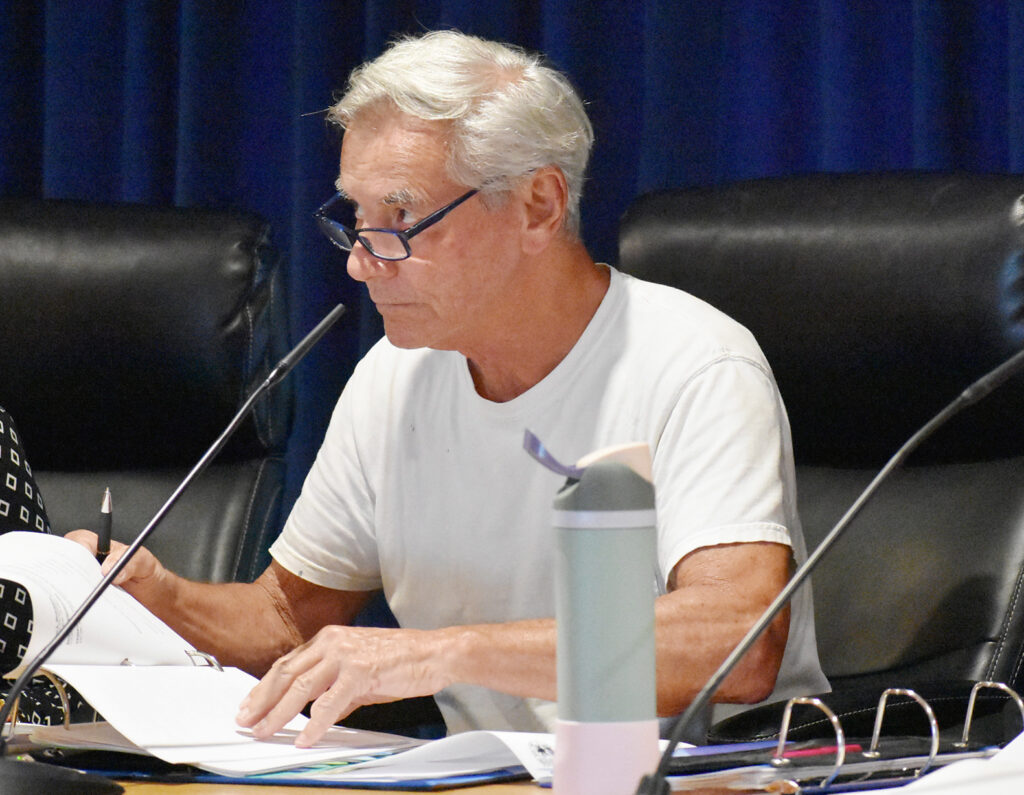
Diggins asked Raybourn if the matching funds needed for the three already awarded grants would be included in the 2026-27 fiscal year budget. Raybourn said they would be.
Diggins said the grant applications currently under review, but not yet awarded, would require matching funds.
“It’s needed work. I recommend the execution of this work,” Raybourn said of the additional projects.
Diggins said the fee increase would help the city capture additional grants.
“These are big projects and there’s few things in this city that affect people in this city more than stormwater and traffic. This is why we need stormwater funding,” Diggins said.
“We’re only talking $75 a year,” he said of the increase to be experienced by those who own 5,000-square-foot properties.
“We can leverage that into multimillion-dollar (grant) contracts. We’re not talking a whole lot of money here folks. I know it’s easy for me to spend your $75 per year, but relatively speaking, this is a great way to spend money,” Diggins said.
Whitmore said she recently asked Raybourn to calculate the increase she would experience for her 11,761-square-foot property. She said her current stormwater assessment is $347 and her assessment with the $1.50 increase would increase by $177.
Oelfke, who opposed the increase last year because of the square-footage-based calculation method, said he has faith that city staff and the commission will come up with a calculation method next year that will make it fairer for those whose properties provide more drainage and stormwater retention capacities and more costly for those who don’t. Raybourn said city staff will be looking at different ways of calculating stormwater fees before next year’s stormwater fee discussions begin.
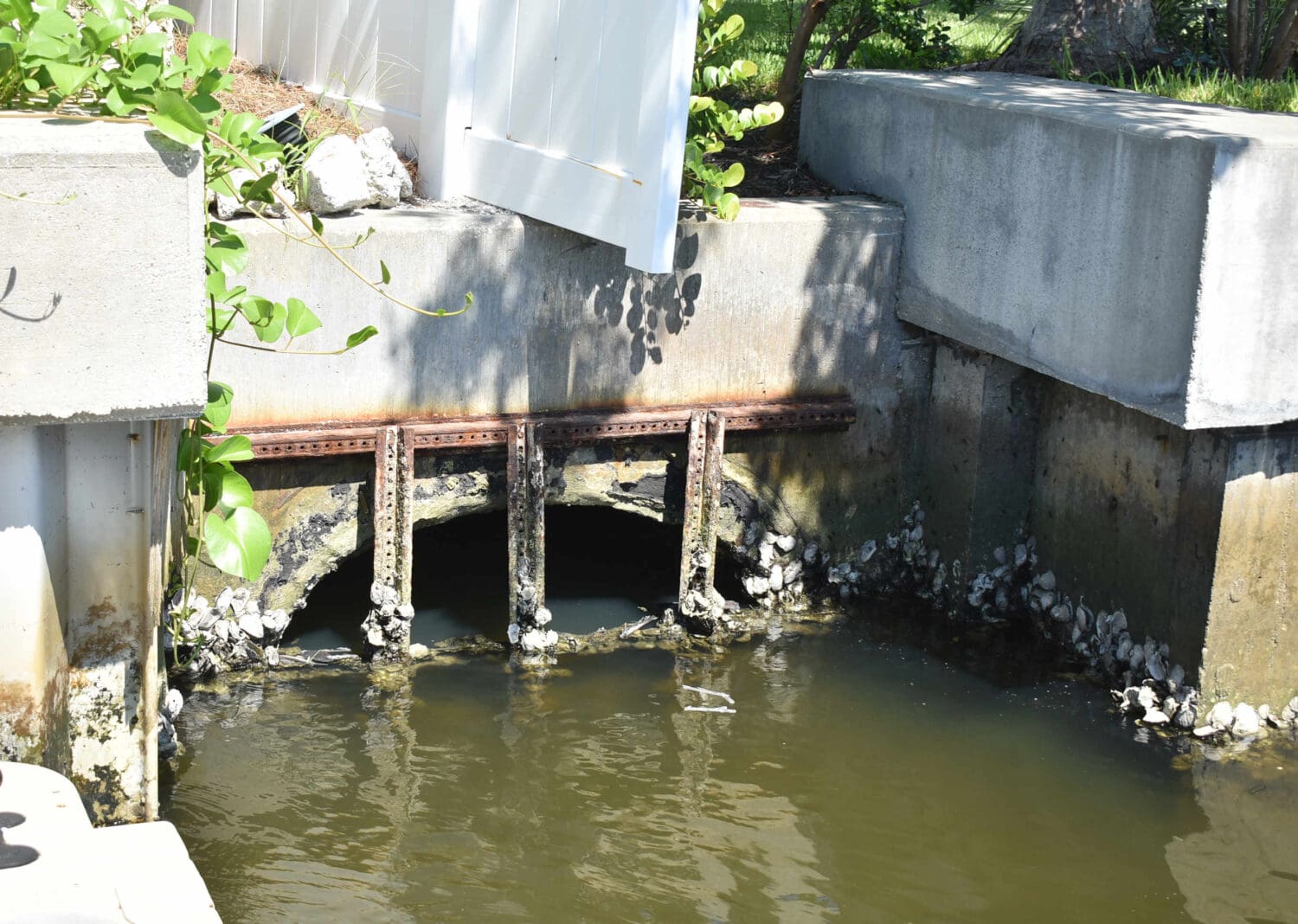
Oelfke said installing backflow valves, also known as tidal valves, on the outfall pipes that discharge into the canals and other waterways, help prevent high tides and king tides from entering back into the drainage pipes and causing flooding.
Regarding the need to make drainage improvements, Oelfke said, “We need to get moving on it. That’s why I would support moving forward with this resolution.”
Raybourn said most of the older stormwater and drainage pipes installed in Holmes Beach many years ago are 18 inches in diameter, which is considered undersized. He said 18-inch pipes transport and store much less water than the newer 36-inch pipes that move and store significantly more water.
“We’re trying to upsize things as much as possible,” Raybourn said, noting the goal is to install as many 36-inch pipes as financially feasible.
Patel said the vertical infiltration trenches installed in the past might not work well, but the tidal valves installed more recently are working well. She suggested spending the stormwater revenues on tidal valves rather than pursuing grants for projects that may or may not work. She suggested determining how much it would cost to install all the needed tidal valves and then increase the fee accordingly.
Although she opposed the fee increase, Patel praised Raybourn for all the information and guidance he provided the commission during the recent stormwater fee discussions.
When offered the chance to provide public input on the proposed stormwater fee increase, none of the 13 meeting attendees spoke in favor or opposition to the increase.
By a 3-2 vote, the commission then approved the $1.50 rate increase.
Related coverage: Bradenton Beach Commission supports raising stormwater fee rate to $8