

Tag: Knott-Cowen cruise port

Kirschner outlines plan to protect Rattlesnake Key

CORTEZ – While campaigning in Cortez, Kelly Kirschner, the Democratic candidate for Florida’s 16th Congressional District, said if he’s elected on Nov. 3, he will file legislation that would attempt to add Rattlesnake Key and the neighboring Knott-Cowen tract of land to the Tampa Bay National Wildlife Refuge. He said doing so would open the way to buy the land using existing federal conservation funds.

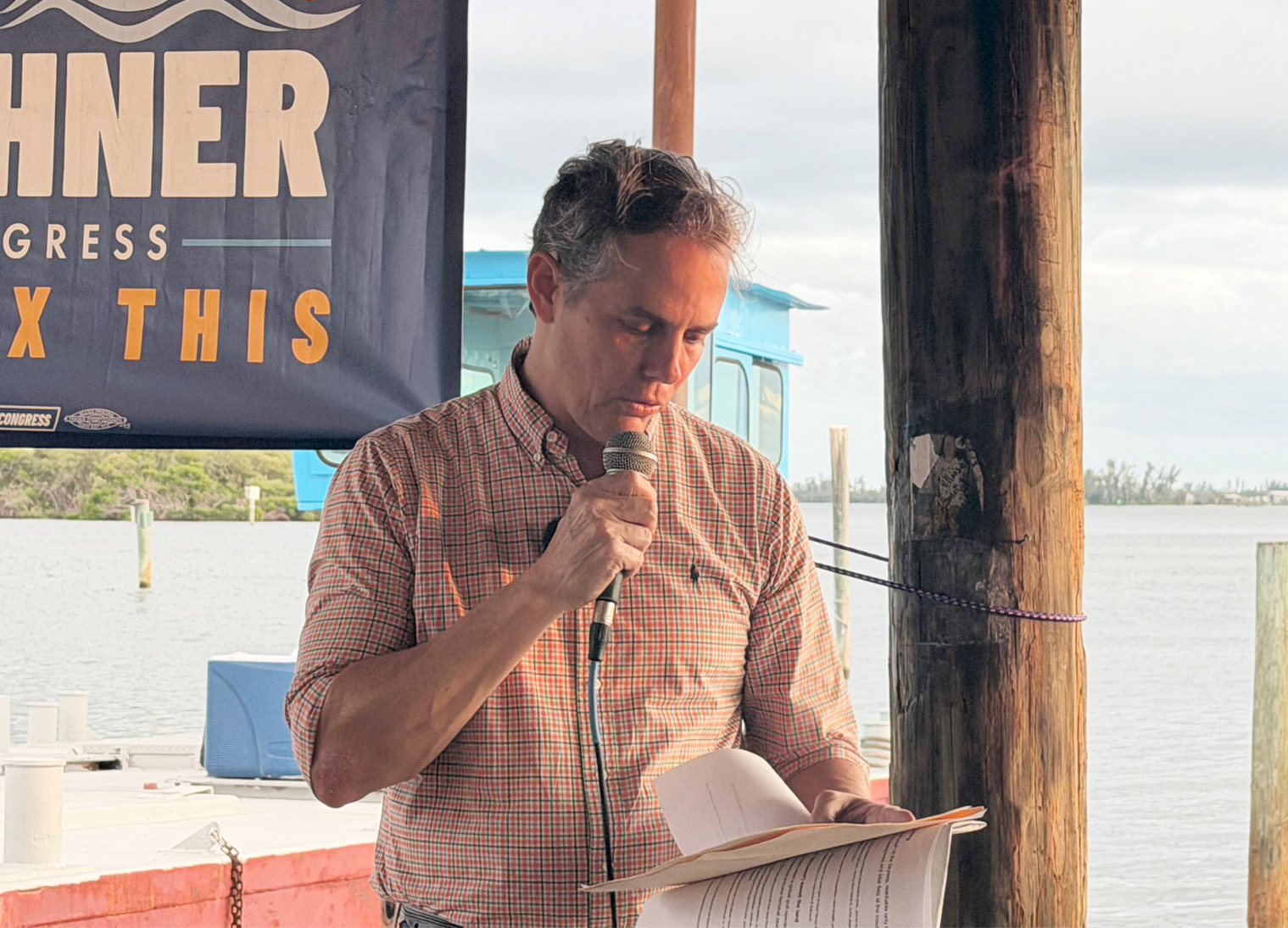
Kirschner spoke at the Miller Dock in Cortez on Oct. 30 to a crowd of local officials, supporters and Cortez residents. Kirschner’s campaign tag line is “Let’s Fix This.” The campaign event hosted by AP Bell Co. owner Karen Bell included fried local mullet and hush puppies.
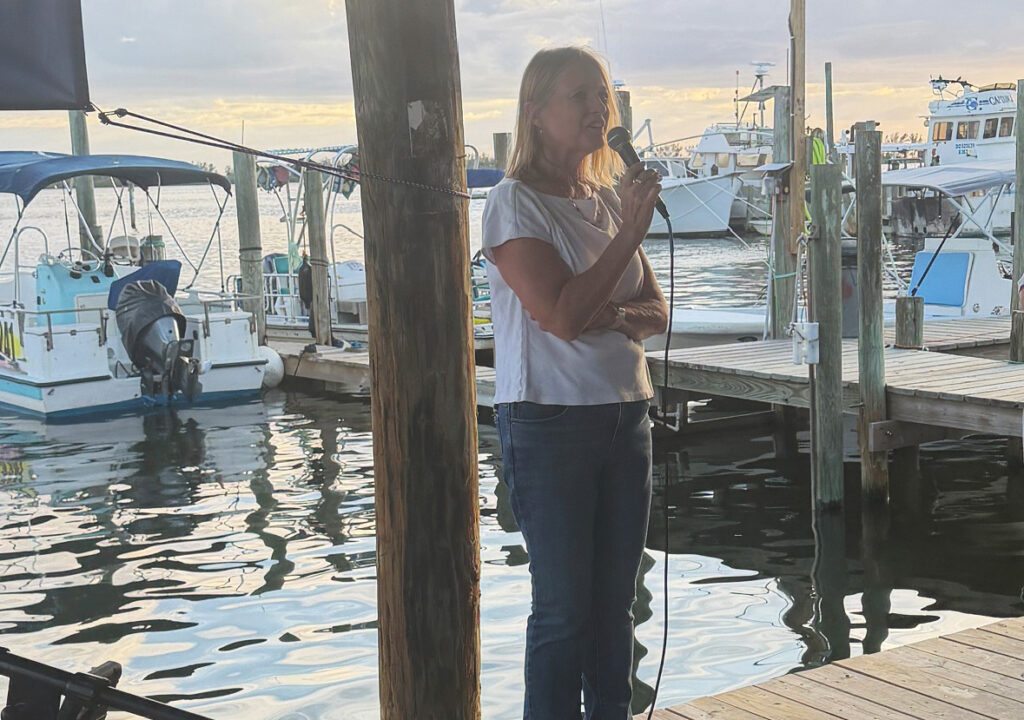
AP Bell Fish Company owner Karen Bell welcomed the campaign event attendees. – Leslie Lake | Sun

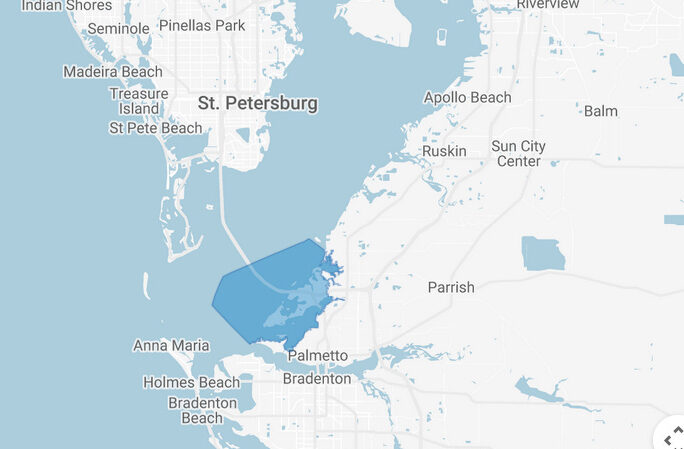
Rattlesnake Key is located in Tampa Bay just south of the Sunshine Skyway Bridge. The undeveloped property is owned by the Rattlesnake Key Preservation Company LLC, which is a subsidiary of cruise ship terminal operator SSA Marine. Slip Knott LLC and SSA Marine announced in January that they were exploring building a multi-berth cruise port on the Knott-Cowen tract of land.

“We almost lost this space in January,” Kirschner said in reference to the proposed cruise ship terminal. Kirschner said the cruise port would have required dredging a channel 4½ miles long and 60 feet deep through Tampa Bay.

Earlier this year, more than 19,000 people signed a petition opposing the cruise port terminal. During the 2026 legislative session, state lawmakers adopted Senate Bill 302. The enacted legislation bans dredging in the Terra Ceia Aquatic Preserve area that includes the Rattlesnake Key and Knott-Cowen properties.

Kirschner credited Republican state Sen. Jim Boyd, who wrote the dredging amendment, and Gov. Ron DeSantis, who signed the bill into law. But Kirschner said the new state law leaves some gaps.

He noted the state did not buy the Rattlesnake Key property and state law still allows “minimum dredging” for marinas and docks – without defining how much minimum dredging is allowed.

“That’s a loophole that you can drive a cruise ship through still today,” Kirschner said.

Kirschner said the state has had the area on its conservation buying list since 1995. He said the Legislature set aside money to buy Rattlesnake Key in 2022 and 2024, and a federal grant of approximately $500,000 was previously awarded, with Manatee County pledging matching money.

That plan stalled over price, Kirschner said. The state appraisal came in at $7.5 million, but the private buyer paid $18 million for the Rattlesnake Key property.

Kirschner said government buyers can only pay the land’s appraised value.

He crafted his remarks around Benjamin Franklin’s 1754 “Join, or Die” cartoon, which depicts a snake cut into several pieces. A sign displaying the cartoon stood during the event.

“Every level of government holds only one piece of the answer,” Kirschner said.

The proposal

Kirschner described Rattlesnake Key as about 700 acres of mangroves and tidal flats that are reachable only by boat and serve as a nursery for snook, redfish, tarpon, shrimp and stone crab. He noted that nearby Bird Island is among the state’s top rookeries.

Kirschner said federal refuge funds can be used only to buy land inside a refuge’s approved boundary. His proposed legislation would extend the Tampa Bay National Wildlife Refuge to include Rattlesnake Key and the Knott-Cowen tract. He said that would guarantee, by law, public fishing and boating access, but he noted the federal government can only buy land from willing sellers.

Kirschner said most of the federal funding would come from offshore oil and gas receipts and from federal duck stamp sales, as well as from fuel and fishing-equipment taxes that already fund fish habitat and boat ramp access.

Kirschner’s protection plan is based on the premise that he gets elected to fill the congressional seat being vacated by U.S. Rep. Vern Buchanan, and that he could then secure congressional support for his Rattlesnake Key plan.

He contrasted the cost of his plan with the state’s spending on the “Alligator Alcatraz” detention facility in the Florida Everglades. Kirschner said the state spent $1 billion on the detention facility that is now being torn down. He said protecting Rattlesnake Key and the Knott-Cowen tract would cost “a small fraction” of that amount.

Kirschner called for a new appraisal of the Rattlesnake Key property and for the state Legislature to close the marina loophole. He urged Manatee County voters to approve the ballot referendum that seeks to continue the county’s land conservation program, which he said has protected 2,500 acres of land since 2020.

Supporters speak

Merrie Lynn Parker, a retired Manatee County School District administrator and board member of the Manatee Fish and Game Association, said hunters and anglers are among the most consistent conservationists. She said her organization is among the groups behind the Manatee County ballot referendum. She said overdevelopment and seawalls have eroded the natural filtering and storm protection that mangroves provide.
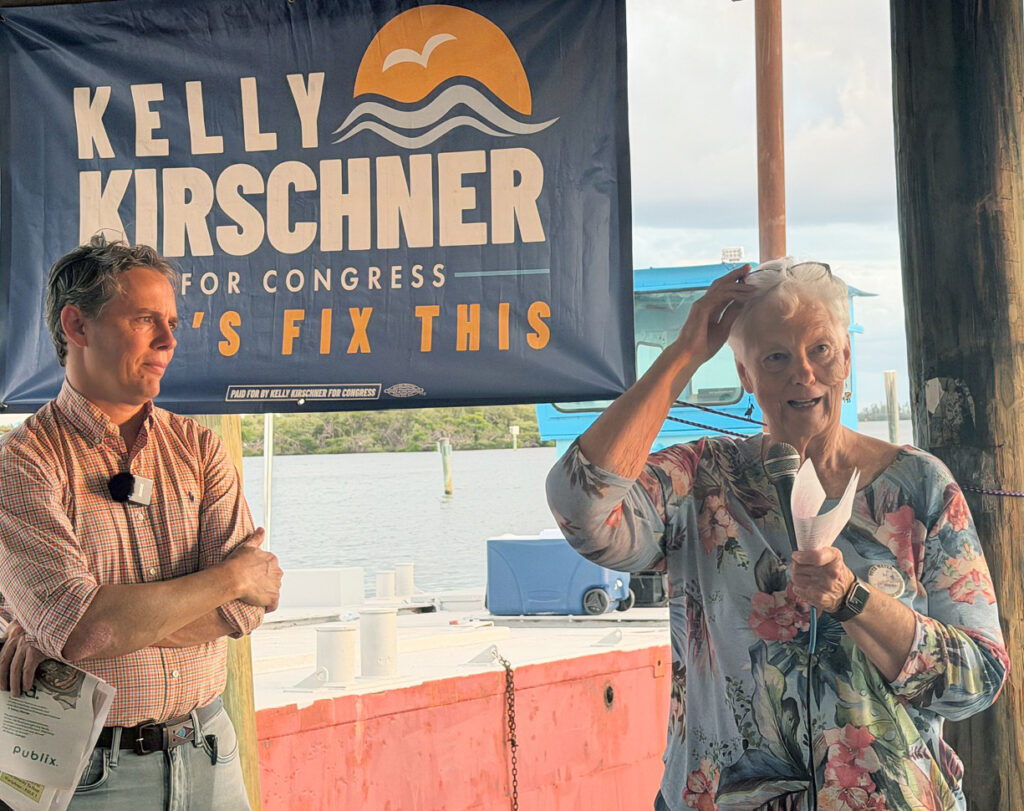
Naturalist Merrie Lee Parker spoke in support of Kirschner. – Leslie Lake | Sun

University of South Florida marine scientist Steven Murawski was unable to attend Friday’s event, but Kirschner said Murawski’s team has spent years testing fish across the Tampa Bay region for contaminants that include PFAS “forever” chemicals.

Suncoast Waterkeeper board member Rusty Chinnis said water quality underpins the area’s fishing and real estate industries.

“If you do not protect the water, none of this works,” Chinnis said.

Reel Tight Fishing Charters owner Matt Feuyo said clean water and healthy mangroves drive the tourism that supports the area’s small businesses.

Cheryl Kelly, a former director of budget and management at the U.S. Fish and Wildlife Service, said she reviewed Kirschner’s plan with former colleagues who work in land acquisition.

“This is an achievable goal,” she said.
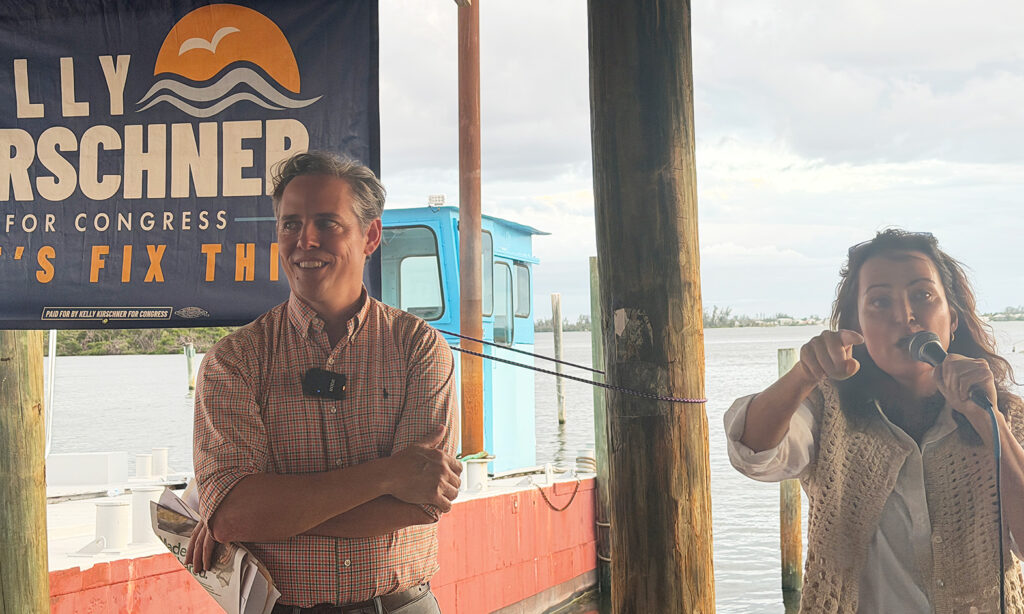
Kelly Kirschner heard Cheryl Kelly describe his plan as “achievable.” – Leslie Lake | Sun

Kelly asked the crowd whether Kirschner’s Republican opponent, Sydney Gruters, had developed a comparable plan to protect Rattlesnake Key. According to those in attendance, Gruters had not held a campaign event in Cortez.

The elected officials in attendance included Holmes Beach Mayor Judy Titsworth, Manatee County Commissioner George Kruse, Longboat Key Town Commissioner BJ Bishop and Sarasota City Commissioner Jen Ahearn-Koch. Kirschner also recognized former county commissioner and county commission candidate Reggie Bellamy and Florida House candidate Lisa Klein.
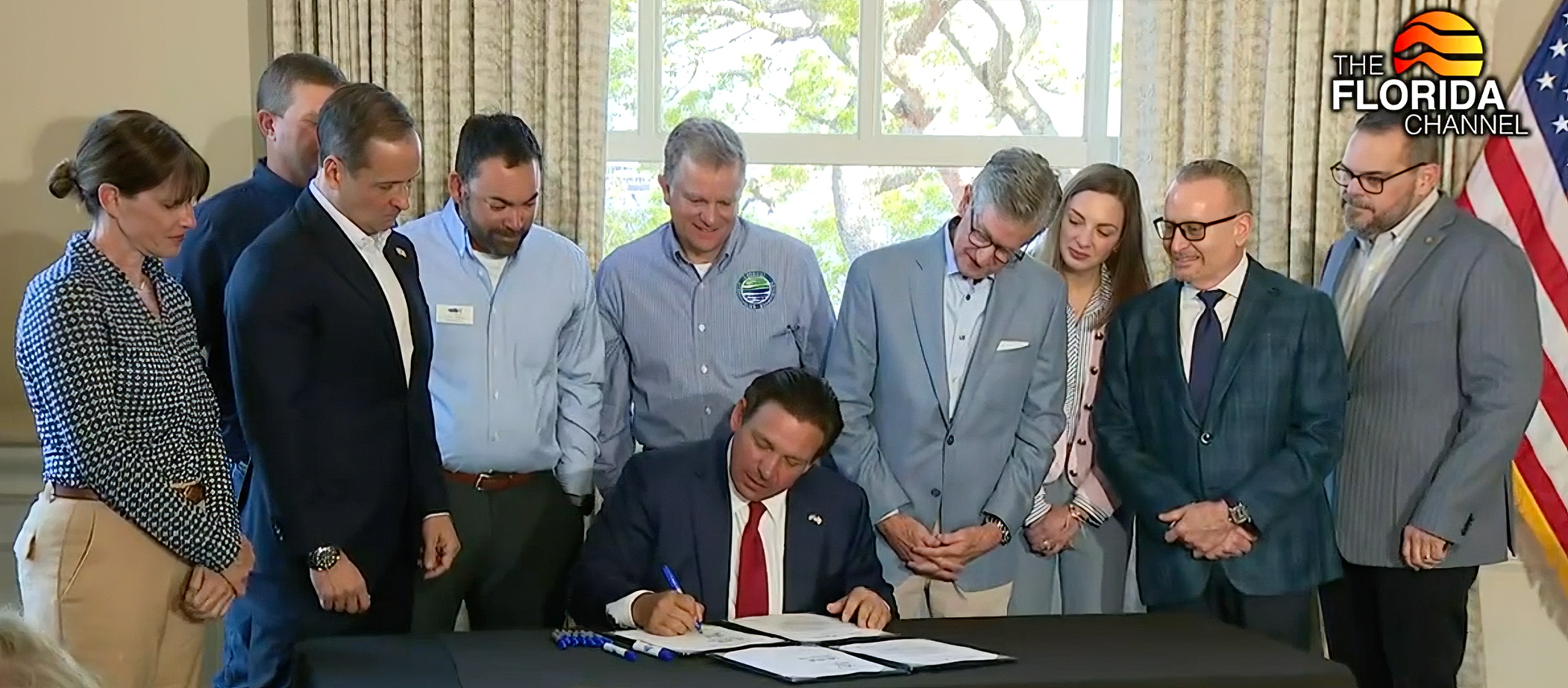
DeSantis signs legislation that seeks to prevent proposed cruise port

BRADENTON – During Thursday’s press conference held at the Pier 22 restaurant in Bradenton, Governor Ron DeSantis signed into law the dredging prohibitions contained in Senate Bill 302 and the matching companion bill recently adopted by the Florida House of Representatives.

During the March 19 press conference, DeSantis, FDEP Secretary Alexis Lambert, State Senator Jim Boyd and State Representative Will Robinson Jr. each said the new state law will prevent the dredging needed to construct and operate the proposed Knott-Cowen cruise port in the Terra Ceia Aquatic Preserve near Rattlesnake Key and The Sunshine Skyway. The new state law will take effect on July 1.

The press conference was streamed at the Florida Channel website and can be viewed using the link below. DeSantis began speaking about the cruise port and signing SB 0302 at the 7:24 mark of the video. Lambert, Boyd and Robinson also spoke during the press conference.

The Florida Channel video:
https://thefloridachannel.org/videos/3-19-26-signing-of-sb-302-coastal-resiliency-and-hb-1417-department-of-environmental-protection/

Boyd amendment could impact proposed cruise port 

TALLAHASSEE – Florida Senator Jim Boyd (R-Bradenton) filed an amendment to Senate Bill302 that if fully adopted might make it more challenging to do the dredging needed to accommodate a proposed Knott-Cowen Cruise Port in the Terra Ceia Aquatic Preserve. 

Boyd filed his amendment on Feb. 18. The following day, the Florida Senate voted 38-0 in favor of adding that additional language to the previously filed Senate bill. 

As of mid-day Monday, Feb. 23, a similar amendment had not been introduced in the Florida House of Representatives. Without a matching bill supported by the House, the Senate bill, as now amended, would fail to become new state law. The Florida Legislature’s 2026 legislative session is scheduled to end on March 13. 

The Florida Senate website lists House Bill 1035 as the rebill to SB 302. As of Feb. 23, the most recent amendment to the House Bill occurred on Feb. 16, and that amendment was not similar to Boyd’s amendment. 

In January, Tampa-based Slip Knott LLC and cruise ship terminal operator SSA Marine announced they were exploring the development of a multi-berth cruise ship port in northwest Manatee County on the Knott-Cowen tract of land near Rattlesnake Key and the Sunshine Skyway Bridge. 

That announcement was met with petitions, protests and significant public backlash against the proposed cruise port that has not yet been subjected to any public hearings as part of the permitting process that would entail the Manatee County Commission at some point. 

THE AMENDMENT

Boyd’s senate-supported amendment says, “No further dredging or filling of the submerged lands of the Terra Ceia Aquatic Preserve shall be approved or tolerated by the board except:

“(a) Such minimum dredging and spoiling as may be authorized for public navigation projects or for such minimum dredging and spoiling as may be constituted as a public necessity.

“(b) Such other alteration of physical conditions, including the placement of riprap, as may be necessary to enhance the quality and utility of the preserve.

“(c) Such dredging as is necessary for the purpose of eliminating conditions hazardous to the public health or for the purpose of eliminating stagnant waters, islands and spoil banks, the dredging of which would enhance the aesthetic and environmental quality and utility of the preserve and be clearly in the public interest as determined by the board.

“(d) Such minimum dredging and filling as may be authorized for the creation and maintenance of marinas, public boat ramps, piers and docks, and their attendant navigation channels and access roads. Such projects may be authorized only upon a specific finding by the board that there is assurance that the project will be constructed and operated in a manner that will not adversely affect the water quality and utility of the preserve. This paragraph may not be construed to authorize the connection of upland canals to the waters of the preserve.

“Any dredging and filling pursuant to paragraph (a), paragraph (b) or paragraph (c) shall be approved by the board only after public notice as provided,” the amendment says.

According to the Florida Department of Environmental Protection, “The boundary of the Terra Ceia Aquatic Preserve starts at the south end of Port Manatee and extends out into Tampa Bay. The preserve extends as far south as Emerson Point, on the northern bank of the Manatee River. Terra Ceia Aquatic Preserve includes several embayments such as Terra Ceia Bay and Bishop Harbor, along with tidal creeks like Frog Creek and McMullen Creek.”

SB 302

SB 302 addresses “Coastal Resiliency.” According to the bill summary listed at the Florida Senate website, the bill addresses “Prohibiting the board of Trustees of the Internal Improvement Trust Fund from approving the dredging or filling of the submerged lands of the Terra Ceia Aquatic Preserve unless such dredging and filling occurs for certain reasons; authorizing certain dredging and filling of submerged lands and placement of certain shorelines and seawalls within the Biscayne Bay Aquatic Preserve; authorizing the erection of certain structures within aquatic preserves; requiring the Department of Environmental Protection, by a specified date, to develop guidelines and standards for nature-based methods to address coastal resiliency and to adopt rules, subject to legislative ratification, for a statewide permitting process for such coastal resiliency, etc.”

SIDDIQUE’S INSIGHTS

On Feb. 19, Manatee County Commissioner Tal Siddique mentioned Boyd’s amendment in his “Making Waves” Substack blog titled, “New Legislation Protecting the Terra Ceia Aquatic Preserve.”

In that blog, Siddique wrote, “This amendment would enshrine additional protections for the Terra Ceia Aquatic Preserve to limit large-scale dredge & fill projects – the kind a certain cruise terminal project would use.” 

Regarding SB 302 as a whole, Siddique wrote, “SB 302 began its life, in my view, as a great piece of legislation creating a statewide framework for how Florida can use nature-based solutions to improve coastal resilience. Projects such as mangrove replanting and living shorelines would be formalized in state statutes and grant funding would be provided through the Resilient Florida Grant Program. This issue focuses on the Aquatic Preserve, the amended language, and how you can advocate for it.”

When asked about the potential impact Boyd’s amendment might have on the cruise port, Siddique said, “What will be interesting though is whether the bulkhead rights become preempted by this legislation or not. Those rights predate any aquatic protections. Attorneys and a court would have to decide that.”