

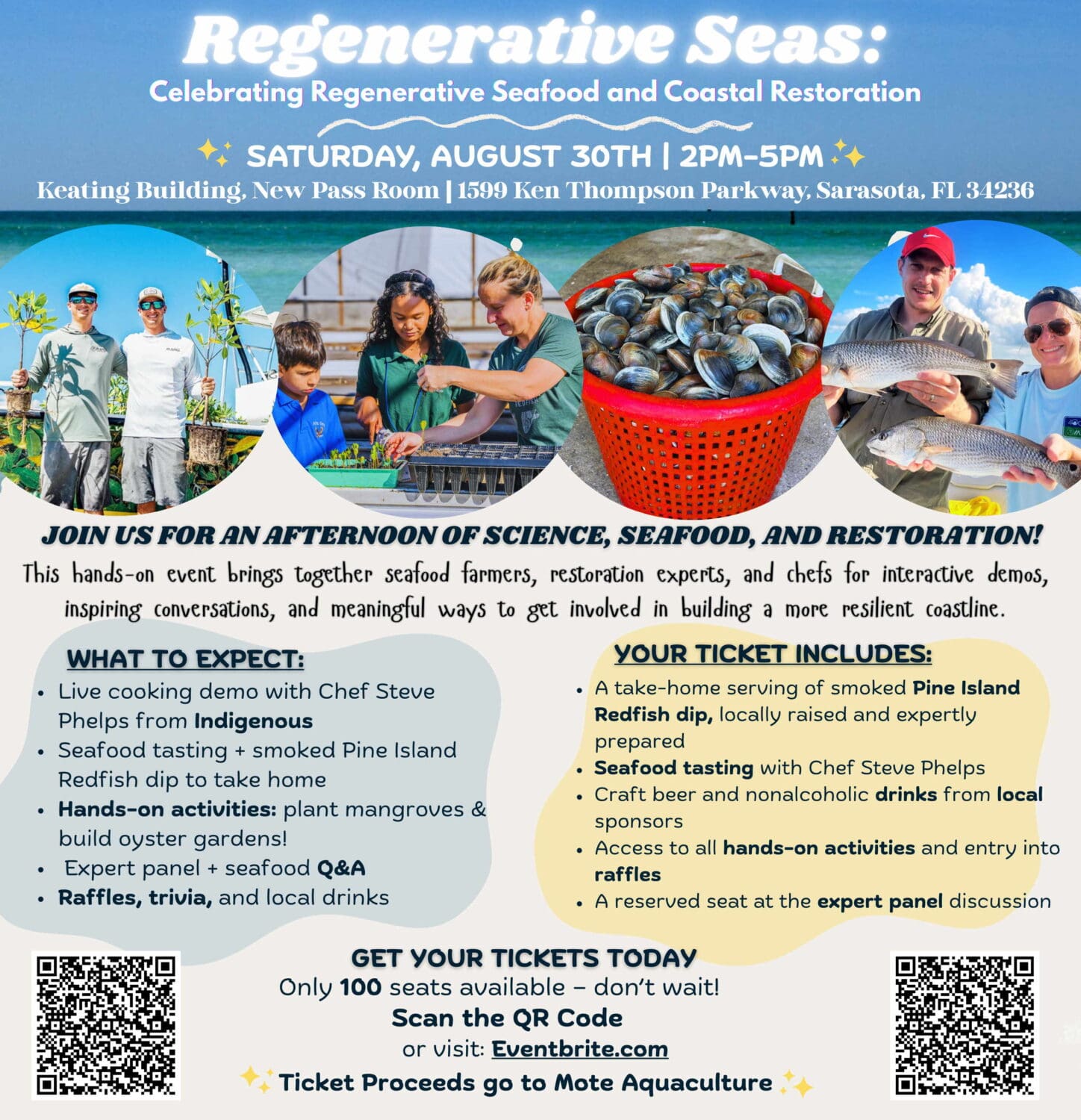
When I first heard about Pine Island Redfish, I contacted owner Megan Sorby about a tour. I had assumed that the operation was on Pine Island but when I reached out to Megan by phone, she informed me that they were located at the Mote Aquacultural Park in Sarasota, refining their operations while they built out their vision on Pine Island. Check out their excellent video at www.pineislandredfish.com for an introduction to see the operation and learn about their plans.
Sorby has worked in commercial aquaculture around the world for the past 20 years.
“I actually had my first internship in the field right here at Mote Aquaculture Park and was hooked ever since,” she related. “Together with my partner, Tom, we focus on the development of new species for aquaculture, beginning with broodstock all the way through to harvest. We saw a real need for our sector to communicate our process more with the public so that seafood farming was seen as just that – farming – and something that offers great opportunity for coastal communities, working waterfronts and transparency in food supply. In that, we also wanted to be the model for how all our food systems must be for the future, which is regenerative.”
Pine Island Redfish’s intention is to produce food in harmony with the environment and, when possible, in a way that gives back.
The company was founded in late 2023 by Sorby. They’re developing a land-based Recirculating Aquaculture System (RAS) on Pine Island, Florida, to sustainably farm a food fish that’s been off limits to commercial fishing since 2007 due to severe overfishing rightly or wrongly attributed to the blackened redfish craze of the early 2000s.
Pine Island Redfish is the first company in the U.S. to successfully farm red drum using RAS technology. In March 2025, they achieved their first commercial harvest and now their farmed redfish are available at select Publix supermarkets in Sarasota and in several regional restaurants, including Indigenous, an elegant and trendy Sarasota eatery. The company uses the waste generated by the fish farm to grow mangroves and halophytic (salt-tolerant) plants like sea purslane that contribute to coastal restoration and ecological health.
Building on their initial success, Pine Island Redfish intends to develop a full-scale facility capable of producing around 800 metric tons of redfish annually, and growing nearly 50,000 mangroves each year.
What instantly excited me about Pine Island Redfish was the fact that their farming method combines sustainable seafood production with habitat restoration, which minimizes their environmental footprint while enhancing coastal ecosystems. If successful, Pine Island Redfish could serve as a blueprint for climate-conscious aquaculture practices nationwide, eliminating concerns of organizations like Suncoast Waterkeeper with proposed local offshore operations that threaten pollution and potential negative effects on native fish stocks.
To learn firsthand from the people behind this exciting technology and to sample their product (redfish) prepared by proprietor and chef Steve Phelps of Indigenous, come to Mote Marine Laboratory’s Keating Building on Saturday, Aug. 30 from 2-5 p.m.