TALLAHASSEE – New legislation effective statewide on July 1 is designed to help reduce the number of at-risk and derelict vessels across the state and improve enforcement tools for Florida Fish and Wildlife Conservation Commission (FWC) officers and partner agencies.
The FWC “is preparing to implement a new law aimed at strengthening vessel accountability and enhancing protections for Florida’s waterways. Senate Bill 164 was signed into law by Gov. Ron DeSantis on June 19,” according to a June 27 press release.
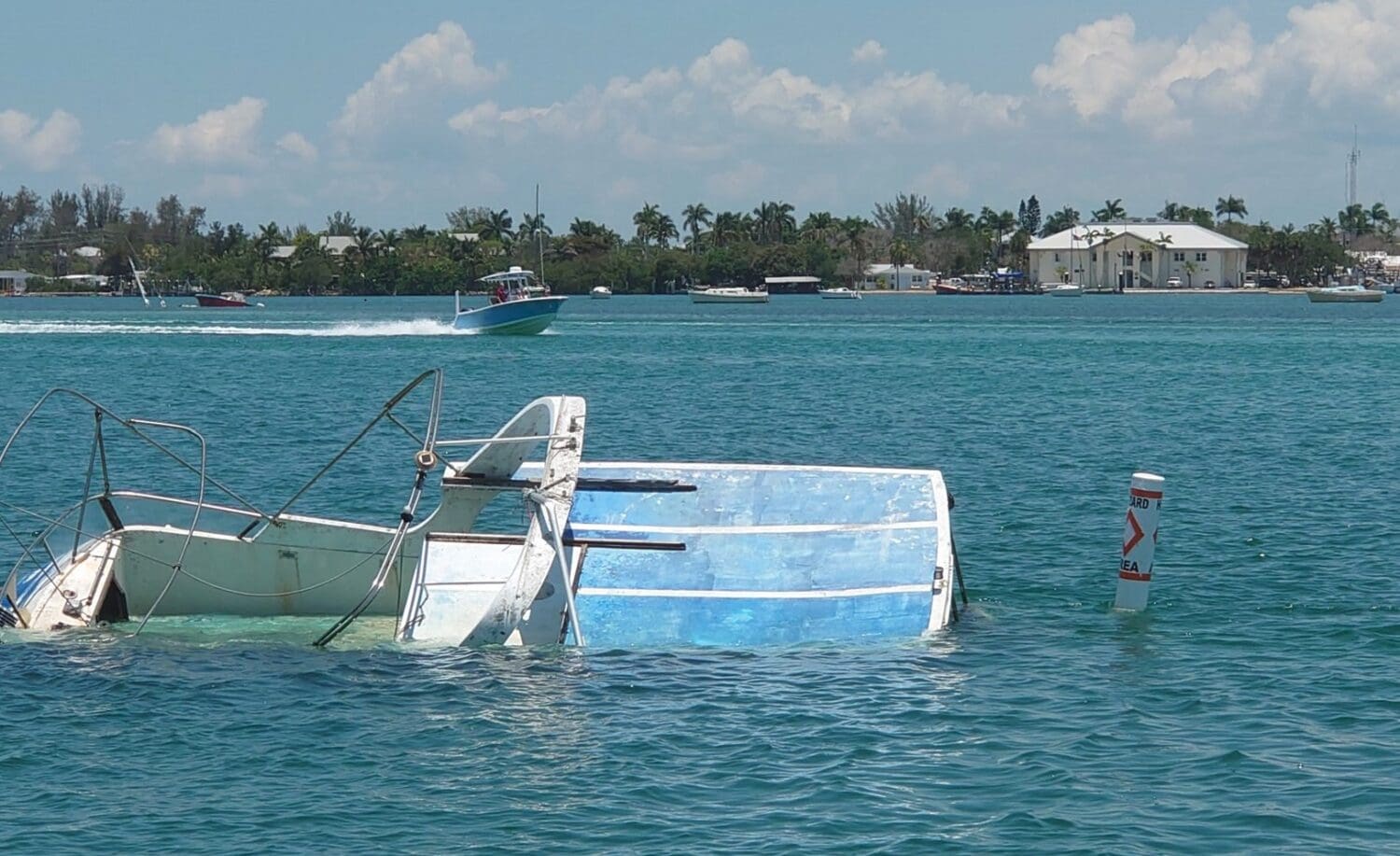
Local boat captains have expressed concern about sunken and unregistered boats south of the Cortez Bridge, and in May 2024, marine law enforcement agencies issued more than 20 citations for multiple unregistered and derelict vessels.
A derelict vessel is any vessel that is that is left in a wrecked, junked or substantially dismantled condition upon waters of the state. Derelict vessels pose risks to navigation, marine life, seagrass beds and public safety. Vessels at risk of becoming derelict include those taking on water without an effective way to dewater; those with spaces meant to be enclosed that remain open to the elements; those listing due to water intrusion, those that have broken loose or may break loose from anchor or those tied to an unlawful or unpermitted structure or mooring.
Key provisions of the new law include:
- Clarified Ownership Standards: The definition of “vessel owner” is clarified, and a valid vessel title will now serve as prima facie (presumed) evidence of ownership;
- Stronger Requirements for At-Risk Vessels: Vessel owners must now complete an Effective Means of Propulsion (EMP) evaluation upon request by law enforcement. If an officer has reason to believe the vessel lacks an effective means of propulsion and the owner is present, the evaluation must be conducted immediately or within 48 hours if notified otherwise;
- Public Nuisance Vessel Designation: A vessel may now be declared a public nuisance – subject to removal like a derelict vessel – if the owner receives three citations related to any at-risk conditions within a 24-month period, including unpaid citations or failure to appear in court.
Expanded Noncriminal Infractions: Violations such as expired registration and long-term anchoring may now be addressed through mailed noncriminal citations from law enforcement;
- More Flexible Use of Removal Funds: Derelict Vessel removal funding may now be used not only for removing derelict vessels but also for preventive removals under the Vessel Turn-In Program and for public nuisance vessels;
- Harsher Penalties for Repeat DV Offenders: First offense, first-degree misdemeanor; second offense, third-degree felony and third offense, second-degree felony; and
- No Liveaboard on Derelict Vessels: It is now a first-degree misdemeanor to live aboard a vessel that has been declared derelict by the court.
Additional requirements, including an annual electronic permit issued by FWC for vessels anchoring longterm, will go into effect on July 1, 2026. The penalty for unauthorized long-term anchoring will consist of fines ranging from $100 to $500.
“If a vessel owner receives three violations within a two-year period, the vessel may be declared a public nuisance and removed as if it were derelict. Some exemptions apply and include vessels that are government-operated, construction vessels, actively engaged in commercial or recreational fishing, docked at a public or private facility or moored at permitted moorings,” according to the FWC release.
“We have seen increasing success in our efforts to combat the ongoing derelict vessel problem in Florida’s waters,” said Capt. Travis Franklin, leader of the FWC Derelict Vessel Removal and Prevention Program. “This new legislation enhances our ef forts to not only remove derelict vessels but also prevent at-risk vessels from becoming derelict. ”
The FWC has removed nearly 200 vessels through the Vessel Turn-In Program and is taking applications from at-risk vessel owners. For more information, call 850-488-5600 or visit the FWC website.