

I was reminded this past week that it’s a good time to remind anglers about the importance and protection of seabirds. Knowledgeable anglers know that these birds are valuable, but some beginning anglers (I’m being kind) should learn a few valuable lessons early on to keep them safe.
Besides being an integral part of the marine ecosystem and beautiful to watch, they help us locate fish. An observant angler notices where birds congregate on a low tide. They know the birds are feeding on marine organisms that fish will seek out when the flat is covered with water on a rising tide. They point us to schooling fish, often indicating action much farther away than we can see. Anglers who fish the coastal waters of Florida will invariably come into contact with the seabirds that inhabit local waters. The encounter can be deadly to seabirds if anglers don’t know the basics of caring for them.
The inspiration came as I was fly casting to Spanish mackerel (my target) and blue runners (an incidental but fun catch). My top water gurgler attracted observant birds on almost every cast, and I couldn’t take my eye off them for 10 seconds. Around me, a couple of other boats were chumming, and I noticed birds picked up hooked baits a couple of times.
The fall run is just beginning, and a lot of effort will be put into fishing for breaking fish on the beaches. The encounter can become deadly if a bird becomes entangled in fishing line and takes some of it back to their roosts. The birds are also put in harm’s way when they come into contact with fishing line that careless anglers leave in the water and in the mangroves from an errant cast.
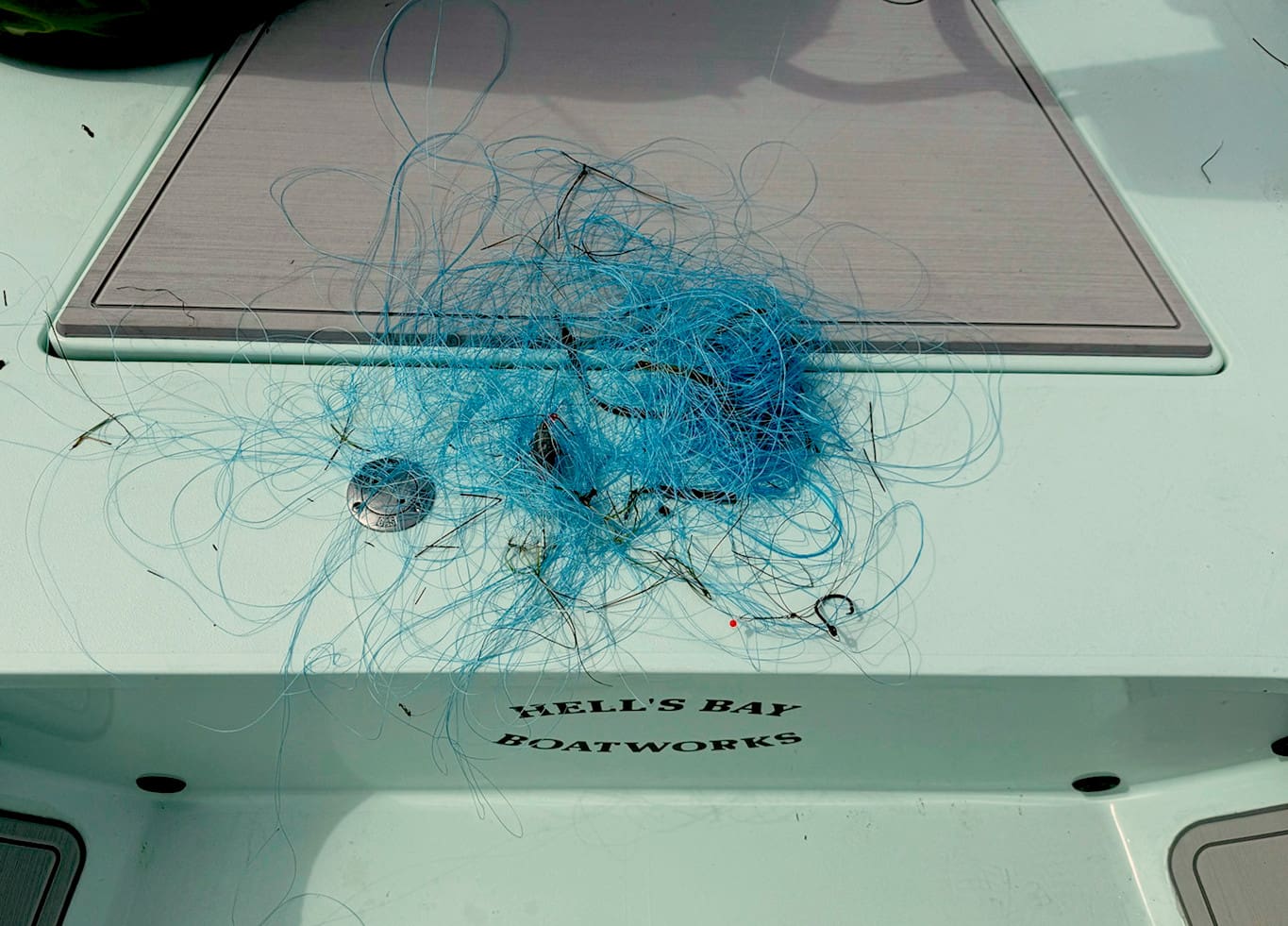
That same day as I was waiting for the tide to change and drifting the west side of Jewfish Key, I noticed a braided fishing line trailing behind me. After about 30 minutes, I managed to retrieve 100-plus yards of bright blue 100-plus-pound line. It was chilling to imagine how many birds and other wildlife that might have impacted.
If a bird is hooked while fishing, it’s important to bring them to the boat with a properly set drag to prevent the line from breaking. It can be a death sentence when they return their mangrove roost trailing it. Eventually, most anglers will hook a bird, even if they’re being diligent to avoid them. When it does happen, work them to the boat carefully as you would a big fish, then throw a towel over their head to calm them before removing the hook.
Care should be taken with all birds, especially ones that have sharp beaks. They don’t know you’re trying to help them. Handle birds carefully as they have very light, hollow bones. Cautiously remove the line from their body, wings and feet and check them thoroughly before releasing them. If you see a hooked or tangled bird in an active rookery during nesting season, it’s important not to approach them as their young may be startled and fall from the nest.
You can reduce the chance of hooking birds by following a few simple rules. First, never feed birds, as this will teach them to look for a handout, a practice that is dangerous to the birds. Second, while you’re fishing, keep an eye out for birds that might be hovering, getting ready to dive on your offering.
Taking care of the wildlife that inhabit our coastal estuaries is everyone’s and especially angler’s responsibility. If you see a bird in distress and can’t help it, call Save Our Seabirds at 941-388-3010 or Audubon Coastal Island Sanctuaries at 813-623-6826.