

When was the last time you got upset when you were on the water? Was it when someone cut you off while you were poling a shoreline, or maybe when they motored up to that school of tarpon you had been positioning yourself well ahead of? Maybe it was someone who had gotten a little too close to where you’re anchored and fishing, i.e., in your “comfort zone.”
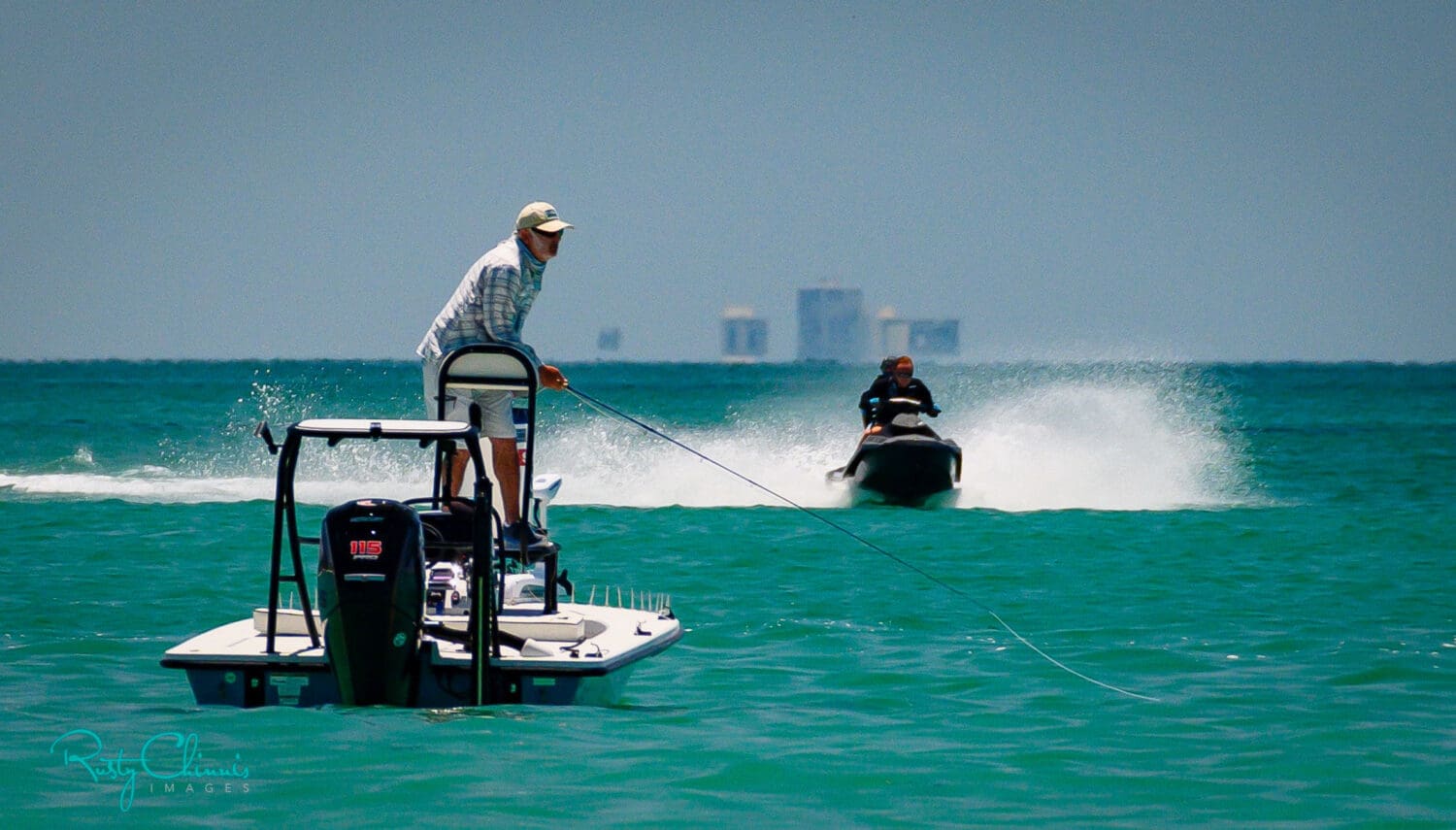
If you were like me, your first reaction might have been to get upset or even to throw your hands up and yell expletives. It took a long time for me to realize that strategy only upset me and often made the situation worse. To give you an example, I would be set up on a line on the beach waiting for tarpon when a Jet Ski would appear and run back and forth right on the line the tarpon were traveling. My first response was to get upset, throw my hands up in a one finger salute and yell something like, “Hey, ******* it’s a big Gulf of Mexico out there!” That kind of a response was most often met with a return of my salute and multiple close passes just out of casting range.
Now, I wave them over and tell them what a nice day it is to be on the water. Then I explain what I’m doing and politely ask them to stay clear of my fishing lane. Almost always they respond with an apology and explain that they didn’t realize what I was doing.
The same goes for those times when I’m fishing inshore and another angler gets in my “comfort zone.” It’s important to realize that we have no idea what’s going on with the other anglers we’re sharing the water with. They could be fishing to eat, indulging a passion, finding solace from a traumatic experience, enjoying a day with friends and family, or just getting some relaxation. We all get caught up in our fishing at times and let our awareness drift as we stalk a school of fish or head to the next spot we’re going to target. Most anglers start out with areas in mind where they’ve caught fish before, and more often these days we either find someone there or nearby. All too often, this can mean that fishermen get crowded together, which has the potential to ruin everyone’s experience. There are lots of places to fish, so if you find someone else nearby, move on to another location. You may even find that you discover fish or a fishing spot you didn’t know about.
I generally hunt fish by poling in shallow water or in schools along the beaches. When I encounter another angler, I either ask them if it’s OK to pass or just give them a wide berth. Most everyone appreciates this gesture and will tell you to proceed, but sometimes they want you to stay completely away, even if there’s little chance of disturbing the action. If this is the case, I don’t argue, I just move on. Even though I don’t fish offshore, I know that many anglers work hard to find a ledge or hard bottom where they target fish and they carefully guard it, never overfishing it. One of the worst things they experience is anglers who look for spots that others are fishing. Most often they don’t have the same respect as the original angler and mark the spot on their GPS, returning later to catch every fish they can. If care isn’t taken, it’s possible to ruin a good hole by overfishing it.
Fishing schooling species like tarpon, Spanish mackerel, little tunny and kingfish requires a stealthy approach; savvy anglers work the edges of a school where they know predators patrol for prey. They understand that a careful approach is their best chance of success. Anglers who don’t know the ropes often troll right through schools of baitfish and breaking fish, causing them to sound and ruining the action for everyone. When anglers take the time to consider others on the water, everyone wins.
Fishing should be fun, and with a little consideration, it can be. When you’re on the water, make it a habit to stay well away from other anglers and if you encounter someone who isn’t playing by those rules, move on. Show them the courtesy they don’t show you.