HOLMES BEACH – City officials are taking a wait and see approach to joining a yet to be filed lawsuit that will challenge a new state law that significantly restricts Florida cities and counties’ ability to enact and enforce new development regulations.
The new state law was created earlier this year by the Florida Legislature’s adoption of Senate Bill 180, which Gov. Ron DeSantis signed into law effective July 1.
The new state law prohibits city and county governments from adopting development regulations and comprehensive plan amendments that are more burdensome or restrictive than those in place on Aug. 1, 2024.
The law
Section 28 of SB 180 says, “Each county listed in the federal disaster declaration for Hurricane Debby, Hurricane Helene or Hurricane Milton, and each municipality within one of those counties, may not propose or adopt any moratorium on construction, reconstruction or redevelopment of any property damaged by such hurricanes; propose or adopt more restrictive or burdensome amendments to its comprehensive plan or land development regulations; or propose or adopt more restrictive or burdensome procedures concerning review, approval or issuance of a site plan, development permit or development order before October 1, 2027, and any such moratorium or restrictive or burdensome comprehensive plan amendment, land development regulation or procedure shall be null and void. This subsection applies retroactively to August 1, 2024.”
Section 18 of SB 180 says, “The term ‘impacted local government’ means a county listed in a federal disaster declaration located entirely or partially within 100 miles of the track of a storm declared to be a hurricane by the National Hurricane Center while the storm was categorized as a hurricane, or a municipality located within such a county.”
The pending lawsuit
Fort Lauderdale-based attorney Jamie Cole is leading the efforts to challenge the new state law and he recently reached out to city and county attorneys statewide to gauge their interest in joining the lawsuit. Cole is a managing partner with the Weiss Serotta Helfman Cole Brierman law firm headquartered in Fort Lauderdale and he’s served as the city attorney for the city of Weston since 1999.
On Sept. 2, Manatee County Commissioners voted 6-1 to join the soon to be filed lawsuit at an initial upfront cost of $10,000 – with additional costs possible if the judge’s eventual ruling is appealed.
When contacted on Sept. 5, Cole said, “So far, a total of 16 local governments have joined the lawsuit from all over the state, including two counties and 14 municipalities. We plan to file in mid-September. We haven’t determined the jurisdiction yet.”
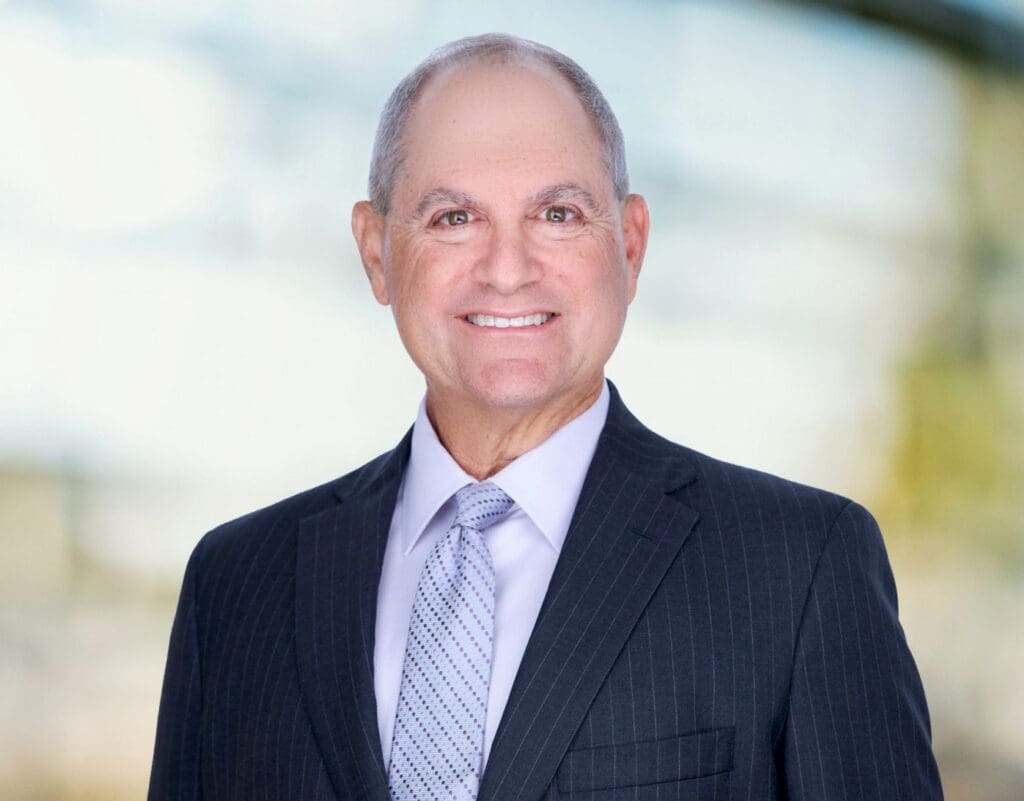
In February 2024, Cole filed a lawsuit that challenged the constitutionality of the expanded Form 6 financial disclosure requirements the Florida Legislature and DeSantis imposed statewide on mayors and city commissioners. In June 2024, United States District Judge Melissa Damian issued a temporary injunction that temporarily prevents from the state from enforcing the financial disclosure law that took effect Jan. 1, 2024. According to Cole, the lawsuit parties are still awaiting Damian’s final ruling.
Holmes Beach discussion
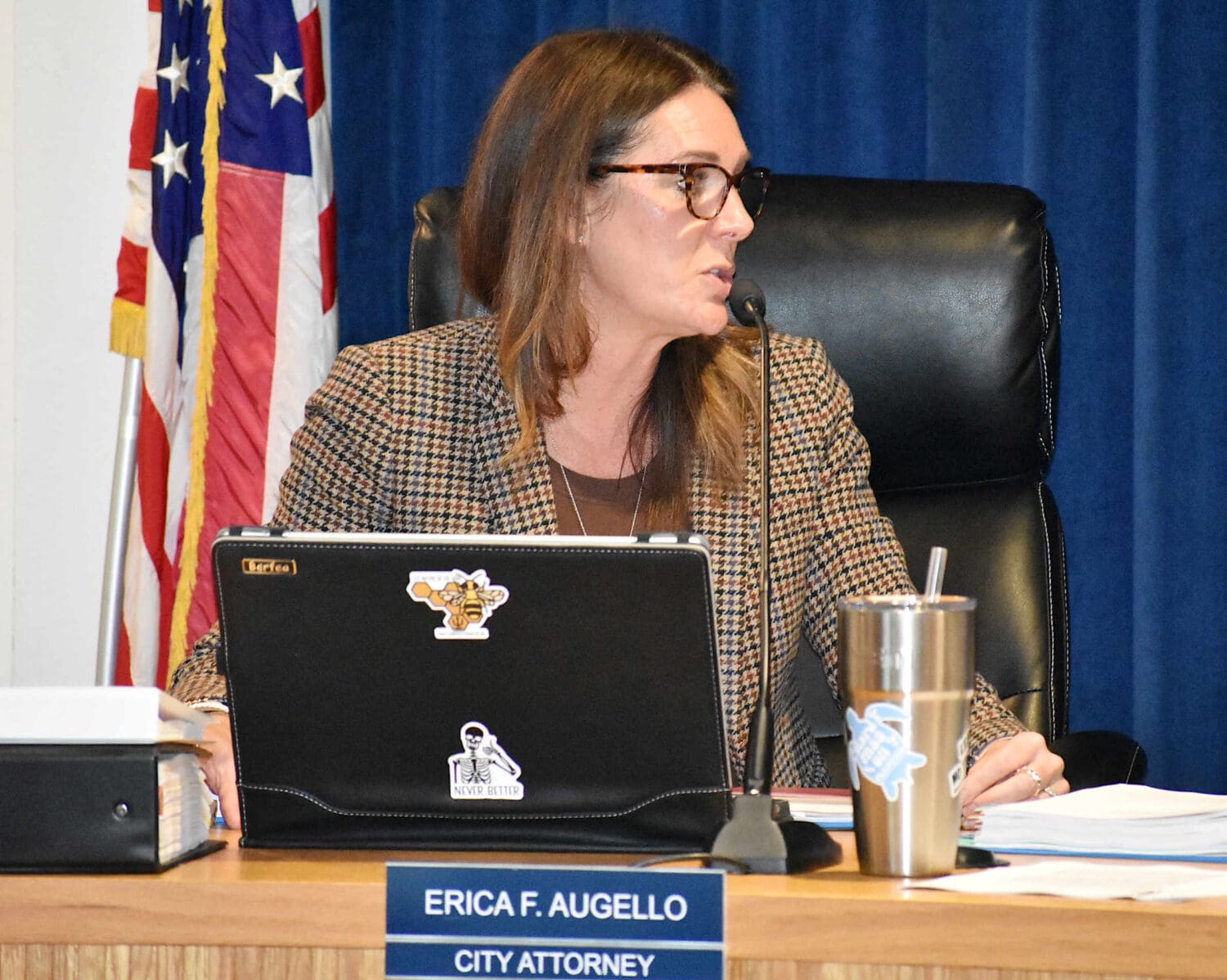
On Aug. 26, City Attorney Erica Augello provided the Holmes Beach mayor and commissioners with an overview of the potential impacts of SB 180. At the time, Manatee County Commissioners had not yet decided to join the lawsuit.
Augello said she wasn’t prepared to advise the commission on joining the pending lawsuit because she didn’t have enough information about the legal arguments to be made, who’s joining the lawsuit and in which jurisdiction the case will be argued.
“This is the law we have to abide by at this point,” she said. “Whatever gets decided at that level is going to impact every city in the state of Florida, so joining it or not joining it is not necessarily going to make a difference.”
Augello said there’s already talk about state legislators amending the law during the 2026 legislative session to address the concerns being raised.
“Let this play out a couple more weeks, see what happens and let Erica continue to do her research,” Mayor Judy Titsworth said.
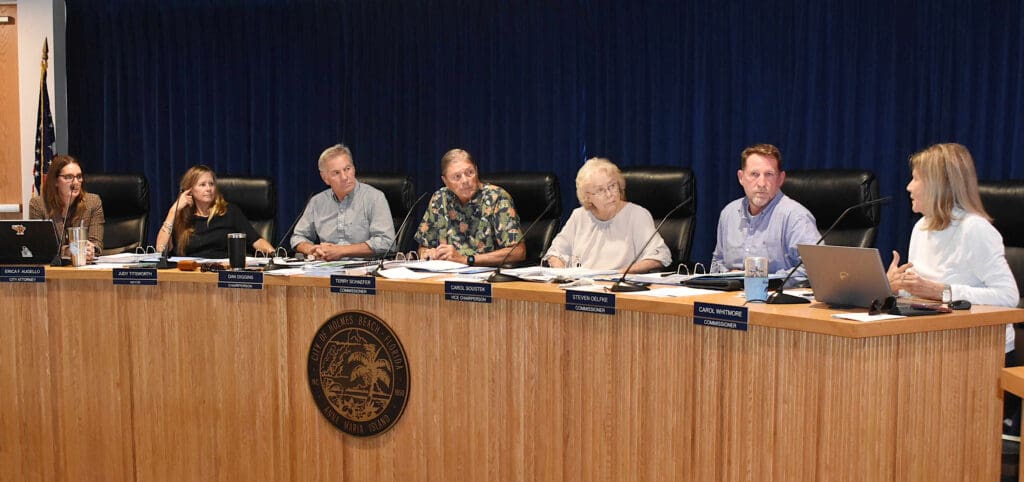
Regarding the law itself, Augello said, “The law says you cannot adopt or enforce any land development regulation that are more burdensome or more restrictive than what was in place prior to Aug. 1, 2024.”
Augello said the state did not define “restrictive” and “more burdensome” and that will likely be argued in court.
“I don’t know if that means financially. I don’t know if that means development rights,” she said,
She said the 100-mile designation is not clearly defined either and that will also likely be argued in court.
Augello noted the new state law is scheduled to expire in October 2027 but the expiration date would be extended each time the city is in the path of a named hurricane.
“They snuck that in there,” Commissioner Dan Diggins said.
“It was debated hotly. That may be something that gets revisited in the future,” Augello said of the expiration date that could be extended annually and essentially “set in stone” all local land development regulations in place as of Aug. 1, 2024.
Augello said development regulations in place before then remain valid and new development regulations can be adopted but fact-specific staff and legal analysis will be needed to determine if the proposed regulation is more restrictive or burdensome. She said local governments can still adopt new regulations that are less restrictive and more favorable to development.
Augello said Holmes Beach has been operating under a similar hurricane-related law the Florida Legislature and the governor enacted in 2023 with the adoption of SB 250.
SB 250 says, “A county or municipality located entirely or partially within 100 miles of where either Hurricane Ian or Hurricane Nicole made landfall shall not propose or adopt any moratorium on construction, reconstruction, or redevelopment of any property damaged by Hurricane Ian or Hurricane Nicole; propose or adopt more restrictive or burdensome amendments to its comprehensive plan or land development regulations; or propose or adopt more restrictive or burdensome procedures concerning review, approval or issuance of a site plan, development permit or development order before Oct. 1, 2024.”
“I think we move on business as usual,” Augello said. “You do what’s best for your city and then we take a look at everything that goes through and we analyze it to see if there’s a way we can support it with factual findings.”
Augello said any new development regulations adopted by the city could be challenged in court. The new regulation could not be enforced while the legal challenge plays out and the legal challenge could be initiated by anyone, even if they’re not personally impacted by the new regulation. The new state law also contains a provision for the award of attorney fees.
“If we lose, they get attorney fees. If we win, we get nothing,” Augello said.
Commissioner Carol Whitmore said she’s not in favor of joining the lawsuit. She doesn’t want the city to alienate the Florida Legislature and the city’s ability to secure state funds while Bradenton-based State Sen. Jim Boyd serves as Florida Senate president in 2026 and 2027.
Commissioner Steve Oelfke said he’s concerned about how the new state law will impact development in Manatee County, which in turn will impact the Island and the city of Holmes Beach. His concerns include protecting the water quality of the surrounding natural waters and the county’s ability to continue providing adequate water and sewage services.
“There’s a lot at the county level that affects us,” he said.
Oelfke said the potential for increased development in Manatee County should be considered when deciding if the city joins the lawsuit.
Commissioner Dan Diggins asked if the city can increase building permit fees under the new state law.
“Absolutely not,” Augello responded.
In response to another Diggins’ question, Augello said the new state law doesn’t hinder the city’s ability to regulate commercial activity on the beach or other behavioral-related concerns.
Titsworth doesn’t share Whitmore’s concern about alienating state legislators and she’s not interested in pursuing state funds if they come with retaliatory “tit for tat” strings attached.
“Attack on home rule is real,” the mayor said. “This bill is very threatening. I think it’s going to be fixed. There’s too many people up in arms. I think the developers went a little too far in getting their way and I think the pendulum will hopefully swing the other way.”
The city commission meets again on Thursday, Sept. 11, at 2 p.m., and it’s possible the SB 180 lawsuit will be discussed again.
A resident’s perspective
After watching the Aug. 26 meeting online, Holmes Beach resident Margie Motzer expressed her concerns that the new state law may be more impactful than the city attorney anticipates.
“As SB 180 was discussed at the commission meeting, I was grateful that some city officials recognized that the potential impact was being underplayed,” Motzer said. “Many experts agree that this bill is a major affront to Florida cities on multiple levels.”
Motzer said the gravity of the undercutting of local planning protections and home rule rights is outlined in the 12-page legal analysis environmental and land use attorney Richard Grosso prepared for the 1,000 Friends of Florida smart growth advocacy organization.
“I would much rather use these dollars towards a team effort than using it for some of our other city expenditures,” Motzer said of the expenses to be incurred if the city joins the lawsuit.
Grosso analysis
“The enormous breadth and scope of the law’s prohibitions on local planning and zoning authority suggests that many, even perhaps most, legislators did not understand its implications,” Grosso stated in his analysis.
“This law is unworkable, confusing and overly restrictive. It ignores the reality that major economic and population shifts, new industries or practices, natural disasters and all manner of other situations change, sometimes suddenly, requiring communities to revise their planning and regulatory approaches. But this law ties the hands of local governments, prohibiting them from reacting to the real world – which is dynamic, not static. As with the (Bert) Harris Act, the greatest impact from such legislation is frequently the chilling effect that it creates with unclear drafting and uncertainty as to meaning, so that local governments are motivated to steer far from any action that arguably triggers liability,” Grosso stated.
“Florida is widely known to be the state most at risk of hurricane damage, rising seas, unaffordable insurance and other threats of a changing world. Confoundedly, Senate Bill 180 removes our ability to meet those challenges. Our state’s economic future depends upon a repeal or substantial rewrite of this very ill-conceived law.”
Related coverage:
Manatee County joining SB 180 legal challenge