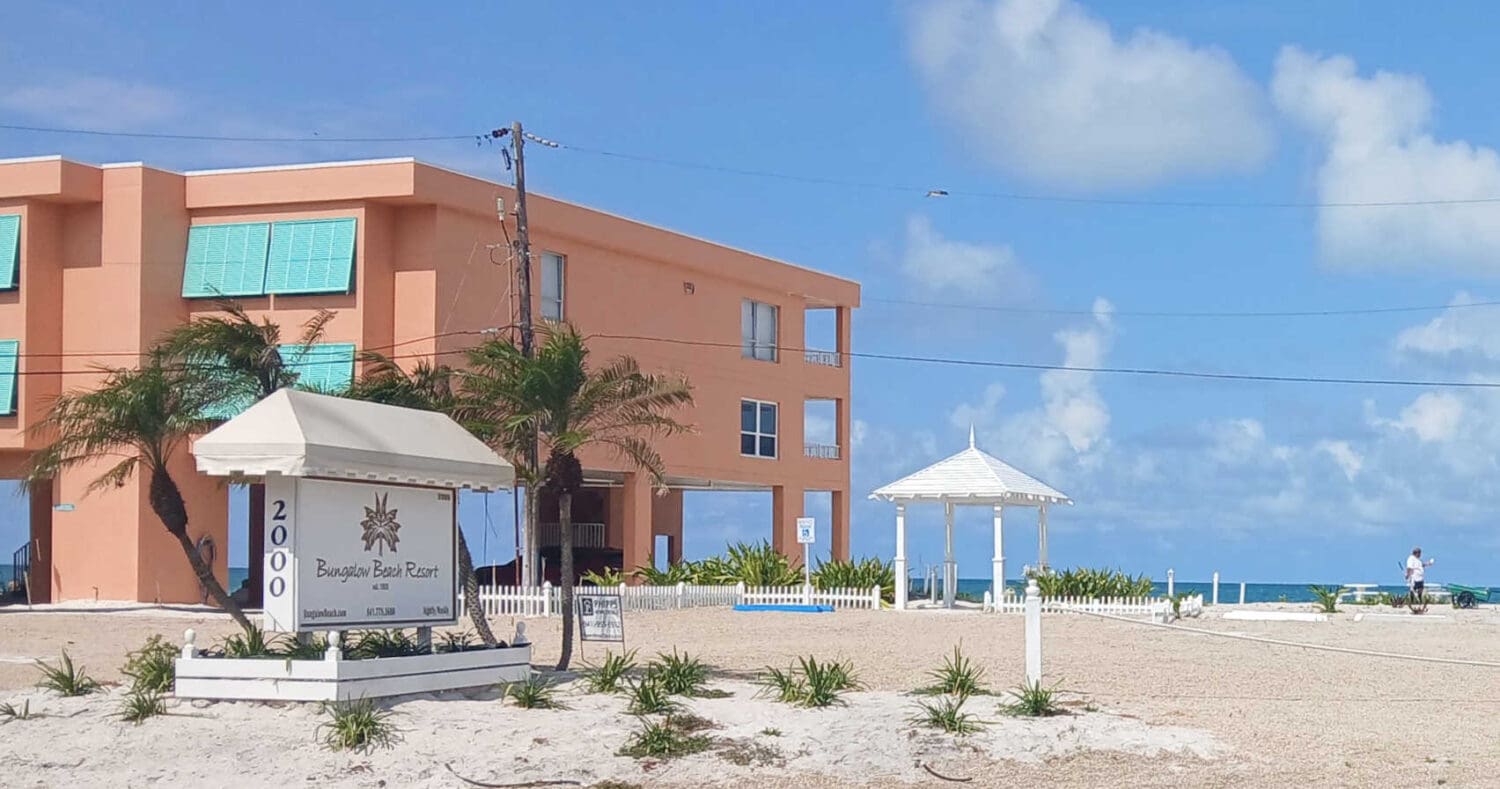
BRADENTON BEACH – The city of Bradenton Beach is asking for a dismissal of an April 25 lawsuit filed against the city by Bungalow Beach Resort owner Gayle Luper.
Attorney Robert Lincoln is representing the city and he filed the motion to dismiss on May 21.
In his motion, Lincoln stated: “Luper improperly seeks declaratory and injunctive relief to attack a quasi-judicial action and decision of the city commission approving her application for a temporary use permit to allow parking on her demolished resort property subject to conditions. Luper attacks both the city commission’s process and decision following its April 17 hearing. Luper alleges the city commission violated her due process rights and violated her parking rights.”
The motion states: “Luper’s sole remedy for attacking the city commission’s quasi-judicial decision is a petition for writ of certiorari (pursuant to state statute). This court may not grant either declaratory or injunctive relief and therefore must dismiss counts I and II with prejudice for lack of subject matter jurisdiction.”
According to the Florida Bar Association, “A petition for writ of certiorari is generally used to review quasi-judicial orders of county, municipal or state agencies that cannot be appealed to the district courts of appeal under the Administrative Procedure Act.”
In his motion, Lincoln stated: “The city commission must, and did, conduct a hearing to consider Luper’s application for a temporary use permit for the razed parcels. The city commission was required to, and did, apply the standards set forth (in the city’s land development code) to Luper’s application and the facts shown at the hearing. Defendant, city of Bradenton Beach, requests the court enter an order dismissing counts I and II and the entire action, with prejudice, for lack of subject matter jurisdiction.”
Hearing and Luper’s lawsuit
The lawsuit complaint filed by Tampa-based Attorney John A. Anthony on April 25 names Luper Enterprises, Inc. and Coastal Sound Investments LLC as the plaintiffs and the city of Bradenton Beach as the defendant.
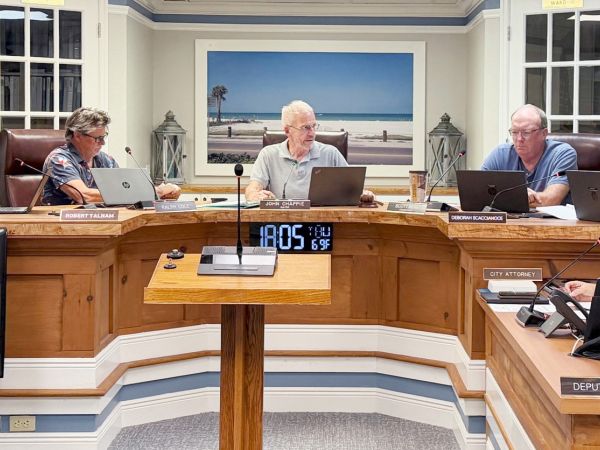
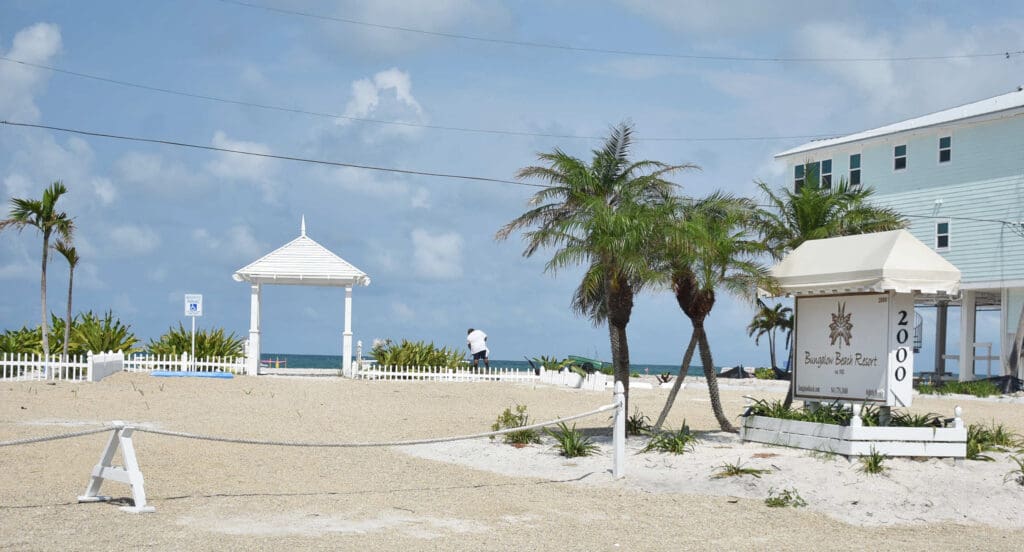
Luper’s lawsuit stemmed from a decision by the Bradenton Beach City Commission at an April 17 quasi-judicial public hearing to deny the use of the currently vacant resort property at 2000 Gulf Drive N. for paid parking using a resort pass.
Commissioners questioned the resort pass request for the beachfront bungalows that were destroyed during Hurricane Helene.
During the public hearing, Luper and her attorney, Stephanie Anthony, maintained that as a working resort, a resort pass, which includes parking and access to a private area of the beach, was appropriate because other Luper-owned properties affiliated with the multi-property resort remained operational following the hurricanes.
After a nearly 2.5-hour quasi-judicial hearing in which City Planner Luis Serna recommended denial of the application, city commissioners denied the paid public parking lot application but allowed a temporary use permit for Luper, resort guests and employees to use the lot no later than 9 p.m.
The city commission placed the following restrictions on the property:
- Parking at the razed parcels (the lot where the bungalows were) is permitted for a period of one year or 30 days from the issuance of a building permit;
- Parking at the razed parcels is limited to 17 parking spaces, per the city-issued Transient Public Lodging Establishment license;
- No trailers, recreational vehicles, campers or buses are allowed to park at the razed parcels, and no tailgating, overnight parking or paid parking shall be conducted;
- Only employees, agents or registered guests of the resort are allowed to park at the razed parcels;
- Parking at the razed parcels is limited to 7 a.m. to 9 p.m. enforced by a towing service secured by Luper.
Dispute timeline
Hurricane Helene destroyed many of 14 original Bungalow Beach cottages. The buildings were condemned and by Feb. 1 the razed parcels had been cleared of the demolition debris.
“At this time, Ms. Luper advised the city of her plan to reopen the razed parcels to continue parking in the manner that had been conducted by the resort for over 25 years,” Luper’s complaint states. “Ms. Luper was then advised by the city that she must file a parking permit in order to continue to charge a resort fee for parking.”
Luper applied online for the permit on Feb. 3 and said she spoke to Serna on Feb. 4 about the proposed plan to reopen the razed parcel for resort-fee parking to the public. She said Serna advised her that he saw no issues with the plan.
“The resort consists of three separate but interconnected areas. The razed parcels acquired in 1999, the duplex parcel (2103 Ave. C) acquired in 1999 and the single-family parcel (2108 Gulf Drive N.), acquired and incorporated into the resort in 2024.”
According to the complaint, the razed parcels have continuously supplied parking, including overflow parking, for operations at all the resort properties.
On March 14, a portion of the parking lot was reopened for parking at the rate of $50 per-car, per-day for 29 parking spaces.
“After parking approximately 14 cars on the morning of March 14, Evan Harbus, in his capacity with the Code Enforcement Division of the city, directed that all parking at the razed parcels cease immediately,” the lawsuit complaint states. “The city’s officials advised that any vehicles violating these instructions would be towed, including vehicles owned by the plaintiffs, vehicles of resort employees, its construction or maintenance-related crews, previous and potential guests and the paying public.”
On March 16, Luper submitted an application for temporary parking.
“The resort, properly permitted to conduct a defined and legitimate business, has never ceased operating even for a day and has continuously charged a resort fee of $50-$59, which included parking,” the complaint states. “The resort charging a resort fee to the public for parking and amenity use is a consistent and well-founded practice employed by several similar resorts in the region, frequently known as a ‘resort pass.’”
Related coverage:
Parking lot owner files lawsuit against city