

Winter may finally have arrived on the Suncoast. Frequent fronts bring wind and cold temperatures, both above and below the water, and they change the patterns of local fish. It can be a challenging time for anglers, but it also brings species that thrive in cold water.
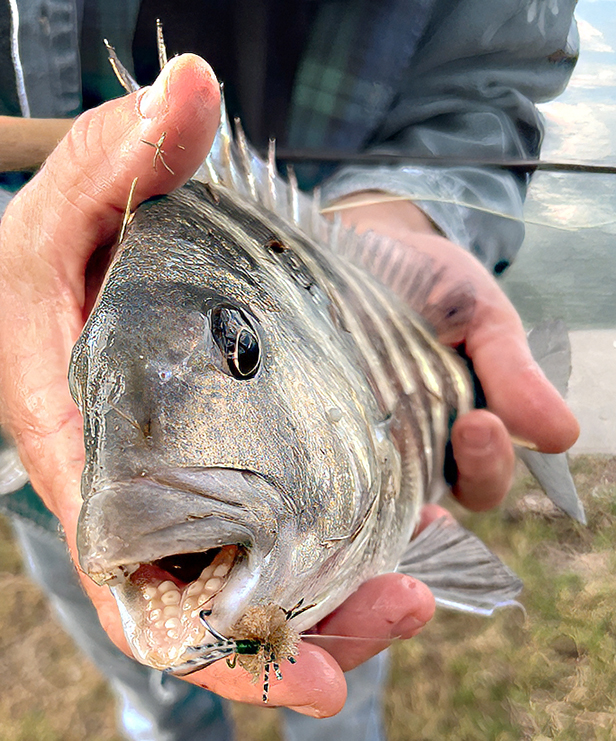
Sheepshead are perhaps the best example. Some anglers shun them, but the striped, buck-toothed predators are hard-fighting, tough to hook and excellent to eat. Savvy anglers target sheepshead around structure such as bridges, hard bottom, oyster bars and dock pilings, where the fish feed on barnacles, crabs and other crustaceans. Anglers use small, stout, sharp hooks and must set them quickly. They often joke that the trick is to strike a split second before the fish bites.
Last year, as I mentioned in a previous column, my friend Ryan Gandy told me he regularly catches sheepshead on a fly rod under the right conditions. As a fly angler, I have caught a few over the years, all by accident while fishing for other species. The times I have seen them and made a presentation, they never responded.
I was intrigued and asked him to explain his approach. The key, he said, is to cast close enough that the sheepshead can spot the fly but not so close that it spooks them. He said the fish have good eyesight and can see a fly from a distance. Gandy ties a small version of the Merkin, a time-tested permit fly, on a No. 4 hook. Other flies, such as the Alphlexo crab, also work.
To get a take, he lets the fly drop to the bottom once the fish spots it instead of stripping it. That is much like what I learned while permit fishing. Crabs, shrimp and other prey try to hide when a sheepshead is nearby. This is not a game of numbers, but it is the kind of challenge that excites die-hard anglers.
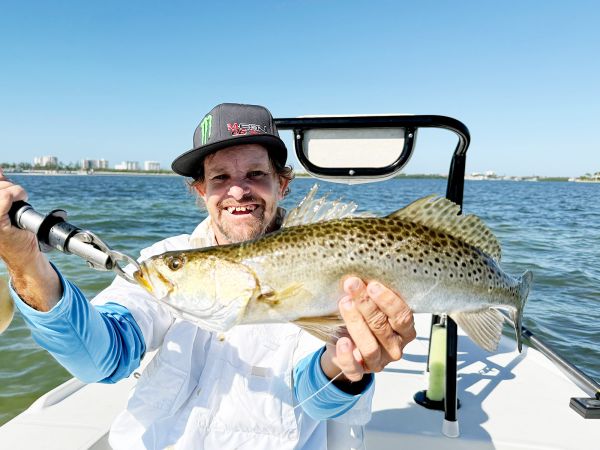
Redfish and trout also thrive in colder water and can be caught on live bait, artificial lures and flies.
This winter, use your senses, experiment and be persistent, and you can find a whole new challenge during the cooler months.