ANNA MARIA – The city’s efforts to implement a new method to calculate annual stormwater assessment fees will be delayed a year.
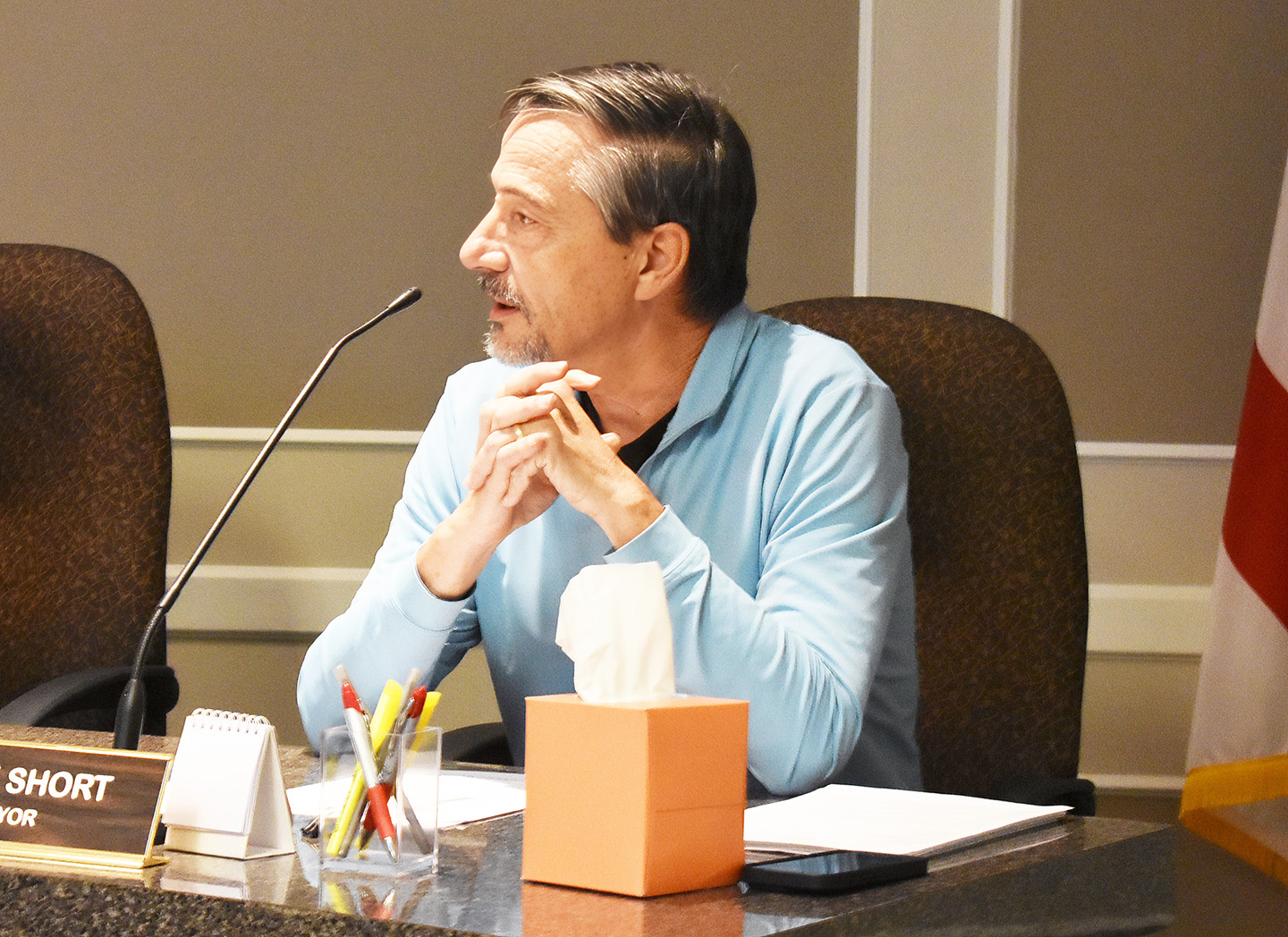
During the Sept. 8 city commission meeting, Mayor Mark Short announced the city’s current calculation method would remain in effect for the 2026-27 fiscal year that begins Oct. 1. That means Anna Maria property owners will again be charged $4 per every 100 square feet of property, regardless of what percentage of the property is covered by impervious surfaces. Short and the city commission hoped to implement a new calculation method that factored in each property’s drainage-related impervious surface coverage.
After City Attorney Pamela Cichon read aloud the title to the stormwater fee-related city resolution, Short said, “As you know we went down the path of alternative methodology and at the 11th hour we received some pushback from our consultant (Raftelis). It wasn’t our methodology, it was about how the amounts got allocated between the methodology. So, by default, this resolution effectively says the stormwater assessment as it was done a year ago will be in place for this year.”
Short also referenced the property tax-related TRIM notices sent to Anna Maria property owners by the Manatee County Property Appraiser’s Office. The TRIM notices include the city’s annual stormwater assessment fee.
“When the original TRIM notices were sent out by the county to our residents, a number of properties received incorrect information regarding what their stormwater assessment was going to be for this coming year. We still haven’t been able to figure out if there was a data transfer problem, or we did something wrong, or the county did something wrong,” Short said. “Effectively, what you paid last year is what you’re going to be paying. The rate’s the same, the methodology is the same: $4 per 100 square feet of the parcel.”
Regarding the specific cause for the delay, Short said, “The methodology of a flat rate and a variable rate based on impervious coverage is okay. It was proving that X dollars relates to the lot size, versus Y dollars relates to the impervious coverage side, where we got sideways. We will be working with our advisors on getting the proper documentation in place to substantiate that.”
Commissioner John Lynch asked if the city still hoped to implement the new calculation methodology next year. Short said it would.
Commissioner Chris Arendt then said, “That was my question as well, because I would hate to see you give up on a better method of success you got because I think we’re on the right track and I would like to see us keep pursuing it.”
In response, Short said, “I was very disappointed that we got this word at the last minute, and because we were heading down the right path, I’m convinced the path we’ve chosen is the right path and we will make it all work.”
In May, the city commission authorized Short to execute a task order with the Raftelis consulting firm to review and evaluate the data collected and the stormwater fee calculation work done by city staff. The goal was to implement the new stormwater fee calculation method for the 2026-27 fiscal year.
According to a document included in the May 14 commission meeting packet, Raftelis was to assist the city in transitioning from the current property area-based $4 per 100 square feet of property calculation method to a method that included an additional charge for properties that exceed the city’s 40% maximum impervious coverage ratio limit.