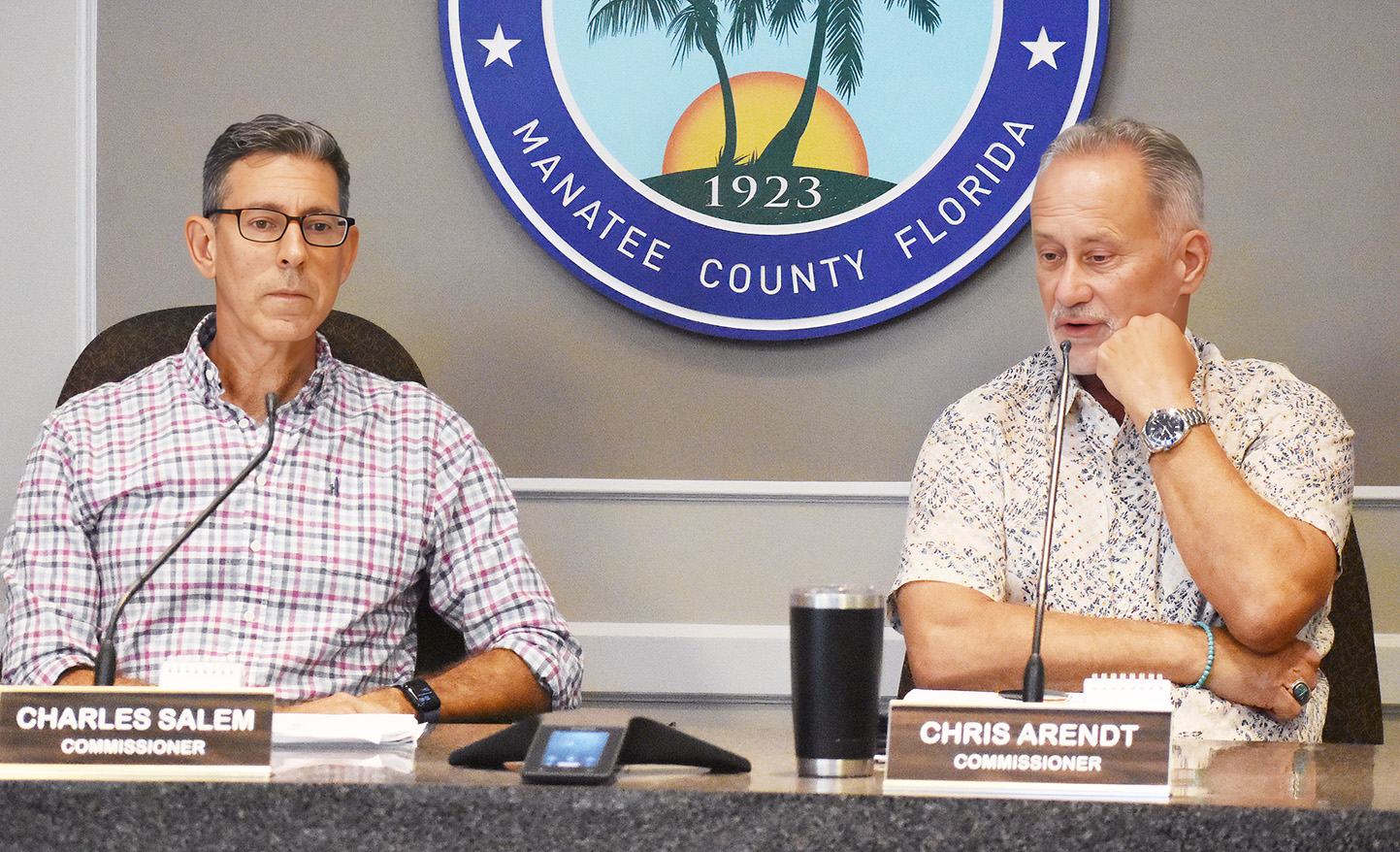
ANNA MARIA – Commissioner Charlie Salem said he will not support a property tax-related millage increase sought by commissioners Chris Arendt and John Lynch for the new 2026-27 fiscal year that begins Oct. 1.
Because of a new property tax-related state law enacted earlier this year by the Florida Legislature and Gov. Ron DeSantis in the form of Senate Bill 4-F, the state now requires a unanimous commission vote to increase the millage rate by more than 10% above the rolled-back rate that would generate the same amount of property tax revenue in the coming fiscal year as it did during the current fiscal year.
After much discussion during the July 23 city commission meeting – including input from City Treasurer Randy Maxson and City Attorney Pamela Cichon regarding the new state law – the commission voted 4-1 in favor of setting the tentative maximum millage rate at 1.85 mills.
The tentative maximum can be lowered before the Sept. 8 budget hearing but not increased.
In September, it will take the support of all five commissioners to raise the millage rate above the current 1.65 rate, which would generate an estimated $4.1 million in ad valorem property tax revenues in the coming fiscal year.
During the July 16 budget workshop, Maxson noted maintaining the current 1.65 millage rate would result in a 9.7% increase in property tax revenues and going 10% or more above the rollback rate would require a unanimous vote of the commission. The 1.65 millage rate in effect for the current 2025-26 budget year that ends Sept. 30 generated $3.8 million in Anna Maria property tax revenues.
According to Maxson’s budget presentation, a simple majority of three votes would be needed to adopt a final millage rate of 1.5042 mills or less. A two-thirds majority (four votes) would be needed to adopt a millage rate between 1.5042 and 1.6546 mills, and a unanimous five-member vote would be needed to exceed 1.6546 mills.
At 1.65 mills, a property owner is taxed $1.65 for every $1,000 of assessed taxable value after homestead exemption and other tax-cutting exemptions are applied. Anna Maria property owners also pay separate millage-based property taxes to Manatee County, the Manatee County School District and other taxing authorities.
According to Maxson, the total value of all Anna Maria properties is $2.6 billion.
COMMISSION DEBATE
After participating in budget workshops on July 16 and July 23, commissioners were asked to set the tentative maximum millage rate during their July 23 commission meeting.
Mayor Mark Short opened the discussion by saying, “I want to be clear: this is the not-to-exceed amount. It cannot exceed 2.05. Our budget currently contemplates 1.65.”
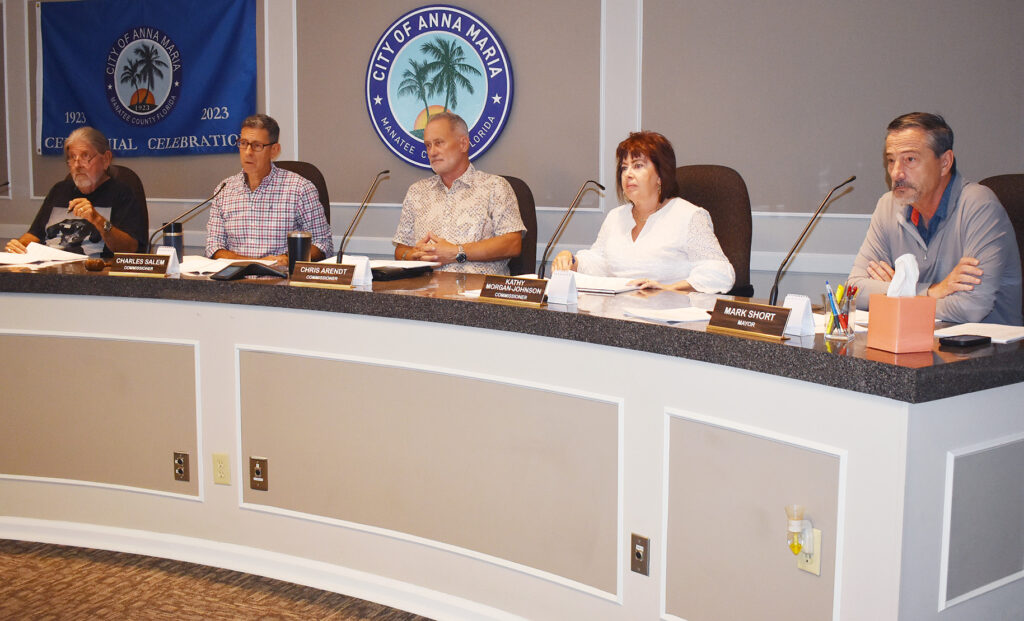
Salem said maintaining the current 1.65 rate would generate about 10% more ad valorem revenue than this year, largely due to increased property values and the new homes that replaced hurricane-damaged homes. He said setting the not-to-exceed rate at 2.05 mills didn’t make sense and it should be set at 1.65 mills.
Arendt said the 1.65 rate would leave the city with an approximate $225,000 budget deficit and would also prevent the city from rebuilding its reserve funds, which were about $4 million before the millage was cut from 2.05 to 1.65 in 2024, and the back-to-back hurricanes in 2024 further reduced the city’s reserves to approximately $1 million. Arendt said he would push for a rate higher than 1.65 to offset the deficit but he does not support raising it to 2.05 mills.
“I think it’s our fiduciary responsibility. I think it would be negligent if we didn’t,” Arendt said.
Participating by phone, Lynch said he agreed with Arendt. He said he doesn’t support 2.05 mills but does support a rate higher than 1.65.
Lynch asked Salem if there is a range that he could accept as a compromise. Salem said there was not and he will not support a millage increase.
Short noted that state law doesn’t allow a city to operate with a budget deficit.
“Whatever the number is, we will have to make it fit. My concern, as a steward of this city, if 1.65 is approved, there is not going to be any kind of significant improvement to the reserves that the city is currently sitting on. If we have another [Hurricane] Helene event, we’re out of money,” Short said.
His position is that any property tax revenues generated by a millage increase should only be used to replenish the city’s reserve fund – and not be used for additional operating revenues or city projects.
Short asked the commission to at least set the maximum millage rate at 1.85 to give the city some flexibility. He said if the millage rate is left at 1.65, the commissioners can expect to be asked what they want to cut out of the proposed budget to eliminate the deficit so they can adopt a balanced budget in which the anticipated revenues match the anticipated expenses.
Arendt said with a unanimous vote unlikely in September, the commission and the city is essentially locked into the 1.65 millage rate for another year.
Commissioner Gary McMullen said he favored keeping the current 1.65 rate, but he supported setting the higher tentative maximum to allow for more discussion and consideration. McMullen noted he was the commissioner who made the motion to lower the millage rate to 1.65 mills in 2024 when adopting the city’s 2024-25 budget. That motion made in 2024 passed by a 3-2 vote.
Commissioner Kathy Morgan-Johnson did not indicate her preference for the final millage rate.
ADDITIONAL REVENUES
The proposed 2026-27 budget also anticipates $8.35 million in grant revenues, $2.17 million in license, permit and fee revenues, $641,228 in stormwater assessment fees and $450,000 in fines and forfeiture revenues.
During the July 23 budget workshop, Short said the current $4 per 100 square feet stormwater fee will remain in effect, but fees will be calculated differently using a new methodology that factors in a property’s impervious surface area. A property with a greater amount of impervious surface area will be assessed a higher fee than a property with more pervious surface area and greater natural drainage and stormwater retention capacity.
During the workshop, Maxson said the proposed budget proposes raising the city’s annual vacation rental registration fee from $100.20 to $165 per allowed occupant. At the increased $165 per-occupant rate (to be adopted later as a stand-alone city resolution), the owner of a one-bedroom rental that’s allowed four occupants would pay a $660 registration fee in the coming fiscal year. The owner of a two-bedroom short-term rental that’s allowed six occupants would pay $990. The owner of a three-bedroom short-term rental that’s allowed eight occupants would pay $1,320. The owner of a 10-occupant short-term rental would pay a $1,650 registration fee.
Maxson said the increased vacation rental registration fee would generate $950,000 in the coming fiscal year. He said he would include $850,000 as an anticipated revenue and set aside $100,000 for legal fees in the event that someone challenges the increased fee in court.
Maxson noted the registration fee is meant to cover the city’s costs for the administration of the city’s vacation rental registration program and the enforcement of the city’s vacation rental regulations and the city’s noise ordinance. Short has noted in the past that the registration fee is not supposed to make a profit for the city.
The proposed budget also anticipates the city receiving $36,000 in commercial beach activity registration fees after the commission finalizes the full implementation of an annual registration program for businesses that rent beach cabanas in the area allowed by city regulations.
The third budget workshop is set for Thursday, July 30, at 2 p.m. The final millage rate will be tentatively adopted on Sept. 8 and presented for final adoption Sept. 23.