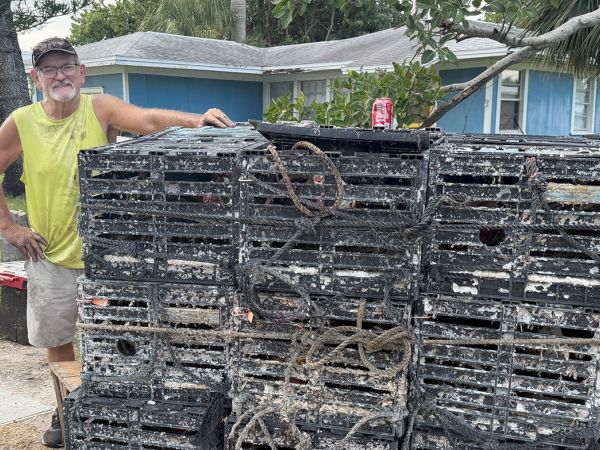


CORTEZ – The stone crab harvest begins on Oct. 15, when traps can legally be pulled from the water.
Commercial crabbers handle the bulk of the annual harvest, but for those recreational fishers who like to try their hand at catching the local delicacy, the Florida Fish and Wildlife Conservation Commission (FWC) has posted the following regulations on its website:
Recreational fishers ages 16 or older must complete a free online stone and/or blue crab trap registration before using the traps. Registration can be done at GoOutdoorsFlorida.com. Upon completion, each person will receive unique trap registration numbers that must be included on each trap along with the owner’s full name and address. This no-cost registration will allow FWC to collect important information about these recreational fisheries needed for future stock assessments and management decisions. Harvesters under 16 are not required to register but still must mark their traps with their name and address.
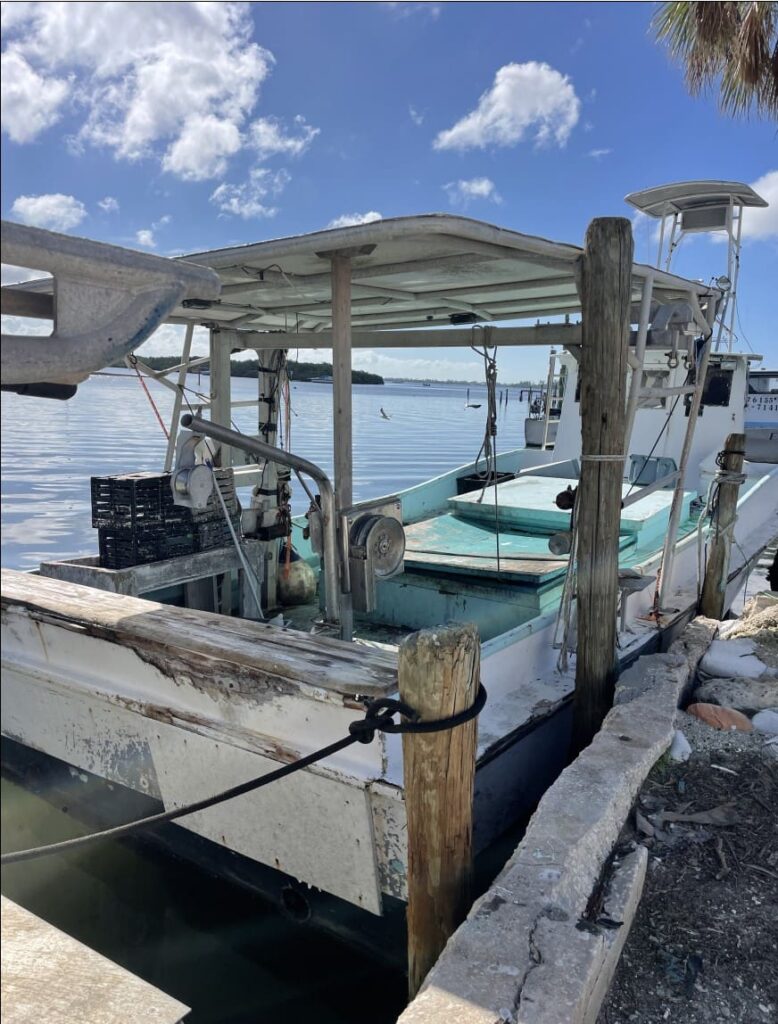
Size, catch limits
- Only claws may be harvested at a minimum size limit of 2 7/8 inches;
- The daily bag limit is 1 gallon of claws per person or 2 gallons per vessel, whichever is less. Harvest from egg-bearing crabs is prohibited;
- Traps may be placed in the water 10 days prior to the opening of the season, but may not be tended to until the start of the season when harvesting can begin; and
- Legal gear is a stone crab trap (maximum five per person), dip or landing net. Any device that can puncture or injure the crab body is prohibited.
Both claws of a stone crab may be harvested lawfully if they are of legal size, but this leaves the stone crab with a weakened defense against predators, so it is suggested that just one claw be harvested. Stone crabs grow back their claws.
Recreational trapping regulations
- Traps must be pulled manually (not by a trap-puller). Any vessel that is rigged with a trap-puller will be considered a commercial vessel and the appropriate licenses will be required;
- Traps must be pulled only during daylight hours; and
- Traps must not be placed in navigational channels of the Intracoastal Waterways, or in navigational channels maintained and marked by any county, municipal, state or federal governmental agency.
Trap specifications
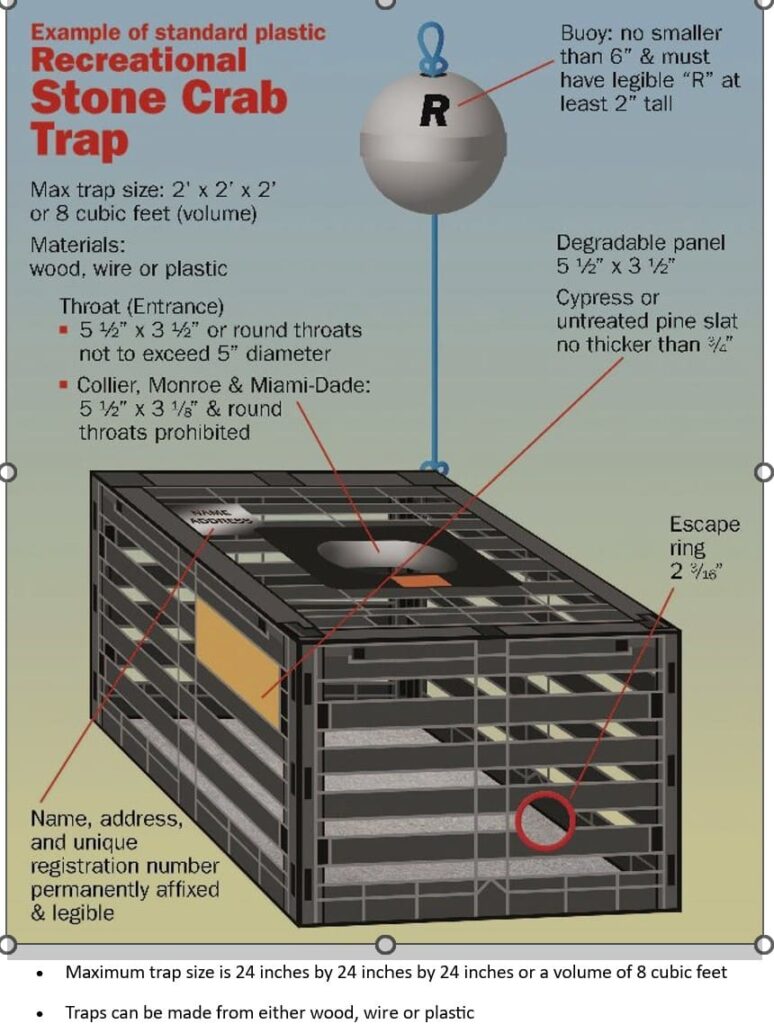
- Maximum trap size is 24 inches by 24 inches by 24 inches or a volume of 8 cubic feet;
- Traps can be made from either wood, wire or plastic;
- The throat or entrance must be 5½ inches by 3½ inches;
- If the throat or entrance is round, it cannot exceed 5 inches in diameter;
- The trap must have a degradable panel that is 5½ inches by 3½ inches and is made of cypress or untreated pine slat no thicker than ¾ of an inch;
- Wire traps must have at least three unobstructed escape rings (2 3/8 inches in diameter) located on a vertical side of the trap; and
- An unobstructed escape ring 2 3/16 inches in diameter to be located within a vertical exterior trap wall for all recreational and commercial plastic or wood stone crab traps is required.
Stone crab harvesting season runs through May 1, 2026.