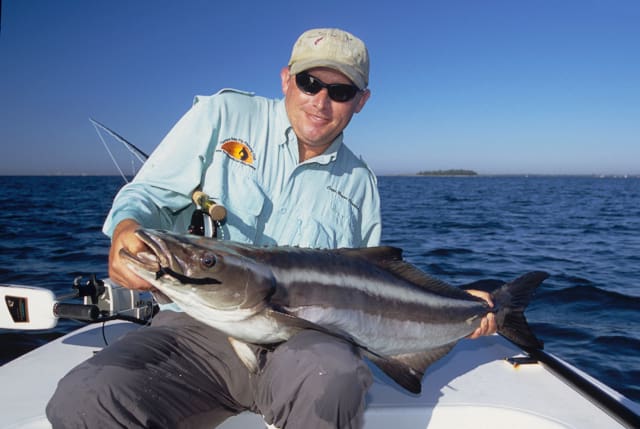
The first day of spring is March 20, and as local water temperatures warm with the approach of spring, local anglers need to be alert for cobia in area waters.
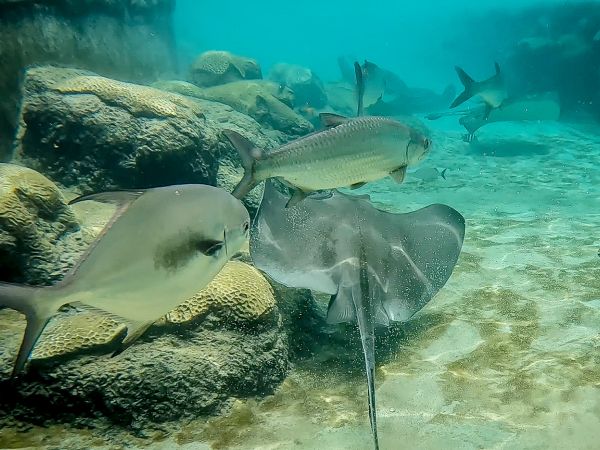
Often mistaken for shark, whose shapes and coloration they resemble, cobia are long and streamlined with a broad, flattened head. Their upper body is brown with a dark lateral line that extends through the eye to the tail. The brown color transitions to white on the belly.
Cobia range up to 6 feet long and can weigh more than 100 pounds. While most anglers target cobia in the Gulf, they range widely throughout local bays, particularly near local passes. Cobia spawn in the spring and early summer and feed on crabs, small fishes and squid.
The recreational and commercial bag limits for cobia in Gulf state waters is one fish per person or two cobia per vessel per day. The minimum size limit is 36” to the fork of the tail.
Cobia have a way of surprising anglers, so it’s wise to have a rig ready should you encounter one. Fly anglers who target cobia opt for at least a 10-weight outfit, although it’s possible to land smaller cobia on lighter outfits.
A favorite fly is a black bunny tied to resemble a small eel, one of their favorite foods. Anglers fishing conventional tackle most often use live baitfish and live crabs, another of their favorite foods. Cobia will also hit a variety of plugs and lures that imitate baitfish.
When fishing this spring, inspect any floating objects you come across like flotsam and buoys as well as structure including markers and artificial reefs.
Cobia are worthy adversaries for local anglers. They can show unexpectedly and be hard to target but put up a terrific battle. Smaller cobia make great table fare but make sure you limit your catch and carefully release any cobia you don’t intend to eat fresh.