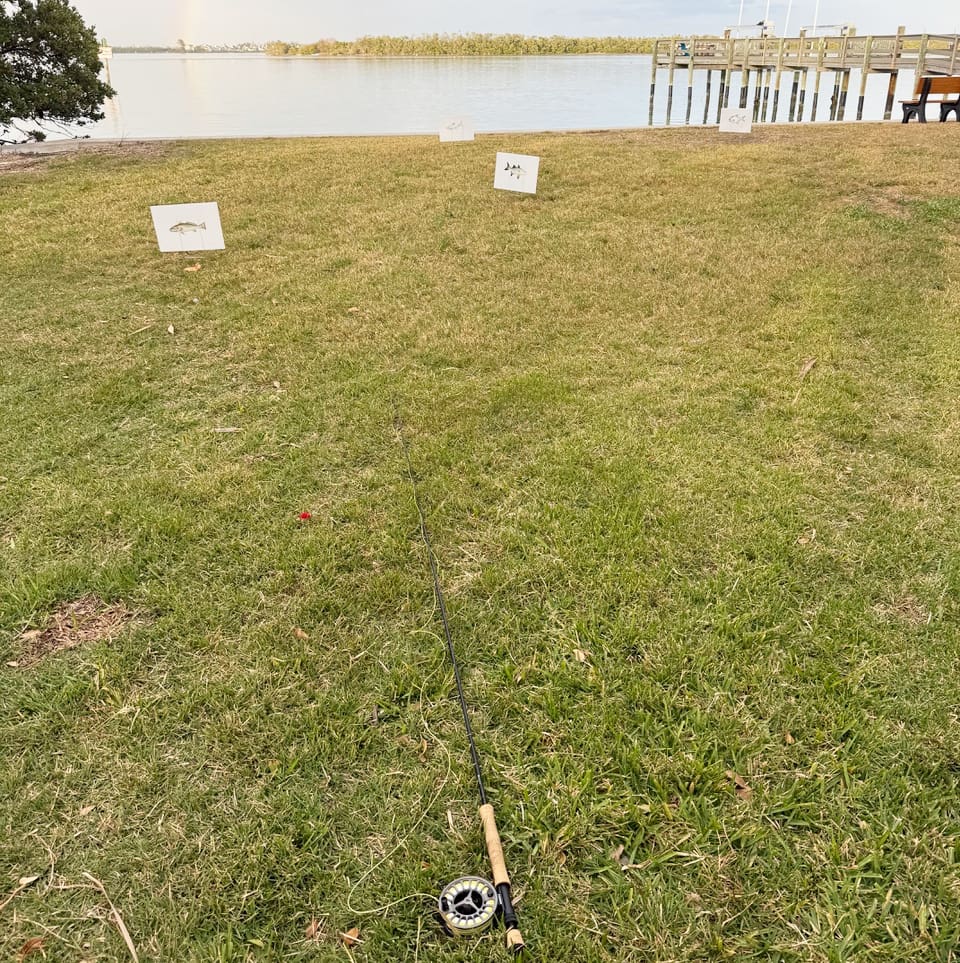
It’s one of the fastest growing segments of the angling industry, a test of the mettle of angler and tackle. Fly fishing dates back to very early times, but its popularity has skyrocketed in recent years.
Fly fishing in the salt dates back to the early 1940s when anglers like Joe Brooks, John Alden Knight, Ted Williams and Jimmie Albright began perfecting techniques to take bonefish, tarpon and permit in the Florida Keys. It’s a short history, but one rich in tradition.
Anglers have discovered that flies can take the gamut of saltwater species. When I first started fly fishing, I remember local guides telling me, “Bring your fly rod along in case the fish are in a feeding frenzy.” Now, many local guides prefer to fish fly anglers and realize that they are happy to get opportunities to present flies to fish and it’s not always about the number of fish caught.
Choosing tackle
Before buying tackle, it’s useful to understand the nomenclature of the sport. While spinning and bait-casting tackle are rated according to the breaking strength of the line, fly fishing outfits are rated according to the weight of the line used.
With conventional tackle, the weight of a lure or live bait propels the line and offering to their target, while in fly fishing, it’s the weight of the line propelled by the flex of the rod that carries the line, leader and fly to the target.
The weight system (rod, line and reel) generally starts with a #2, suitable for panfish and trout in small freshwater streams, to a #14, which is used for giant bluefin tuna and marlin. The most versatile outfit for fly fishing in Florida saltwater is a 7,8 or 9 weight. The line and rod are generally matched although a reel can be rated for multiple weights, for example 7-9. If you’re pursuing larger fish like cobia or king mackerel, a 10 weight would be the best choice. You’ll want to step up to an 11 weight or 12 weight if you’re pursuing the tarpon that frequent our area from May through July and often run over 100 pounds.
A reputable tackle dealer like AMI Outfitters on Anna Maria is a must when purchasing fly tackle. You need the kind of salt resistant tackle that will survive the rigors of the ocean and bays, and while you don’t have to buy the most expensive tackle on the market, good quality gear is a must.
Try different outfits and buy the one that feels “good in hand” and is the best quality you can afford. Next week, we’ll discuss the basic cast and the importance of practice.
Many of us take the tackle we fish with for granted, but it wasn’t long ago that anglers didn’t have the choices we have today. In the early days of saltwater fly fishing, there were no pre-made rods available, anglers had wrapping machines and would build their own rods from blanks made by US Fiberglass. Lefty Kreh and Flip Pallot remember how they would take a blank, wrap the guides, glue the individual cork rings, turn and sand them on lathes and head to the street to try them out. It was a common practice to make a few casts, find the rod too whippy or a guide that trapped line, and immediately break them apart and rebuild them. By constantly experimenting with different guides, blanks, and other components, they essentially advanced the technology of rod building. Many of the spin and plug casting rods they also built gave them ideas that they incorporated into fly rods. Companies like Shakespeare and Fenwick were aware of these pioneering anglers, who competed for 12 months of the year and had representatives like Ben Hardesty work closely with them, making the new innovations in rod design available to a larger angling public.
In the early days, there were no pre-made rods. – Rusty Chinnis | Sun
Fly reels were also very basic and required constant refinements to handle the rigors of the salt. The Pflueger Medalist, Taurus, Hardy, Zenith and Rogue reels of the day required anglers to modify the inadequate drags and spools to fight and land the big fish they encountered. Some had metal drags (Rogue), while others used clickers (Hardy) and had drag adjustments in the handles (Taurus and Rogue). One of the solutions they discovered was to use greases with different viscosities on the center post of a reel in order to defeat the friction and subsequent heat developed when fighting big fish. Never Seize, used on the shafts of a ship’s propeller, was one of the products Kreh remembers using. Pallot recalls the automotive product STP having the perfect viscosity, with the addition of a few drops of gasoline. Time and time again it would be an angler from one of the fly clubs (fishing for a MET record) that would come up with an innovation that would advance the sport. One of the fishermen’s favorite gathering places, where many of the new ideas were discussed, was Mel Shapiro’s fly shop on Bird Road in South Miami.
Fly lines of the day had advanced from the days when they were spun by hand from horsehair in a Cortland factory. The invention of nylon created stronger tapered lines that were coated with PVC. By 1954, Leon Martuch (Scientific Anglers) had patented a device to vary the coating on level fly line cores and followed with the addition of micro-balloons in the early 60s which allowed the line to float.
A big problem for fly anglers was finding a fly line to match to their rods and reels. At the time, lines were not standardized. Fly anglers had to own many different lines for the various species they targeted. Cortland, Shakespeare, and Sunset all made lines the anglers used but in those days, there was no rhyme or reason to the weights and tapers. Myron Gregory, a leading tournament fly caster from San Francisco, was responsible for suggesting a standardized system. He recommended using numbers to determine line size instead of the confusing line lettering system that was in use at the time. Lefty remembers the long passionate letters Gregory would write to him, Pallot, Ted Trueblood, Al McLane and others, extolling the virtues of a line system. He also marshaled the outdoor writers of the time to pressure the line and rod manufacturers to adopt the system. Gregory was a true pioneer and one of the first anglers Lefty remembers who used a shooting head. At the time, fly anglers could never just take a fly line from the package and fish with it. Every line available had to be modified to the particular use for which it was intended. Anglers would make the heads and tapers longer or shorter, and splice in different size running lines. Pallot remembers that at the time, all running lines, despite the fly line size, were standardized. In order to create the line he preferred, he would splice a product called “Amnesia” to the line. At that time all monofilament line, according to Lefty, was as kinky as a coil spring. “Amnesia,” which had less memory, could be stretched and straightened into an effective running line.
In the early 60s, Pallot and his friends would fish for tarpon off the bridges in the Keys. In those days, as today, the fish would lie in the shadow lines and wait for food to be swept to them by the tide. The big difference was that it wasn’t uncommon for tarpon to swim 20 feet to inhale one of the “chicken feather” creations the anglers cast. Because they lost so many fly lines to the bridge fenders, Pallot and his angling buddies would create their own lines. They would stretch 500-pound monofilament line beside a G2AF fly line and sand in the taper with Emory cloth. At the time they didn’t realize that it was the weight of the line as well as the taper that really mattered. As always, they innovated with the materials they had on hand.
While technology played a big role in the advancement of fly tackle and techniques from the 1950s to the present, it was the often-unheralded competitive anglers that spurred the creation of the tackle we enjoy today. Modern saltwater fly anglers owe a debt of gratitude to Kreh, Pallot and the men and women who continue to add to our collective knowledge. The next time you make a successful cast to a school of tarpon you’ll have a new appreciation for the line that effortlessly unrolls into the twenty-knot wind, the silky smooth drag and the bend of the rod as the line rooster-tails to the horizon.
No two people are more knowledgeable about the origins of modern saltwater fly tackle than Lefty Kreh (passed in 2018) and Flip Pallot. I was fortunate a few years ago to interview these two living legends about the early days of saltwater fly fishing, and the development of the tackle we enjoy today.
The modern saltwater fly angler has a problem, just like his predecessor in the early days of the sport. Back in the late ’50s and early ’60s, when competitive anglers were discovering the remarkable variety of saltwater species from Miami to Key West, their problem was finding dependable tackle. Today’s anglers, on the other hand, are hard-pressed to keep up with all the innovations in tackle. There are literally hundreds of rods, reels, lines, and gadgets available. Exotic rod labeling systems denote rod stiffness and flex. Fly reels feature advanced sealed drag systems with space-age materials and are filled with computer designed fly lines which are available in mind-bending quantities. In short, saltwater anglers today have to figure out what to use, anglers in the ’60s had to find something to use.
Less than fifty years ago, there was essentially no specialized equipment available to the pioneers in the field. The innovations that we enjoy today are the results of their determination and love of the sport, combined with a healthy dose of competitive spirit. Flip Pallot grew up fishing the waters of South Florida from Miami, to the Florida Keys. He witnessed first hand the fabulous angling opportunities and experienced the advancement of fly tackle beginning in the late ’50s.
Lefty Kreh came to Miami in October of 1964 to run the Metropolitan South Florida Fishing Tournament (MET). He helped the local pioneers realize the potential of fly fishing in saltwater while contributing to their awareness of casting to angling success. Both men lived, fished, and experimented with the anglers who fostered the innovations that have led to our modern tackle.
Lefty Kreh & Flip Pallot were best friends and are fly fishing legends. – Rusty Chinnis | Sun
Kreh and Pallot both agreed that the MET was the driving force behind most of the advancements. The MET was the brainstorm of the Miami Beach Rod & Reel Club. The tournament was established in 1935 to promote local angling opportunities and would send pictures of prize-winning anglers to papers throughout the nation in the hopes of convincing people to move to south Florida. The MET was the only public record keeping body in its day.
Several fishing clubs, including the Tropical Anglers, the Miami Sport Fishing Club, and the Miami Beach Rod & Reel Club, were composed of blue and white collar workers who competed every 6 months in three divisions: spin, plug, and fly. There were no cash prizes at the time, but winners received press and appeared on television. Most of the techniques and tackle developed in the “Hey Days,” from 1960-70, were the result of competition between these anglers. Florida Keys guides like George Hommell, Stu Apte, Jimmy Albright, Cecil Keith, and Jack Brothers, advanced their methods of locating and catching saltwater game fish using the ideas and innovations provided by the light tackle clubs, their competitions, and clinics.
Many of the local club members including Pallot, Norman Duncan, Norm Jansik, John Emory, and Chico Fernandez would come to Lefty’s house and practice casting in the street. The first rod the anglers used was a resin impregnated bamboo rod from Orvis called a “G2AF Shooting Star.” The first fiberglass rod they used (as a fly rod blank) was developed by Henry Orr, and was known as the “Spinmaster.”
Lee Cuddy was one of the most influential innovators of saltwater fly rods during the ’60s and ’70s. Kreh, Pallot and other fly anglers would frequent his rod component store, J. Lee Cuddy’s, on Coral Way in Miami. Cuddy supplied the anglers the raw materials (blanks, reel seats, guides and cork) they used to build rods. Kreh, Pallot, John Emory (who worked at the store), and other local competitive anglers in the area, would constantly build and experiment with rod designs.
Since there were no pre-made rods available, anglers had wrapping machines and would build their own rods from blanks made by US Fiberglass. Kreh and Pallot remember how they would take a blank, wrap the guides, glue the individual cork rings, turn and sand them on lathes, and head to the street to try them out. It was a common practice to make a few casts, find the rod too whippy, or a guide that trapped line, and immediately break them apart and rebuild them. By constantly experimenting with different guides, blanks, and other components, they essentially advanced the technology of rod building. Many of the spin and plug casting rods they built gave them ideas that they incorporated into fly rods. Companies like Shakespeare and Fenwick were aware of these pioneering anglers, who competed for twelve months of the year and had representatives like Ben Hardesty work closely with them, making the new innovations in rod design available to the angling public.
Privacy choicesWe use Google Analytics to understand readership and improve the website. Analytics cookies are optional and can be accepted or declined.Privacy Policy