
Tag: EPA

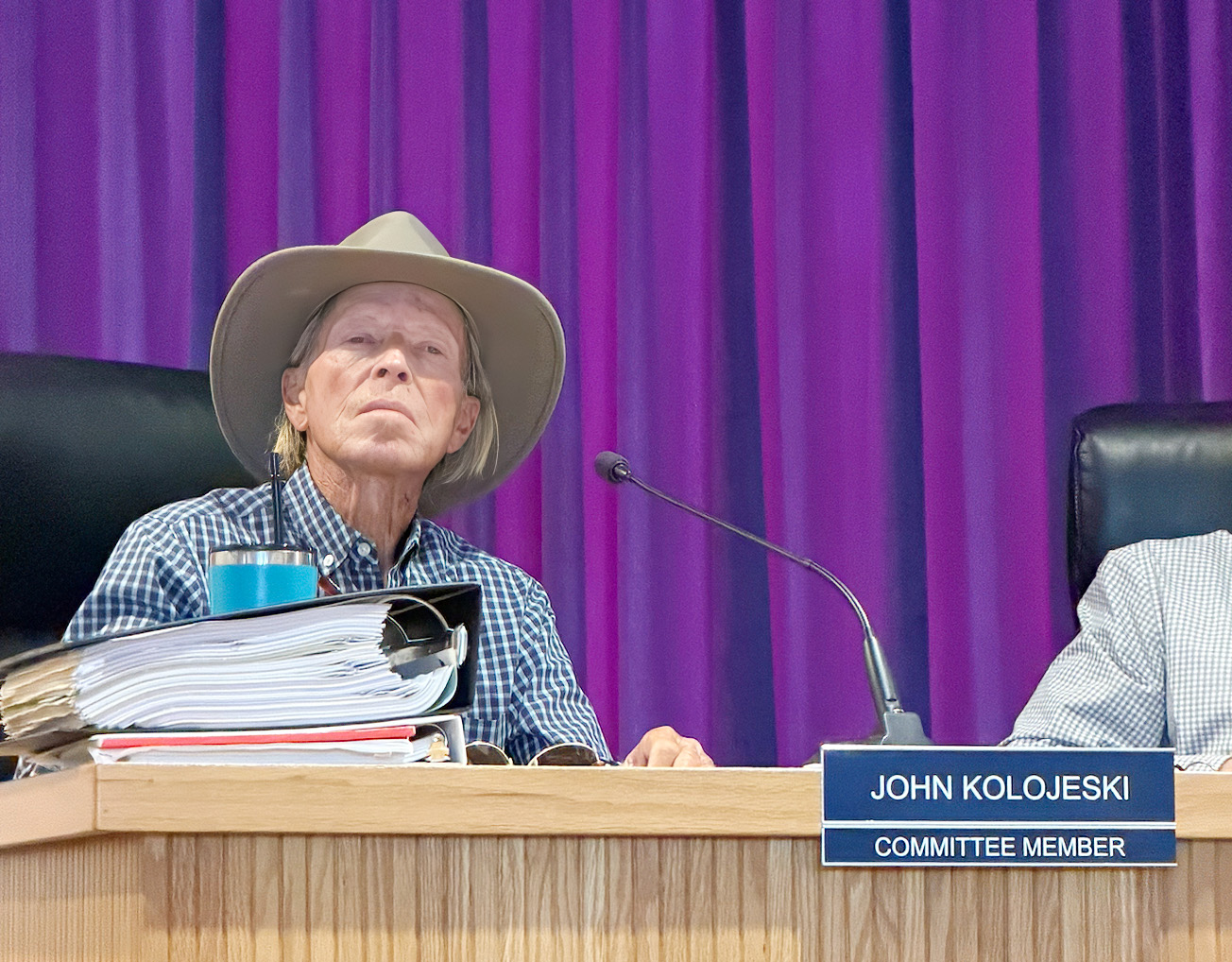
Profiles In Conservation: John Kolojeski

There could be no better person to begin this series of “Profiles in Conservation” than Anna Maria’s John Kolojeski. Here is an individual who has had an outside influence on protecting our environment and water quality, not only on Anna Maria Island, but throughout his distinguished career. 

John was among the founding members of the city of Holmes Beach’s Clean Water Ad Hoc Committee that held its first meeting on December 15, 2021. The volunteer committee John serves on acts as an advisory board for the city commission, with a focus on community education and outreach and encouraging governmental and community actions that improve and protect our water quality. 

I first met John at a support group meeting over 10 years ago, but it wasn’t until recently that we reconnected through our shared interest in water quality. Here is a man who doesn’t wear his achievements on his sleeve. He is a quiet achiever who lets his work speak for itself. Having said that, I think it’s important to highlight some of his impressive accomplishments.

During the Richard Nixon era in the early 1970s, John served as the deputy general counsel and chief of litigation for the U.S. Environmental Protection Agency’s Office of Pesticides, Toxic Substances and Solid Waste Management. This was a senior legal role at the EPA, overseeing litigation in some of the agency’s most consequential regulatory areas. 

John later became special assistant to the assistant administrator for water and hazardous materials and chaired the EPA work group that developed the original list of toxic pollutants under the Federal Water Pollution Control Act (the Clean Water Act).

After leaving the EPA, John took a one-year leave to teach (at the deans’ request) at the Harvard School of Public Health, where the administrator gave him wide latitude, including taking charge of creating a list of priority pollutants which became the famous “list of 65” – a list of man-made chemicals that is often been mentioned during the Clean Water Ad Hoc Committee’s discussions about the PFAS pollutants found in our drinking water, natural waters and many of the products we buy and use.

John then started Clement Associates Inc., one of the early pioneering environmental and scientific regulatory consulting firms in the world. This endeavor was a result of John seeing the need for expert scientific witnesses during his tenure with the EPA. 

We all owe a debt of gratitude to the men and women like John Kolojeski who champion protecting the water and natural resources that support our lives and those of future generations. 

Now, more than ever, it’s important for citizens to demand of elected officials the basic environmental protections that are being loosened for profit. 

I don’t think it’s an overstatement, as I’ve said before, to consider this a moral imperative.

Suncoast Waterkeeper opposes fish farm

In a press release last week, Suncoast Waterkeeper and a coalition of ocean advocates announced their opposition to what they called a bait-and-switch permit application for the Velella Epsilon industrial finfish aquaculture facility 40 miles off the Sarasota coast. The press release explains, “Florida fishermen; homeowner association leaders; business owners; community and clean water advocates; other concerned residents, and visitors to the Gulf coast gathered today to protest a “bait-and-switch” on the terms of an Environmental Protection Agency (EPA) permit that was issued for wastewater discharge from the Velella Epsilon industrial finfish aquaculture facility. The open cage fish farm operation is planned for construction about 40 miles off the Sarasota County, Florida coast. Ocean Era, the company that requested the permit, recently informed EPA that it plans to swap out both the kind of fish to be raised and the type of facility to be constructed.”

Groups challenging the permit in ongoing litigation included Food & Water Watch, Center for Food Safety, Healthy Gulf, Recirculating Farms, Sierra Club, Suncoast Waterkeeper and Tampa Bay Waterkeeper. The parties sent a letter to the EPA on June 7 urging the agency to void the existing permit and do an entirely new impact assessment, with a public comment period. The letter states:

  • “…on May 10, 2023, Ocean Era expressly acknowledged that it does ‘not intend to implement the project as currently permitted (i.e., with almaco jack or a SPM net pen system)’ and instead requested to alter both the species of fish proposed to be raised by Ocean Era (changing from almaco jack to red drum) and the type of net pen system utilized for the facility (changing from a swivel-point mooring system to a grid mooring system).
  • “Accordingly, we hereby call upon EPA to exert its jurisdiction and authority under the Clean Water Act to revoke NPDES Permit FL0A00001 in its entirety, in light of Ocean Era’s explicit admission that it will not — indeed, as a practical matter, it cannot — implement the project as currently permitted.”

Suncoast Waterkeeper opposes fish farm
Justin Bloom, founder of Suncoast Waterkeeper, addresses attendees at the fish farm press conference. – Samantha Wassmer | Submitted

Attending the press conference, Justin Bloom, founder and board member of Suncoast Waterkeeper, stated, “Notwithstanding the major changes to the project proposal, this permit is flawed and not adequately protective of the environment and our coastal communities that rely on clean and healthy waters. The new changes are equivalent to an entirely new project and make it clear that the permitting agencies should require a new permit proposal.”

Also present was Dr. Neal Schleifer, vice president of the Siesta Key Condominium Council (SKCC), representing over 90 associations and 7,000 residences.

“The changes should result in revocation of the permit, which is widely opposed by residents and local municipalities as a danger to the environment and local economy,” Schleifer said. “The changes introduce new issues and question the credibility of previous company information. Imagine the potential problems if this facility existed during Hurricane Ian or the subsequent massive red tide outbreak.”

Dr. Larry Allan, Manatee-Sarasota Sierra Club steering committee member and wildlife photographer, repeated what so many in the crowd said in some form or another.

“It’s not aquaculture I oppose in general, but the proposed placement of this project – no matter what kind of fish or what kind of open cage – just offshore from an area plagued with annual red tide blooms makes absolutely no sense for anyone,” Allan said.

While the lawsuit is currently on hold pending an EPA review of the Velella Epsilon project changes, Marianne Cufone, director of recirculating farms, steering committee member of the Don’t Cage Our Oceans coalition and a Florida attorney on the lawsuit, was in Washington, D.C.  at the time of the event discussing offshore finfish farming bills.

“EPA should withdraw the permit it issued for the Velella Epsilon industrial finfish aquaculture facility and do a full environmental review of the new plans, including meaningful opportunities for public input, to fully consider all the potential impacts and alternatives,” she said.

If you would like more information on the pending permit and project, contact Justin Bloom at 917-991-7593 or bloomesq1@gmail.com, Casey Streeter at 239-333-8832 or casey@floridawatermen.org, Cris Costello at 941-914-0421 or cris.costello@sierraclub.org and  Shane Tan at shane.tan@berlinrosen.com.