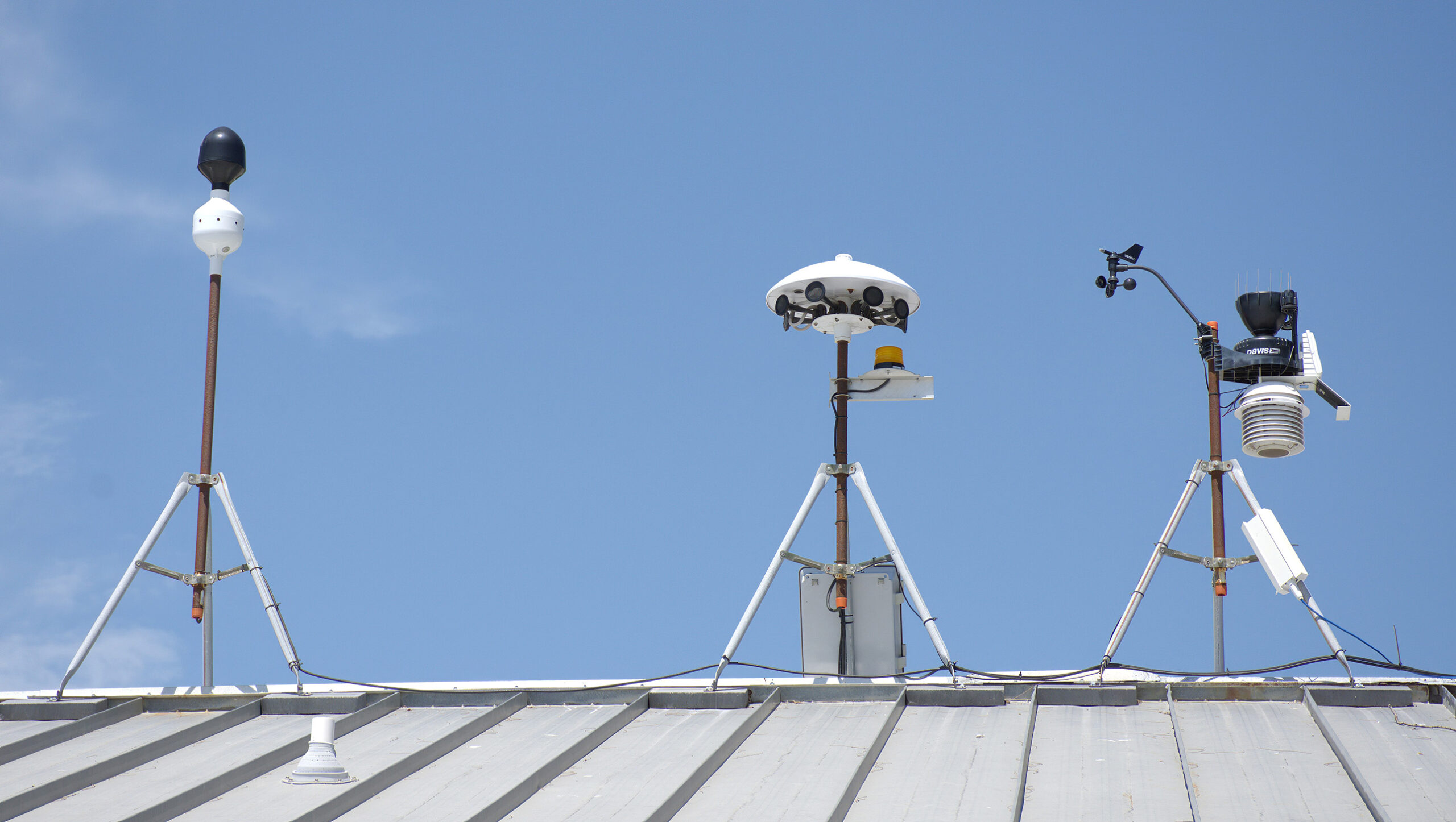
ANNA MARIA ISLAND – The Thor Guard lightning detection systems at Manatee County beaches on Anna Maria Island can predict a lightning strike up to 20 minutes before it happens, giving lifeguards time to clear the beach before a storm arrives.
Protecting Island beachgoers from lightning strikes is one of Manatee County Beach Patrol and Aquatic Safety Division Chief Chet Brown’s top priorities.
“One person being struck by lightning is too many,” Brown said. “I have a family member that was killed by lightning. My grandfather was. So, it’s something that resonates with me. I know what can happen to people in lightning storms.”
On July 3, a lightning strike killed a 51-year-old man on Fort Myers Beach and sent three of his family members to the hospital with injuries, according to the Lee County Sheriff’s Office. Florida is often referred to as the lightning capital of the United States. According to the National Lightning Safety Council, an average of 50 people in Florida are struck by lightning per year and roughly 10 of those strikes are fatal.
That’s why Brown pushed to install Thor Guard lightning detection systems last year at Manatee Beach in Holmes Beach and at the Beach Patrol headquarters across the street from Coquina Beach in Bradenton Beach. Having the Thor Guard system in place has changed the way beachgoers are warned about potential lightning strikes.
“We didn’t have anything out on the beach to warn people. It was us verbally warning people when we thought there was going to be lightning in the area,” Brown said. “This system tells us there’s lightning coming and we need to clear the beach.”
Brown said most weather apps alert users only after a lightning strike has already happened within a few miles. The Thor Guard system reads the electrical charge building in the atmosphere and predicts a strike before it occurs, typically giving lifeguards a 10-20 minute warning.
When the system detects a lightning risk, one long horn blast means clear the beach. Three short horns mean it is safe to return. When the horn sounds, lifeguards move up and down the beach in trucks, sheltered from exposure themselves. Brown said he is careful about how far he lets his own staff push into a storm.
“We can only do so much. For the safety of the staff, because I want to make sure our lifeguards are safe and protected as well,” he said.
Since no warning system is 100% accurate, Brown advises beachgoers to keep an eye on their own weather apps as a backup.
Manatee County now has Thor Guard systems protecting Manatee Beach, Cortez Beach and Coquina Beach on Anna Maria Island. The systems have also been installed at the county’s outdoor public pools and at four splash pads, with more installations anticipated.
Brown said getting county funds to purchase the Thor Guard systems for the Island beaches was relatively easy. Each unit costs approximately $30,000 to $32,000, a one-time cost rather than a subscription.
“Once I explained the importance of having a redundancy of safety features, it wasn’t difficult to get my administrator to approve it,” he said.
THOR GUARD INSIGHTS
When contacted by The Sun, Thor Guard President and CEO Robert Dugan said the system measures the positive energy building in the ground and in the atmosphere and compares it to the energy gathering at the top of a thunderhead. It samples that activity 170,000 times a second and detects the precise moment the charge stops receding and starts to build toward a strike.
“All the other systems see a lightning strike and react to it,” Dugan said. “They can’t tell you where the next one’s going to strike. What we do is read the electrical data going on in the atmosphere.”
The system will not issue its all-clear signal until that energy has fully dissipated, even if the sky has gone blue and a storm appears to have passed. Dugan said the system can also detect what he calls “bolt out of the blue” strikes – lightning that can travel 50 miles or more from a storm that can’t be seen yet.
Dugan said Manatee County has gone a step further than most Thor Guard clients by feeding its system data into the Peregrine emergency management platform that also tracks electrical stations, water pumps and offshore buoys on a single map during storms and hurricanes. Dugan said that is a level of integration few other counties have matched.
A TEAM EFFORT
Brown said protecting beachgoers takes a team effort: “It takes everybody doing their part to make sure we’re successful every day.”
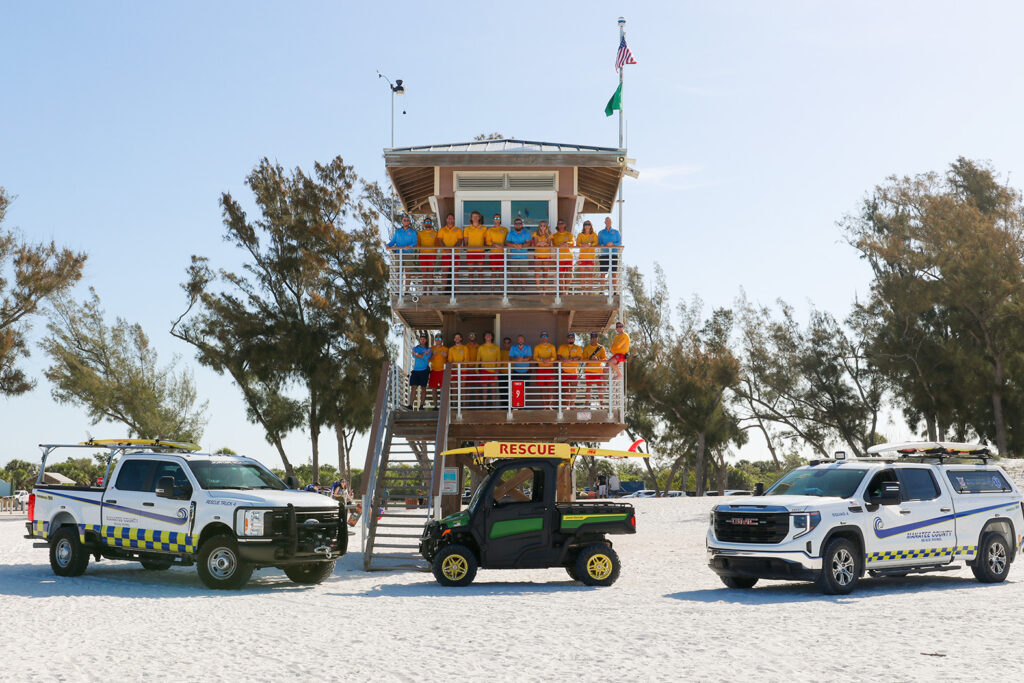
His message to families heading to the beach this summer is simple: Check the weather conditions before you leave the house, pay attention to the warning flags and signals, swim near a lifeguard and clear the beach the first time the horn sounds.
“We’re doing this for their safety,” Brown said. “We want them to come to our beaches, enjoy them and be able to go home at the end of the day.”
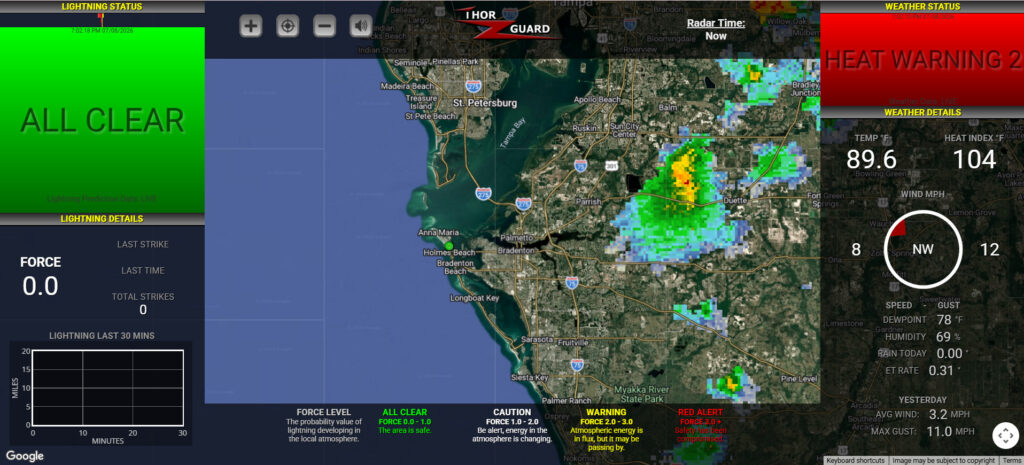
Manatee County’s Thor Guard data is public. Real-time lightning prediction and weather readings for the county’s beaches can be viewed at the county’s Thor Guard webpage. Beachgoers can also check flag conditions and lifeguard tower status in real time at safebeachday.com.