

Tag: Cortez FISH Preserve

FISH Preserve being restored following hurricanes

FISH Preserve being restored following hurricanes

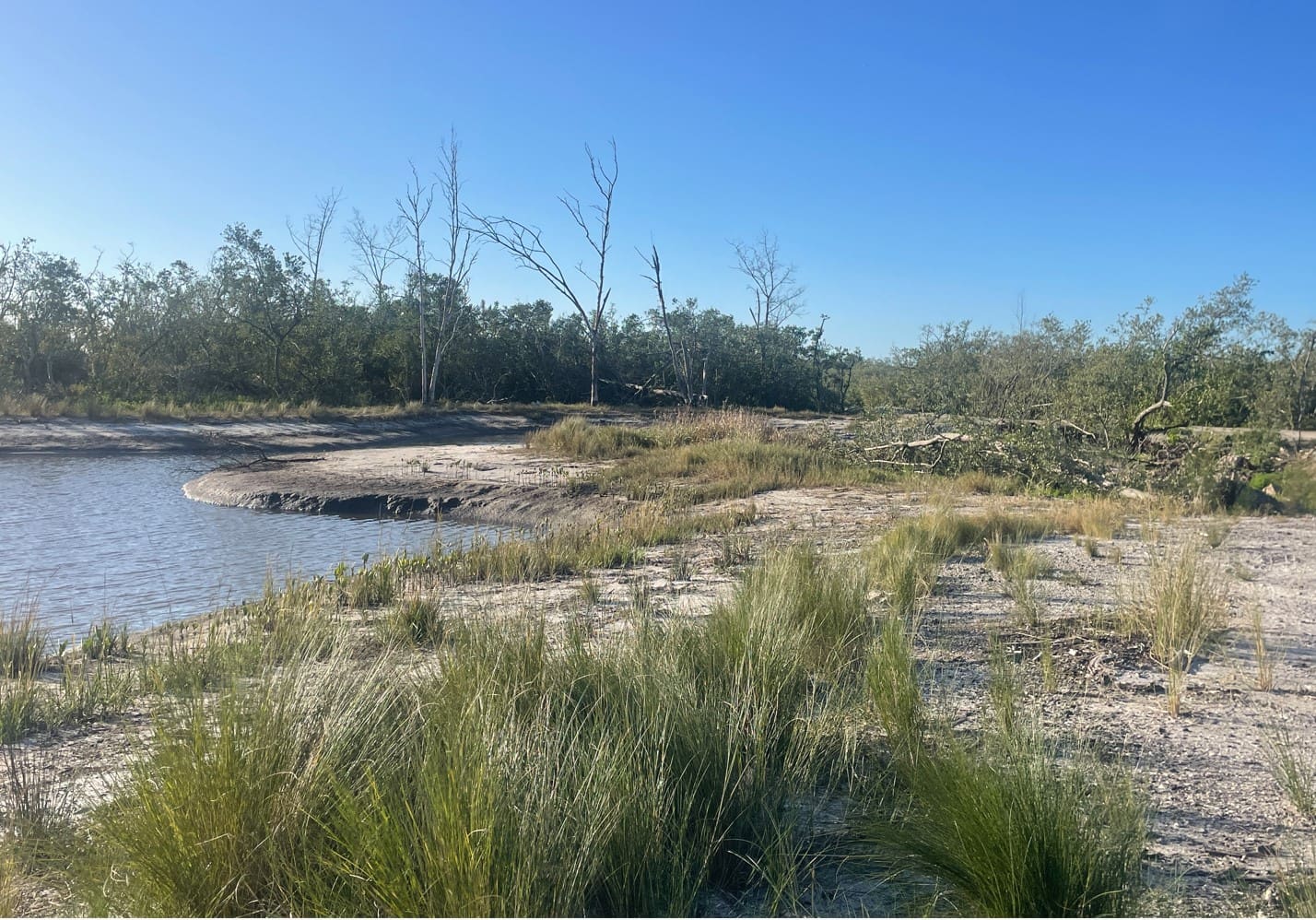
CORTEZ – The recent hurricanes took their toll on the 98-acre FISH (Florida Institute for Saltwater Heritage) Preserve.

Allen Garner, a retired landscape architect who has been working on the preserve for many years, gave a report on the post-hurricane impact at a Jan. 6 FISH meeting.

“The hurricanes were just the beginning in a whole new era in our history as far as the preserve goes. The amount of devastation plus what’s carrying through into other things has been very significant,” Garner said.

He said the trees have thinned out to such an extent that very few shady areas remain.

“You might be able to find some shade in some patches of the mangroves, but it’s very sunny out there,” Garner said.

He said the preserve is losing weakened native pine trees due to an infestation of beetles.

“The native pine trees in the preserve, we’re losing nearly all of those, and the reason for it is because of a little beetle called an ips beetle that’s always around and they bore into the trees and lay their eggs,” he said. “In a healthy pine tree, the sap is toxic basically to the water bug, it kills it off. But if the tree’s weakened from sitting in salt-saturated soil and it’s too weak, then the larva win.”

He said mature pine trees are turning brown.

“The pines didn’t die from the salt water,” Garner said. “They got weakened and the beetles moved in and that’s what’s killing them off. They’re dying now rather than three months ago.”

Due to the abundance of sunlight reaching the soil, there has been a proliferation of seed distribution.

“Everything is starting to sprout, both good and bad,” he said. “The two things that have significantly started sprouting are the Australian pines and the mangroves. The mangrove seeds got everywhere. They’re sprouting on top of hills, between two crab traps, in our yards, in shell parking lots, all over.”

Garner had been working on removing the remaining Australian pines over the past several months.

“One of the things we’re going to have happening as we go into spring are the Brazilian pepper trees, the carrotwoods, all the invasive things. It’s going to be an overwhelming number and it’s going to be this year,” Garner said.

He suggested FISH hire one or two people to go through the preserve weekly over the next four or five months and pull out seedlings of the invasive species. Garner said spraying is not an option.

“The problem with spraying is we’re going to have all the good stuff sprouting too and we want to pull out the pepper trees and not pull out the native things,” he said. “Spraying becomes a bad overkill approach.”

He said by summer, the seedlings will be too big to pull out by hand.

Garner said he would have to train potential subcontractors, and he recommended FISH allocate funds for the new few months for the seedling removal project.

A motion to spend up to $1,500 a month for the next six months to pay one or two people to pull the unwanted seedlings was approved unanimously by the board.

Garner said for the past three months he has been doing mostly restoration of the preserve following the storms, but is making progress on the work funded by the Barancik grant.

In June of 2024, the FISH board approved a proposal by Garner to complete the public accessibility project at the FISH Preserve in fulfillment of a grant from the Barancik Foundation.

Garner is working on the following projects:

• Design and build two new bridges; one sufficiently strong and sized to accommodate both pedestrians and maintenance vehicles and the other for foot traffic;

• Grade and create 12,000 square feet of shell trails;

• Build a portable information kiosk;

• Create and install a FISH Preserve entrance sign, four education signs, four orientation signs and 12 trail markers;

• Build two picnic shelters;

• Provide and install four picnic tables and six benches; and

• Provide construction support for completion of the Bradenton Kiwanis-funded bridge.

“We have been putting pilings in and probably finish up the pilings tomorrow or the next day for the bridge,” he said at the Jan. 6 meeting.

Garner began the grant project in July.

The total budget for the project is $180,000 with the grant amount being $165,000 and FISH providing the additional $15,000. The grant application for the FISH Preserve Enhanced Public Access Project was approved on Feb. 9, 2024.

FISH board outlines successes, plans

FISH board outlines successes, plans

CORTEZ – It’s been a year filled with successes and a few challenges for the Florida Institute for Saltwater Heritage (FISH) as the board laid out plans for enhancements to the FISH Preserve at its annual membership meeting on May 13.

“We’ve been truly blessed from a financial standpoint,” FISH Treasurer Jane von Hahmann reported at the meeting.

Despite being rained out on the second day of the Cortez Commercial Fishing Festival in February, the non-profit netted $43,000, which supports the FISH Preserve. Von Hahmann also reported a $50,000 anonymous donation designated to help pay down the mortgage on Fisherman’s Hall and a portion of the preserve.

“We have some big projects coming up,” she said.

With a $165,000 grant from the Barancik Foundation, the preserve will have trails, two bridges and a picnic area installed. The funds must be used within 18 months. FISH is contributing an additional $15,000 to that initiative.

A donation from Kiwanis of $16,000 will possibly be used toward the cost of a third bridge.

“Phase IV of the preserve is finished; that’s the last and final phase of digging dirt. Now we have the job of connecting everything up with walkable trails,” she said. “Father and son Alan and Alex Garner have been doing work on planning improvements for the preserve for about a year, which includes signage at the preserve, an additional entrance sign and a kiosk where visitors can sign in and obtain educational materials. We are discussing the grand plan with a tower and possibly a canopy walk. We have some big ideas.”

Von Hahmann also noted the November 2023 donation of $50,000 for trails and bridges at the preserve from Dr. Terry Bert, the wife of the late John Stevely. Stevely was one of the original FISH board members.

FISH’s goal for the recent Giving Challenge of $15,000 was exceeded; the organization received nearly $20,000.

Board member Karen Bell gave a festival report.

“It was a good festival, as good as it could be considering the rains,” Bell said.

Bell said FISH donated $4,000 to the Organized Fisherman of Florida for their help in setting up the festival.

Bell also gave an update on the progress of the refurbishment of the old volunteer fire station.

“The fire station used to be Cortez’s only fire station,” she said. “I remember they used to have in the fall, maybe two or three or maybe four mullet fries. It was so cool, the ladies used to bring pies or cakes and big pots of coffee.”

The volunteer fire department had been owned by Anna Maria Fire District and in their deed the building had to go to another non-profit, according to Bell.

“It was deeded to the Florida Institute of Saltwater Heritage,” Bell said. “By fall we should be ready to use it. It’s nice to see it come back to life.”

Cortez FISH Preserve gallery

Wetlands at the FISH Preserve - Cindy Lane | Sun

Wetlands at the FISH Preserve - Cindy Lane | Sun

New mangrove - Cindy Lane | Sun

New mangrove - Cindy Lane | Sun

White pelicans - snowbirds - and native brown pelicans at the FISH Preserve. - Cindy Lane | Sun

White pelicans - snowbirds - and native brown pelicans at the FISH Preserve. - Cindy Lane | Sun

Birds hunt for mullet at the FISH Preserve - Cindy Lane | Sun

Birds hunt for mullet at the FISH Preserve - Cindy Lane | Sun

An osprey hunts at the FISH Preserve. - Cindy Lane | Sun

An osprey hunts at the FISH Preserve. - Cindy Lane | Sun

Native plants are replacing invasive species. - Cindy Lane | Sun

Native plants are replacing invasive species. - Cindy Lane | Sun

A mangrove island forms off the FISH Preserve. - Cindy Lane | Sun

A mangrove island forms off the FISH Preserve. - Cindy Lane | Sun

Wetlands at the FISH Preserve - Cindy Lane | Sun

Wetlands at the FISH Preserve - Cindy Lane | Sun

Wetlands at the FISH Preserve - Cindy Lane | Sun

Wetlands at the FISH Preserve - Cindy Lane | Sun

Wetlands at the FISH Preserve - Cindy Lane | Sun

Wetlands at the FISH Preserve - Cindy Lane | Sun

FISH Preserve from Sarasota Bay - Cindy Lane | Sun

FISH Preserve from Sarasota Bay - Cindy Lane | Sun

Juvenile fish are protected in the FISH Preserve wetlands. - Cindy Lane | Sun

Juvenile fish are protected in the FISH Preserve wetlands. - Cindy Lane | Sun

FISH Preserve wetlands draw white ibis and other shorebirds. - Cindy Lane | Sun

FISH Preserve wetlands draw white ibis and other shorebirds. - Cindy Lane | Sun

A turkey vulture at the FISH Preserve. - Cindy Lane | Sun

A turkey vulture at the FISH Preserve. - Cindy Lane | Sun

Mangroves have been planted at the FISH Preserve, part of many efforts to restore the bayfront land to a natural state. - Cindy Lane | Sun

Mangroves have been planted at the FISH Preserve, part of many efforts to restore the bayfront land to a natural state. - Cindy Lane | Sun

The FISH Preserve from Sarasota Bay - Cindy Lane | Sun

The FISH Preserve from Sarasota Bay - Cindy Lane | Sun

The eastern boundary of the FISH Preserve. - Cindy Lane | Sun

The eastern boundary of the FISH Preserve. - Cindy Lane | Sun

The FISH Preserve is nearly 100 acres east of 119th St. W. in the historic fishing village of Cortez, whose residents began raising money more than three decades ago to purchase the land, one plot at a time, with proceeds from the annual Cortez Commercial Fishing Festival held each February.

FISH, the Florida Institute for Saltwater Heritage, intended the preserve to create a buffer between encroaching development and Sarasota Bay, known as “The Kitchen,” because Cortezians find much of their food there.

FISH continues to work on restoring and expanding the preserve, clearing it of invasive species, planting native vegetation and working on plans for hiking and kayak trails.

FISH Preserve opens officially with ribbon-cutting

FISH Preserve opens officially with ribbon-cutting

CORTEZ – In the culmination of more than two decades of planning, fundraising and hard work, the Florida Institute for Saltwater Heritage hosted a ribbon-cutting ceremony at the FISH Preserve on Nov. 3.

At nearly 100 acres, the preserve is on the south side of Cortez Road, an oasis of natural beauty in stark contrast to the multiple construction projects nearby. The preservation and non-development of the preserve, adjacent to the Cortez fishing village and bordering the waters of Sarasota Bay, was precisely the goal of FISH members in 2000 when they began fundraising to purchase the property.

“The FISH Preserve came close to getting paved over by developers, however, the community came together to purchase the property in the nick of time,” according to the FISH website.

The invitation-only ribbon-cutting featured speakers Dr. Dave Tomasko, director of the Sarasota Bay Estuary Program (SBEP); Dr. Jay Leverone, staff scientist with SBEP; FISH Treasurer Jane von Hahmann; EPA Region 4 Regional Administrator Jeaneanne Gettle and Manatee County Commissioner and SBEP policy board member Kevin Van Ostenbridge.

A special guest at the ribbon cutting was Dr. Theresa Bert, the widow of John Stevely, who was instrumental in the planning and purchase of the preserve’s parcels, and of the Cortez Commercial Fishing Festival that funded it.

Tomasko applauded what he said was the perseverance and resilience of the FISH board in making the preserve a reality.

“That’s what it takes to succeed,” he said. “This is the light at the end of the tunnel to keep what they had.”

“This is a celebration,” Leverone said. “It’s really moving to have this actually done.”

His participation with the project goes back 10 years.

“We paid for the plans and the permits and we were shovel-ready,” he said. “We were just waiting for the money for the shovels to start. That was the last hurdle we had to overcome. I guess I was the conductor, but I had a great orchestra behind me.”

Leverone said the Biden Infrastructure Law (BIL) funding of $700,000 was critical in the completion of Phase IV.

“We talked about preserving this; what it looked like before I’m not sure we wanted to preserve it,” he said. “Over time, it really needed a facelift. The goals of what we wanted this property to look like have finally become realized.”

Leverone said 10,000 native plants have been planted recently.

FISH Preserve opens officially with ribbon-cutting
Dr. Jay Leverone leads a tour of the FISH Preserve. – Leslie Lake | Sun

“We have committed the estuary program to one year of maintenance of the plants,” Leverone said.

“Finally, we’re not quite done. We have and we continue to look to foundation or public funding for bridges, trails, signage, kiosks,” he said. “We want to make this publicly friendly, publicly usable. We want people to come and enjoy this.”

Gettle said that the preserve is “an inspiring story for us all.”

Van Ostenbridge recalled his youth when the preserve land was a hangout for teens.

“I never thought at the time we’d ultimately be turning this into a wetland mitigation project; it was essentially a dump site and a hangout site in what we all assumed was going to a subdivision – a waterfront subdivision,” Van Ostenbridge said. “It’s thanks to the foresight of (former Manatee County) Commissioner von Hahmann and the FISH board that we ended up here and when EPA came up with the money, that we were shovel-ready.”

Plaques were presented to Leverone and Bert in recognition of their contributions to the preserve.

“In recognition of your outstanding dedication to the restoration of Sarasota Bay and the FISH Preserve and the Sarasota Bay Estuary Program and the Florida Institute for Saltwater Heritage,” Tomasko read from Leverone’s plaque.

“There’s one person that could not be with us today,” von Hahmann said. “This is a gentleman who was part of the original purchase of this program, who was part of the original board that was FISH in 1992, he was part of Sea Grants and sat on the board. And we lost him last year to a battle with cancer.”

Von Hahmann then asked Theresa Bert to come to the podium to accept a plaque on behalf of her late husband.

“In memory of John Stevely, without his dedication to, and passion for, the FISH Preserve and the village of Cortez, the FISH Preserve restoration project never would have been accomplished. Gone but not forgotten,” von Hahmann read from the plaque.

“This is indeed a momentous day, because our only son’s wife is at this moment in the hospital having our first grandchild,” Bert said.

“I think I have a surprise for you guys perhaps,” Bert said. “In John’s and our will, we put $50,000 to be willed to the FISH Preserve. What I would like to do is donate that $50,000 to the FISH Preserve now, specifically for trails and bridges. So this will help build those.”

The preserve is fully restored, but public recreation is currently limited to a few foot trails.

“When you build things to make them more natural, you make the divisions. Water is so important,” von Hahmann said. “Because you can’t access the west side from the east side so now we have to do these bridges and connective trails, so people can use the entire property.”

FISH board sees aerial video of preserve

FISH board sees aerial video of preserve

CORTEZ – As the improvements to the FISH (Florida Institute for Saltwater Heritage) Preserve are progressing, a discussion about the environment was fitting at the monthly FISH board meeting.

The 98-acre preserve on Cortez Road is familiar from a ground-level perspective to board members. At their Sept. 11 meeting, however, they saw it from a new perspective – a bird’s eye view.

Rusty Chinnis, board member of the environmental advocacy organization Suncoast Waterkeeper and The Sun’s outdoors columnist treated the FISH board to his Aug. 13 drone video of the preserve, which showcased multiple wetland areas and mangroves. The preserve is one of the only undeveloped waterfront properties on Sarasota Bay.

“What a wonderful job you’ve done with the FISH Preserve,” he said. “It’s fantastic.”

Chinnis was invited to speak to the board about the Manatee County comprehensive plan and land development code changes on mangrove and wetland protections.

“I don’t have to tell you what kinds of problems we’re having with our water these days,” he said. “Right now when we should be doing more and more to protect the water quality, unfortunately Manatee County is doing just the opposite.”

Chinnis referenced the Aug. 17 meeting in which Manatee County commissioners voted to approve a comprehensive plan amendment that would reduce wetland buffers.

“Not one person (at that meeting) got up and spoke in favor of it,” he said. “As soon as public comment was done they voted 6-1 to approve it.”

He noted the FISH board was comprised of fishermen and others familiar with the local waters.

“You see what most people don’t appreciate. You can see that slow, steady decline in the health of the water, with algae and the loss of the fish,” Chinnis said. “We need to get the water quality right.”

He urged the board members to vote for candidates who have a record of protecting the environment.

“Either we get involved or we suffer the consequences,” Chinnis said.

Chinnis’ FISH Preserve Progress video is posted on YouTube at https://youtu.be/qryw1tZ3nwc

In other FISH board business, the theme was announced for the Feb. 18 and 19, 2024 Cortez Commercial Fishing Festival.

“The theme will be ‘Cortez Commercial Fishing – It’s a Way of Life,’ ” FISH Treasurer Jane von Hahmann said.

Karen Bell, owner of A.P. Bell Fish Co., gave a monthly fishing report.

“It’s been a pretty rough summer,” she said. “The guys aren’t seeing what they normally see. They’re seeing a little more activity following the storm. Shallow water opened up fine Sept. 1.”

Mary Green: The villager who could, and did

CORTEZ – Residents of the last commercial fishing village in Florida will miss the “matriarch of Cortez,” Dr. Mary Frances Fulford Green, but those who knew her – and many who did not – will benefit from her remarkable legacy well into the future.

A commanding personality, Green died on June 9 in Tallahassee surrounded by her family.

God, family and fishing were her touchstones. She could recite whole sections of the Bible, the genealogies, marriages and deaths of the village’s founding families, and who fished with whom on what boats until her death at age 96.

Mary Fulford Green – Cindy Lane | Sun

“Mary definitely was a force to reckon with,” said Karen Bell of A.P. Bell Fish Co. “She was never one to take ‘no’ for an answer. I like to think she symbolized the people of this village – strong, tough, spirited and, at times, somewhat impossible! When she didn’t like the way I was doing something, she had no problem letting me know about it. I believe she was so proud of her family’s history and she wanted to share that story with anyone who would listen. And I mean anyone. I will miss her.”

Born in Cortez in 1925, Green was the granddaughter of 1887 Cortez settlers William Thomas Fulford and Sallie Adams of Carteret County, North Carolina. She was born in the house next door to the one she lived in when she died, the Walton “Tink” and Edith Wilson Fulford house, which the family moved into when she turned 1 year old.

The valedictorian of her Bradenton High School (later Manatee High School) Class of 1942, Green was selected as Manatee High School’s Outstanding Alumna in 2020.

She earned B.A., M.A. and Ph.D. degrees at Florida State College for Women, now Florida State University, in Tallahassee in science, chemistry and education. She taught high school science classes, was a guidance counselor in Florida’s public schools and helped to create the career counseling program at State College of Florida in Bradenton.

The proud redhead raised two sons and two daughters with her husband, who retired from the U.S. Air Force.

She was a licensed mental health counselor and served as president of Manatee County’s Mental Health Association for seven years, volunteering with the Manatee County Drug Court and several Florida prisons to mentor those incarcerated.

Of her many accomplishments, perhaps most important to her was her personal Christian ministry, holding Bible studies at the Manatee County jail, her daughter Carol Kio-Green said, adding that she also formed a group called WINGS to help women leaving prison gain employment.

A champion of women, she was one of the founders of HOPE Family Services in 1979 to assist victims of domestic violence.

Historian par excellence

All her life, Green vociferously expressed her love for and the importance of local history.

A natural step for a woman with an encyclopedic memory, she was instrumental in establishing the Cortez Village Historical Society in 1984.

“Mary’s life was Cortez, and she gave back over many years,” said Kaye Bell, of CVHS. “Mary fiercely defended this little village. She persevered against developers, big industry and anything that would change the footprint of the village and its way of making a living. She was also instrumental in obtaining nearly 100 acres of waterfront land to become a forever preserve for the public. We will miss her energy and are grateful for her many accomplishments.”

Green was one of the founding members of the Florida Institute for Saltwater Heritage (FISH), which, over more than three decades, has gradually purchased 95 acres on Sarasota Bay called the FISH Preserve to protect and enhance the habitat for fish, birds and other wildlife.

She led the charge to have the fishing village of Cortez listed as a federal historic district. Green wrote the application and lobbied successfully to have Cortez put on the National Register of Historic Places in 1995.  For that, she was honored by the Manatee Chapter of the Daughters of the American Revolution in 2020 with the DAR National Historic Preservation Recognition Award. Most of the 97 historic structures in the Cortez historic district were at one time homes of fishing families she grew up with. If not for Green’s efforts, many Cortez village buildings would likely have been lost.

Mary Fulford Green displaying a Cortez Village Historical Society T-shirt. – Cindy Lane | Sun

“She was so proud to have gotten Cortez on the National and State Registry of Historic places,” FISH board member Jane von Hahmann said. “She was such a wealth of knowledge. I don’t think there was anything about the village, the FISH Preserve or the families that settled here in the late 1800s that she didn’t know. If you had a question about the past, she was definitely the go-to person. But she worried about the future as well, as it was tied to the past. Our history was beyond important to her. The pride she exuded of being a native-born Cortezian was contagious! But she did worry about who was going to keep the story of this village alive as the older past generations left this earth.”

To that end, Green became a driving force behind the creation of the Florida Maritime Museum, formerly the Cortez Rural Graded School, dedicated to preserving the state’s seafaring culture. When Manatee County took over the museum, she led the Cortez Village Historical Society to obtain the historic Monroe cottage and have it moved from Bradenton Beach to Cortez and renovated as the Cortez Village Historical Society’s Cortez Cultural Center. There, she worked to create a Cortez Family Life Museum to preserve the fishing history and heritage of Cortez, with a special exhibit on veterans. She dressed in vintage clothing as her grandmother to tell stories of old Cortez to groups visiting the center. Her storytelling was captured on video in “Gone Fishing For Old Florida: Voices of Cortez,” which aired on the WEDU series, “Diamonds Along the Highway” in 2019.

“The veterans and fishermen of Cortez were two of her biggest loves, with her goal yet to be realized of providing for a Cortez Veterans Memorial Center,” von Hahmann said. “With her gone now we shall see whether that dream can come to fruition.”

In another building move, Green pioneered the preservation and relocation of the 1890s-era Burton/Bratton store from the west end of Cortez village to the east end at the Florida Maritime Museum. The store now serves as a music stage at the annual Cortez Commercial Fishing Festival, where she volunteered.

The history devotee authored “Cortez – Then and Now” with Linda Molto in 1997. The two also produced the “Walking Tour Map of the Cortez Fishing Village.” Green also was a cookbook author, locally famous for her strawberry shortcake.

A project she did not have time to realize was writing the book, “The Little Fishing Village That Could – and Did.” It was to detail the many challenges that development posed to the village’s historic district, which she actively opposed.

With her razor-sharp mind and matching speaking manner, Green protested planned marinas and condos and a plan to demolish the Cortez Trailer Park and other proposed encroachments into the village. She opposed the planned closure of the Cortez post office in 2021, voicing the concerns of senior residents like herself with limited mobility who would have to arrange travel to the Palma Sola branch 4 miles away. She also opposed efforts to replace the Cortez Bridge with a larger one. The marina and condo plan were scrapped. The Cortez Trailer Park remains intact. The post office remains open. And neighbors residents have taken up the charge against a new, larger Cortez Bridge.

The Manatee County Commission gave the Cortez native her own day; April 14, 2012 was named Dr. Mary Fulford Green Day. But Green’s impact on Cortez will last lifetimes.

“She was amazing,” von Hahmann said. “Some might say a pain once in a while because of her passion, but boy, what an incredible life she lived, and what a loss I for one feel at her passing. I will miss her but I know how faithful she was and that she is now in her new Heavenly home! She closed every conversation we ever had with “God Bless” and He did that for me just in my knowing her. I will miss her!”

Cortez is ready for a party with a purpose

Cortez is ready for a party with a purpose

CORTEZ – After more than a year of planning, the village of Cortez is ready to host the 40th Annual Cortez Commercial Fishing Festival to raise money for the FISH Preserve. This two-day event, taking place this Saturday, Feb. 19, and Sunday, Feb. 20, will feature live music, arts and crafts, lots of food, drinks, prize giveaways, and plenty of opportunities to learn about Florida’s commercial fishing industry that supports the Cortez community. After being canceled last year due to COVID-19, festival planners have put in hard work to make the return of Cortez’s largest annual event bigger and better than ever.

One of the founders of the festival, John Stevely, calls the festival “the party with a purpose.” It’s a fitting description since the money from this two-day festival funds the expansion and preservation of the more than 100 acres that make up the FISH Preserve in Cortez.

“There is major restoration work currently underway at the festival and progress at the Preserve has been awesome,” Stevely said.

The FISH Preserve consists of more than 100 acres of environmentally sensitive land immediately east of Cortez. The site has long been an important fisheries habitat for the section of Sarasota Bay south of Cortez, often referred to as “the kitchen.” Over time, the seafood caught in this area has allowed local families to make a living and keep food on the table through the best and worst of economic climates. The Florida Institute for Saltwater Heritage (FISH) is continuing to make improvements to the property so current and future generations can research, monitor and continue to learn about the fishing industry and coastal environment in Florida. 

Those planning to attend this year’s festival will not only have a great time suitable for the whole family but will also know money spent is going to work for this worthy cause. With an average attendance of more than 20,000 people, this is a party not to be missed.

The Cortez Commercial Fishing Festival entrance is at the Florida Maritime Museum, 4415 119th St. W. Admission is $5, and parking is available with a $5 donation to local Boy Scouts.

Related coverage


Local students add art to trash


‘Gear up’ for Cortez Commercial Fishing Festival

Volunteers needed for Cortez Commercial Fishing Festival

Volunteers needed for Cortez Commercial Fishing Festival

CORTEZ – If you’ve ever wanted to be a part of the Cortez Commercial Fishing Festival, now is your chance.

Volunteers are needed for a variety of jobs associated with the annual celebration, which is scheduled in the village on Saturday, Feb. 19 and Sunday, Feb. 20.

Volunteers needed for Cortez Commercial Fishing Festival
The last Cortez Commercial Fishing Festival was in 2020 due to the COVID-19 pandemic. – Cindy Lane | Sun

“We still need 25 to 30 more volunteers,” said FISH Treasurer Jane von Hahmann. “If you’d like to volunteer, we need help with gate entry, tickets and maybe T-shirt sales.”

The Florida Institute for Saltwater Heritage (FISH) board held a special meeting last week to go over some last-minute issues for the popular festival, which draws thousands of visitors annually to the small fishing village.

Details ironed out in the meeting include parking issues, placing of signage and dealing with an increase in cost for just about everything. The same supply chain issues that are driving up prices in the grocery store and at the gas pump are also having an effect on events such as this. Even though costs have risen, the price for this year’s festival will remain at $5, after having been increased from $4 three years ago. The festival is asking for a $5 donation to the local Boy Scouts for parking.

Volunteers needed for Cortez Commercial Fishing Festival
Oysters were on the menu at the 38th Annual Cortez Commercial Fishing Festival in 2020. – Cindy Lane | Sun
Volunteers needed for Cortez Commercial Fishing Festival
From left, FISH Treasurer Jane von Hahmann and President Kim McVey discuss the upcoming Cortez Commercial Fishing Festival with the board. – Jason Schaffer | Sun

The Cortez Commercial Fishing Festival is held to celebrate the heritage of commercial fishing in Cortez, Florida’s oldest fishing village. This year’s theme is “Gearing Up,” a reference made by fishermen when getting their gear ready to go out on the water. Plenty of live music, great food, wine and beer, arts and crafts and education will be on hand for the 40th edition of the festival. There was no festival last year due to COVID-19.

If you would like to volunteer, please email Angela Collins or call 941-301-4000.

Cortez Cultural Center to host Veteran's Day salute

Cortez Cultural Center to host music, arts events

CORTEZ – The Cortez Cultural Center, 11655 Cortez Road W., invites everyone to enjoy its fall events, including Music on the Porch, an Arts and Crafts sale and a Veteran’s Day Weekend Salute.

Open to the public every Friday and Saturday from 10 a.m. to 4 p.m., the center hosts Music on the Porch with local musicians who welcome others to jam with them at the tiki hut located between the center and the Florida Maritime Museum next to the Bonefish Bridge on the second and fourth Saturdays of the month.

An Arts and Crafts Sale is set for Saturday, Oct. 23 from 9 a.m. to 2 p.m., featuring local artists and their paintings, prints, colorful crafts, hand-crafted jewelry, baked goods, books and more.

A Veteran’s Day Weekend Salute in November will feature a tribute to Cortez veteran Albert Few Jr., who passed away this summer at the age of 100. The commercial fishing village of Cortez is home to veterans who have served in all branches of the U.S. military, and the organization showcases the impacts of those who went to war as well as those who went to sea to fish; many did both.

The center has an extensive collection of historical records related to the rich history of Cortez and its residents, including artifacts, books, documents, records and other items related to the families and individuals who have shaped Cortez, past and present. 

Visitors are welcome to stroll through the FISH Preserve next to the center, formerly a 1940s Bradenton Beach cottage that has been relocated and repurposed into an exhibit space. Admission is free.