ANNA MARIA – The mayor and city commissioners kicked off their multi-meeting budget adoption process with a budget workshop on Thursday, July 16.
Mayor Mark Short and City Treasurer Randy Maxon presented the proposed 2026-27 fiscal year budget, which currently anticipates matching revenues and expenses totaling $16.8 million.
The presentation included in the meeting packet notes a $493,338 deficit if the current millage rate is maintained and the budget is adopted as is for the 2026-27 fiscal year, which begins Oct. 1.
According to Maxon, the total taxable value of all Anna Maria properties increased to about $2.61 billion this year, compared with about $2.38 billion last year.
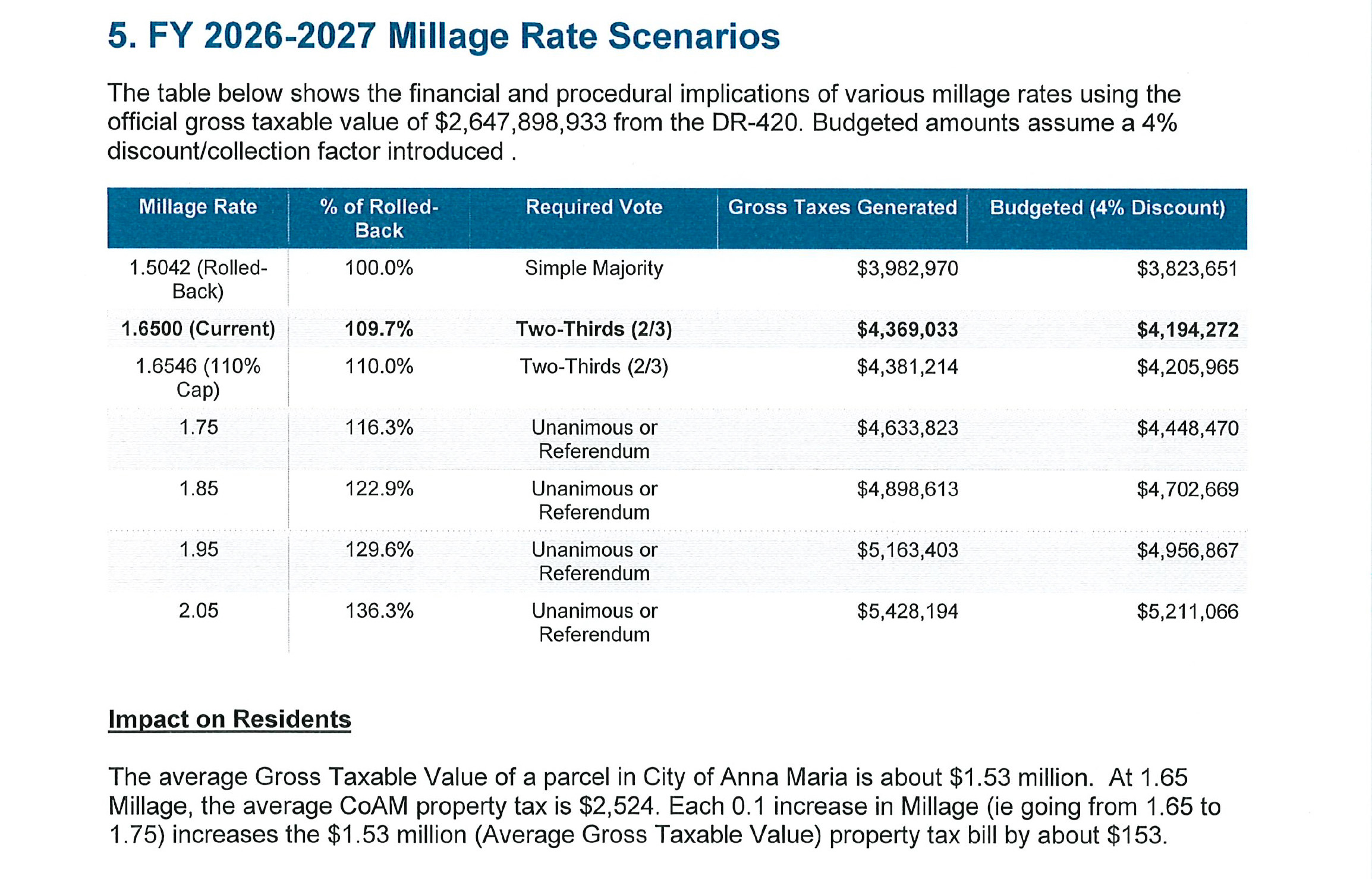
The proposed budget anticipates the city receiving $4.19 million in ad valorem property tax revenues this year if the current 1.65 millage rate is maintained. A return to the previous 2.05 millage rate would generate $5.2 million in property tax revenues for the city.
In 2023, the commission lowered the longstanding 2.05 millage rate to 1.65 mills. At the current rate, Anna Maria property owners are levied $1.65 for every $1,000 of taxable assessed property value, minus homestead exemptions and other exemptions that lower the property’s taxable value.
The commission must set its tentative maximum millage by Aug. 4. The adopted tentative millage rate can be reduced before final adoption during two public hearings in September, but it cannot be increased.
During the budget workshop, the commissioners discussed potentially increasing the millage, in part to help restore the city’s depleted reserve fund. According to the presentation included in the meeting packet, the city currently has just over $1 million in unencumbered reserve funds. The presentation notes the reserve fund was much higher when a past commission lowered the millage rate in 2023.
The city has also incurred expenses associated with Hurricanes Helene and Milton since then.
According to the one-page budget report included in the presentation, the largest projected city expenditures include $6.6 million for capital projects and outlay — some of which likely includes reconstruction of the hurricane-damaged City Pier, which is expected to reopen in November. The budget report lists $1.79 million for public safety, most of which entails contracted law enforcement services provided by the Manatee County Sheriff’s Office; $641,000 for code enforcement; $2.77 million in debt service; and $910,000 for staffing and operation of the public works department.
It was noted during the workshop that the city is obligated to cover up to $4.2 million for hurricane-related pier damage, and the city has about $1.6 million in claims to date. The county has already provided the city with $1.3 million for the pier reconstruction project. It was also noted that a $4 million loan was taken out to help finance pier reconstruction while awaiting future reimbursement.
The presentation also included an update on the city’s hurricane recovery efforts. The presentation addresses what the city did well and what it did not do well. As for what was not done well, the presentation notes there was a lack of competitively bid debris contracts and incomplete photographic documentation of storm damage.
The commission did not take any formal action during the initial workshop, and the next budget workshop is scheduled for Thursday, July 23, at 9 a.m., with projected city revenues as that day’s focus.