

The sound comes before the man does – a diesel engine’s groan down at the far end of the beach, at low tide, with no tourists in sight yet and the sun still deciding how hot it plans to get.
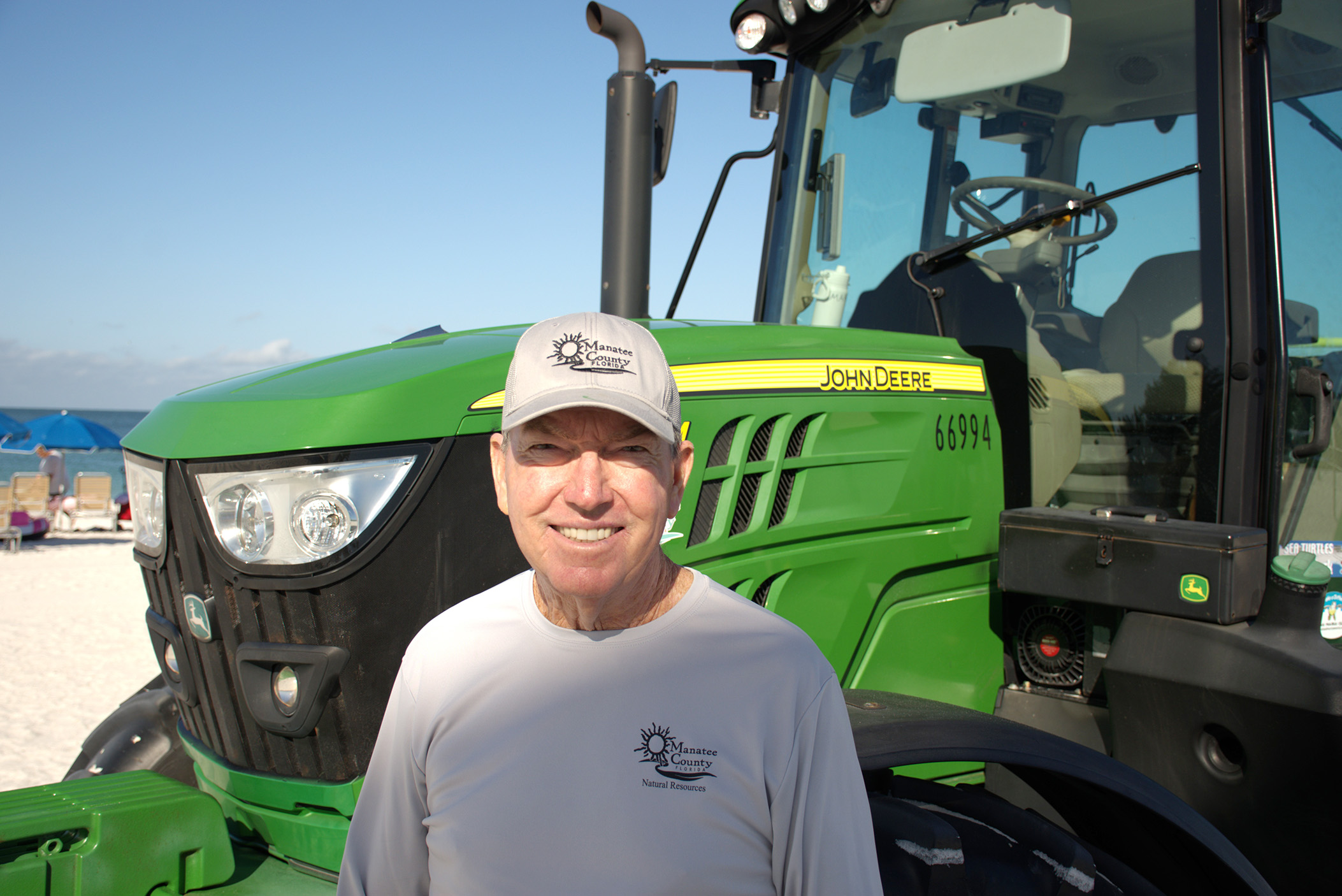
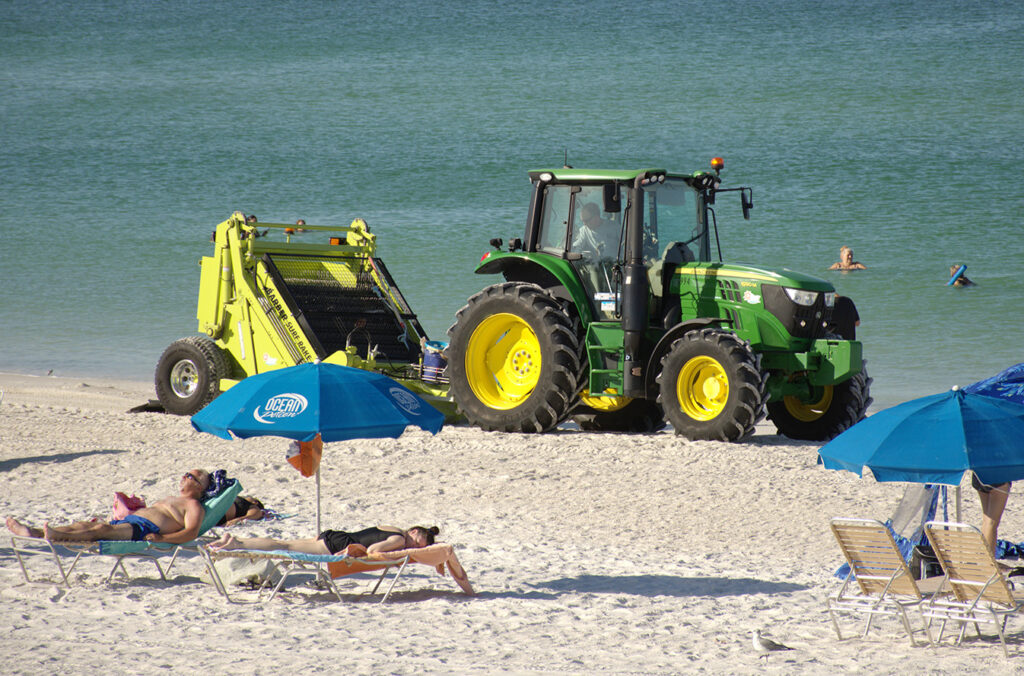
Then comes a green John Deere tractor towing a Barber Surf Rake that combs the sand behind it.
Behind the wheel is Mark Taylor, the man who grooms the beach for the beachgoers who mostly don’t know his name.
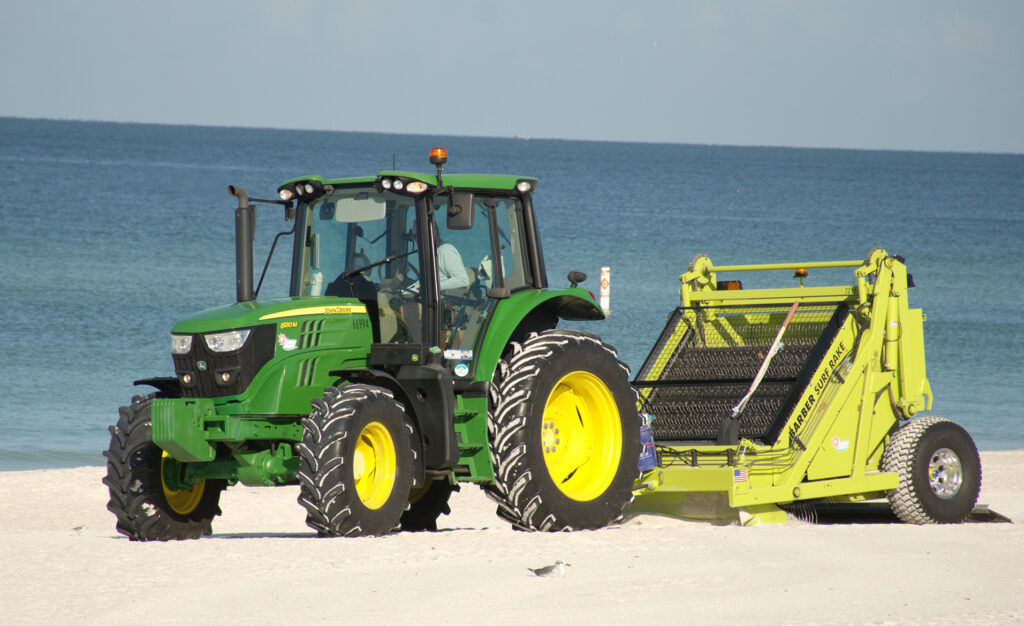
Taylor works beach maintenance for Manatee County and he spends most mornings running that tractor and rake across the county’s three lifeguard-patrolled beaches: Manatee Beach, Cortez Beach and Coquina Beach.
That routine changed in 2018. A red tide bloom had been building along Florida’s Gulf Coast since the fall of 2017. By August 2018, it had turned the Gulf a sickly color and was killing fish by the ton – bad enough that Gov. Rick Scott declared a state of emergency for Manatee County and six others on Aug. 13.
Taylor was out there cleaning the dead fish that stacked up on the Gulf-side beaches for 21 days and nights straight, before anybody thought to put charcoal filters in the tractor’s cab.
The 2017-19 red tide bloom ran longer than most. What made it dangerous wasn’t only the smell. A beach full of rotting fish also leaches nitrogen back into the water as it decays. Dave Tomasko, then executive director of the Sarasota Bay Estuary Program, estimated that 7,000 pounds of dead fish carry enough nitrogen to fuel another 15,000 pounds of the very algae causing the bloom.
Every load Taylor hauled off the sand was a load the red tide didn’t get to feed on twice. He tried a respirator for a while, but it didn’t help. The county’s public works manager called him “Superman” for his efforts, and he meant it. Taylor figures that month on the beach is still living in his lungs.
He’s also raked the beaches through other, less severe red tide-related fish kills since, including one in 2021 that didn’t last as long, but still left plenty of dead fish behind.
Taylor grew up in Cortez, the old fishing village on the mainland that’s connected to Anna Maria Island by the Cortez Bridge. He went to the old Cortez Rural Graded School – the same schoolhouse his father sat in before him. He remembers the boys setting the palmetto scrub on fire to run the rattlesnakes out, so there’d be room to play baseball in the schoolyard.
“It was kind of a tough place to grow up, but it was a wonderful place to grow up. You can’t take away those memories,” he said.
Taylor’s family goes back to Cortez’s founding. His grandfather was one of the fishermen who came down from Carteret County, North Carolina, in the late 1800s, and N.E. Taylor and Leo Taylor built most of the fishing boats the village ran on.
Taylor himself spent years commercial fishing out of Cortez, working his way up to boat captain, before Florida’s 1995 net ban gutted the industry. Like a lot of the old fleet, he found other ways to stay close to the water. Somewhere between the fish house and the county payroll, that meant the tractor.
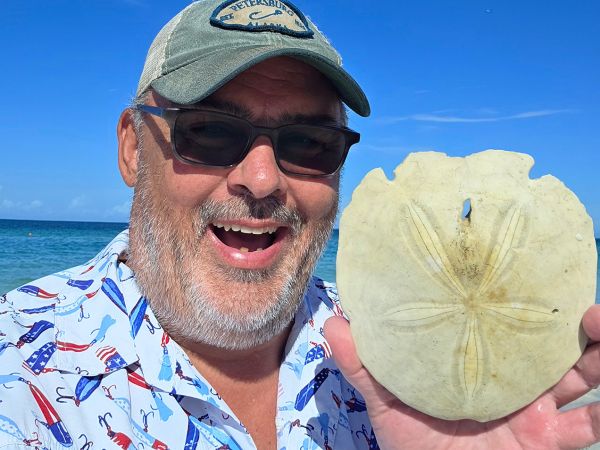
And that’s where I ran into him recently at midday, with the tractor engine off and his rig parked at the same beach access where I dive for sand dollars. He’d stopped for a bite to eat, hours into a day that started at 4 a.m.
He told me about the CT scan he was getting that week. Fluid has settled low in both of his lungs, and he has a cough that rattles when it finally clears. His wife thinks it might be asthma.
He’s never smoked a day in his life. He had pneumonia once, last January, the first bout in a life spent breathing salt air, diesel exhaust and, for the better part of a month in that summer of 2018, whatever 100 tons of rotting fish puts in the wind.
Spearfishing is off the table for now, which, for a man who was already itching to get back out there, is its own kind of ailment.
He also told me about the Sunshine Skyway Bridge, the tall span that carries traffic across the mouth of Tampa Bay, north of here. Whenever he’s been away on vacation, he crosses back over it, pulls over and rolls the window down to breathe in the low-tide mangrove smell most people race past with the air conditioning on recirculate. What smells like rot to everyone else is hydrogen sulfide – the byproduct of bacteria breaking down more leaf litter than the tide has oxygen to handle, a forest quietly feeding the whole bay. Taylor doesn’t know the chemistry. He just knows the trade is a good one. To him, it’s home.
He’s got a tackle box of stories like that. There’s John Stevely, a former Sea Grant agent for the University of Florida program that funds coastal research and outreach. Stevely dove for sponges the world over and helped build the Cortez fishing festival from its first year.
Stevely once spent a sloppy-weather pompano fishing trip heaving his stomach contents over Taylor’s transom until Taylor had to turn the boat around and carry him up onto the dock.
“I thought you were salty,” Taylor told him.
Stevely died in 2022, and Taylor still tells the seasick story like it’s the highest compliment he ever paid the man.
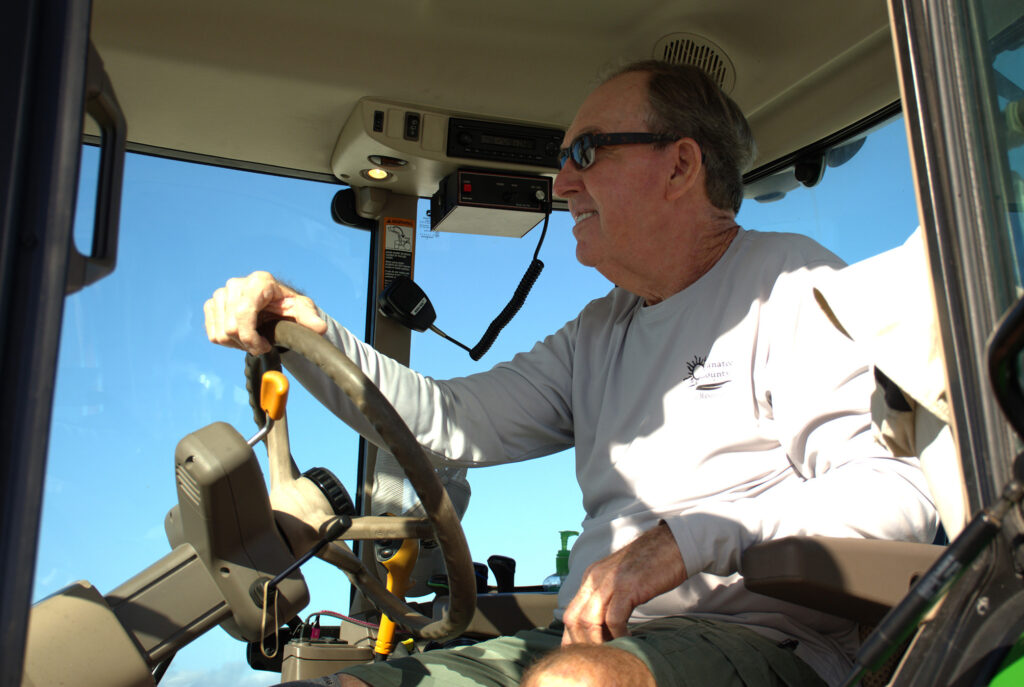
Seeking praise doesn’t enter Mark Taylor’s mind. What does is his gratitude for a job that keeps him close to the Gulf, in the tractor seat, doing the custodian’s work that disappears into the place he helps protect – and he knows no statue will be erected for the guy who raked up the dead fish so your kids could build a sandcastle.
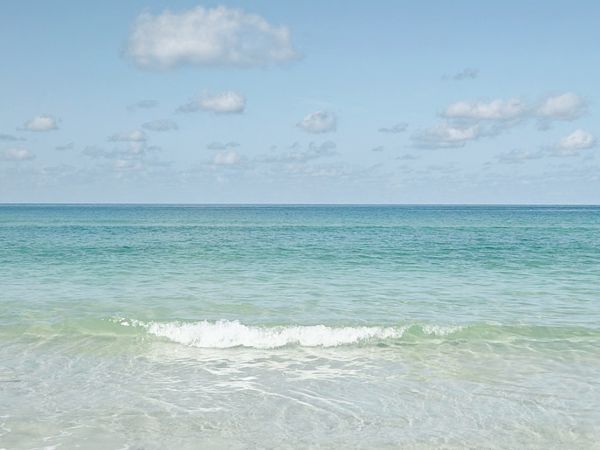
In the same breath, he mentions the CT scan. He’ll tell you he’d rather be out on his boat right now, spearfishing about a mile from shore if his wife would let him go alone that far, which she won’t. For now, dry land and a beach rake are as close to the Gulf as his lungs will allow – and the few minutes he can steal midday, with the engine off, watching the water instead of being on it.
Ask him how he sees things and he plainly says, “The Lord took care of me. I am close to the water. I am blessed. It’s a good job for an old man. And I’ve always had a supportive wife. Hopefully my health holds up and the county keeps me around.”