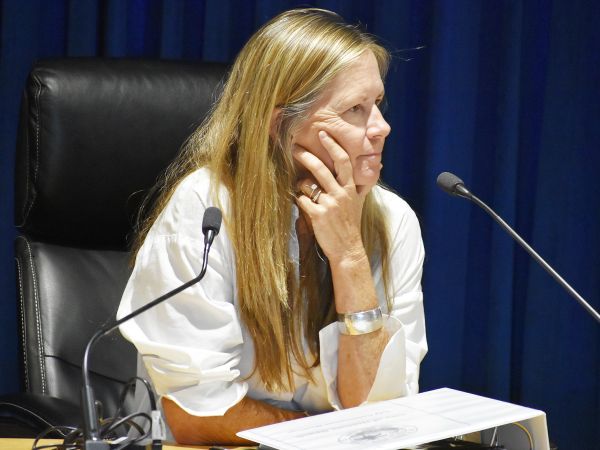


ANNA MARIA – The mayor and city commissioners held another budget preparation workshop on Thursday, Aug. 6, and the workshop focused on citywide expenses not assigned to a single department.
City Treasurer Randy Maxson and City Clerk and Human Resources Administrator Amber LaRowe reviewed many of the proposed expenditures included in the 2026-27 fiscal year budget that takes effect Oct. 1.
PUBLIC SAFETY
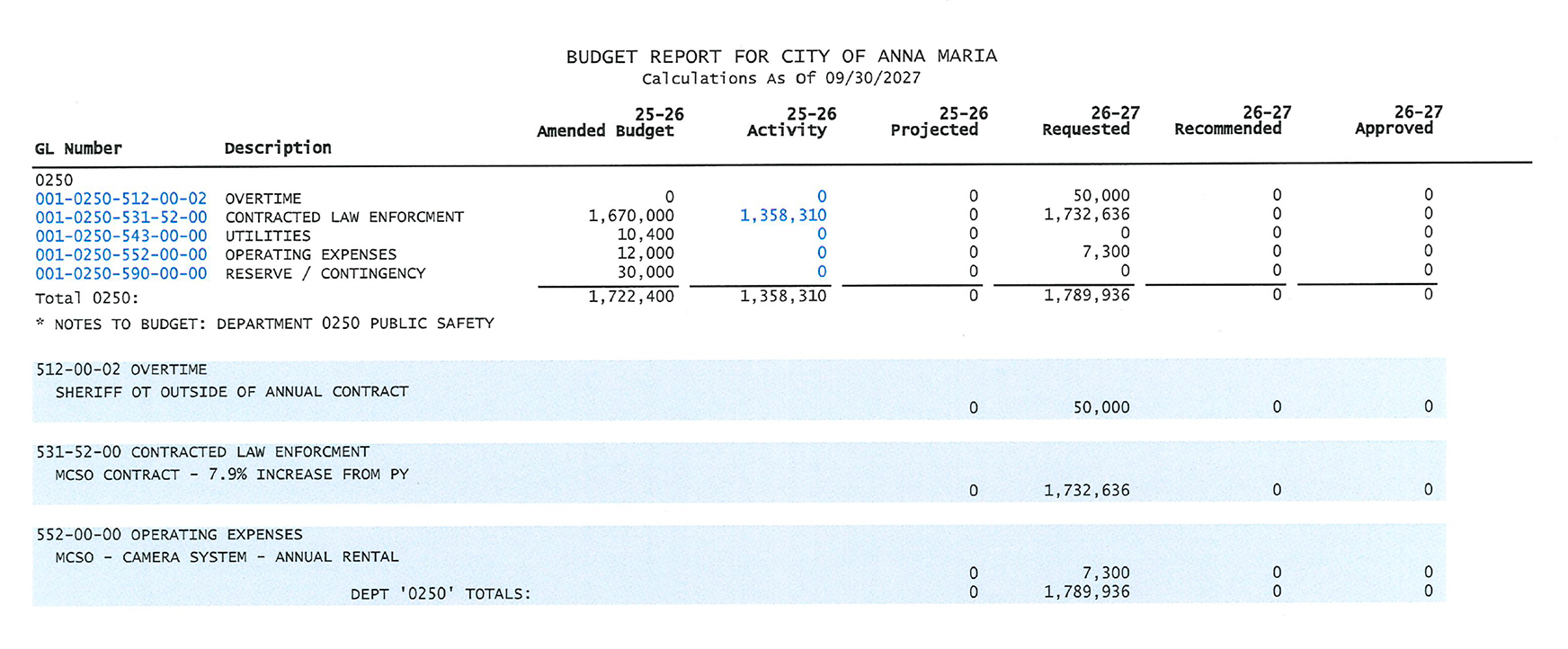
The largest single citywide expense is $1.78 million budgeted for the law enforcement services provided by the Manatee County Sheriff’s Office Anna Maria Unit. That is a projected 6.7% increase over the current fiscal year, for which $1.72 million was budgeted.
Mayor Mark Short noted the Anna Maria Unit consists of Sgt. Brett Getman and eight deputies.
Short said the budgeted figure does not reflect additional services the sheriff’s office provides at no extra charge, including marine patrols, extra-duty officers during busy periods and dispatch services. Short noted Anna Maria’s law enforcement costs are lower than the two other Island cities.
ADMINISTRATION AND IT
LaRowe presented the proposed $299,804 city administration budget and the proposed $155,000 information technology (IT) budget, both of which are now standalone departmental budgets after previously being grouped with other departmental budgets.
LaRowe said the change is intended to improve budget transparency and allow for more accurate year-over-year comparisons.
She said the administration’s priorities for the coming year include continued emergency management planning, professional development for staff and expanded use of the city’s CityConnect resident communication platform.
When discussing the IT budget, LaRowe was joined by Big Sur Technologies’ Noah Williams and Todd Williams. The city’s IT contractors explained the city’s recent shift toward cloud-based systems, including a move to Microsoft 365, which they said would keep city operations running even if local infrastructure were knocked offline during a storm. The city eliminated its on-site server and now backs up data through a security platform called Barracuda.
It was noted that the CitizenServe system will cost approximately $50,000 during the new fiscal year. The system is used to issue and track building permits, and it’s also used to help operate and enforce the city’s in-house vacation rental registration and inspection programs.
Commissioner Charlie Salem asked staff to review the city’s 20 software subscriptions for possible duplication, which might provide the city with some additional cost savings.
STAFFING AND PAYROLL
Short outlined the staffing changes anticipated during the coming fiscal year, including a new full-time position focused on procurement, grants and contract management, and the shift of payroll processing to a part-time role.
He said the city currently has about 19 full-time and part-time positions combined and is budgeting for 20.5 positions in the coming fiscal year – driven in part by the recent decision to bring vacation rental inspections in-house rather than pay outside contractors to do the annual inspections.
Short said the number of registered vacation rentals in the city has grown from 700-730 short-term rentals to 905 rentals. He said the added positions are expected to be offset by eliminating about $190,000 in third-party contracts for vacation rental management and grant administration.
Overall payroll costs are projected to rise about 18% next year, to an estimated $1.55 million, which factors in new staff positions, promotions, a proposed 4% across-the-board raise for city staff and payroll tax increases.
Before the workshop ended, Commissioner John Lynch thanked city staff for their budget preparation transparency.
“I feel very confident that you guys have been very good stewards about the city’s money,” he said.