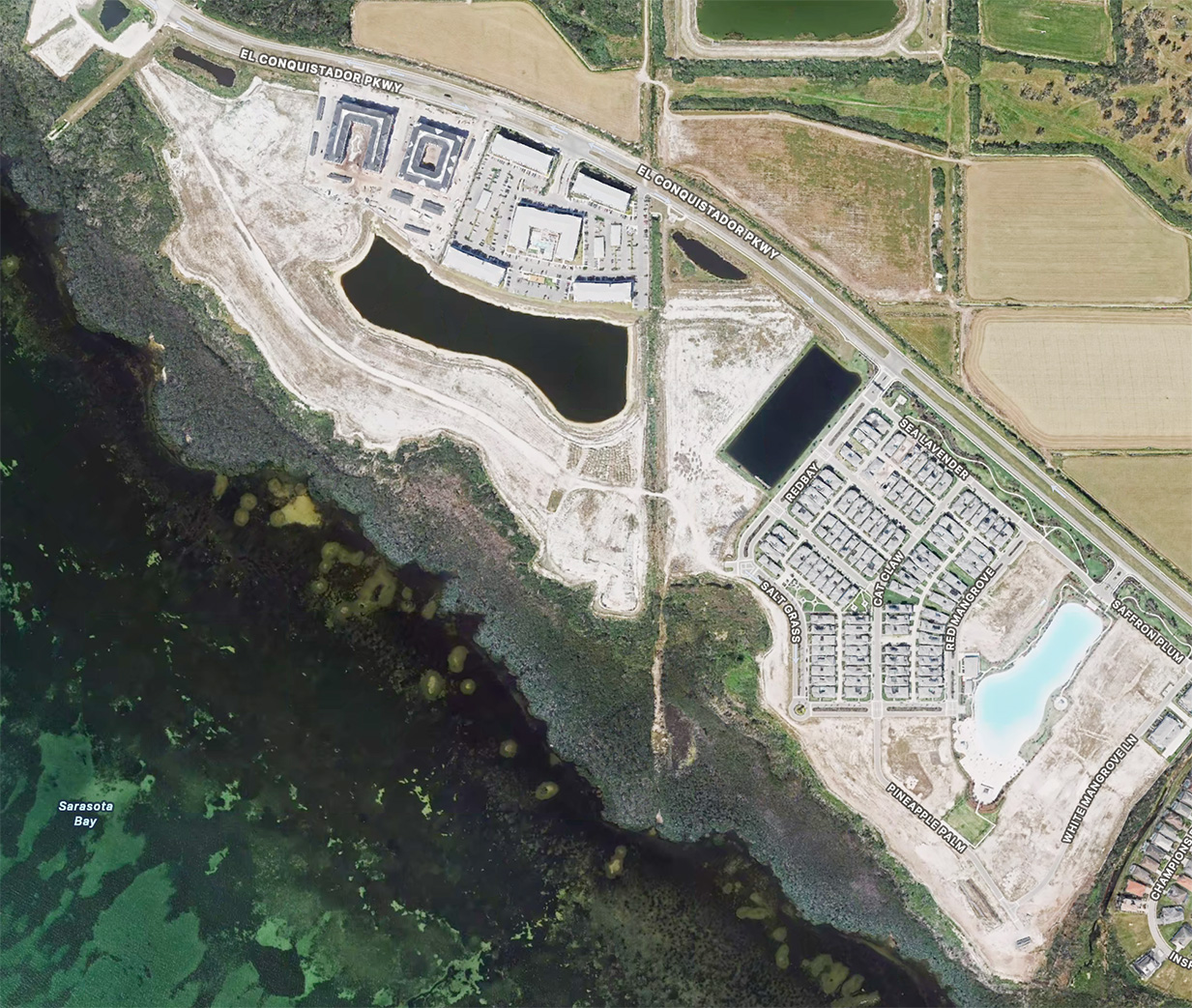
MANATEE COUNTY – On July 17, the U.S. Army Corps of Engineers Jacksonville District issued a public notice regarding an application to construct a gabion wall along the Long Bar Point/Sarasota Bay shoreline as part of the Aqua/ Sea Spray development formerly known as Long Bar Pointe and Aqua by the Bay.
The federal agency seeks public comment on the proposed gabion wall and Friday, Aug. 7, is the submission deadline. Public comment can be submitted at the Army Corps website (scroll down to Long Bar Pointe item).
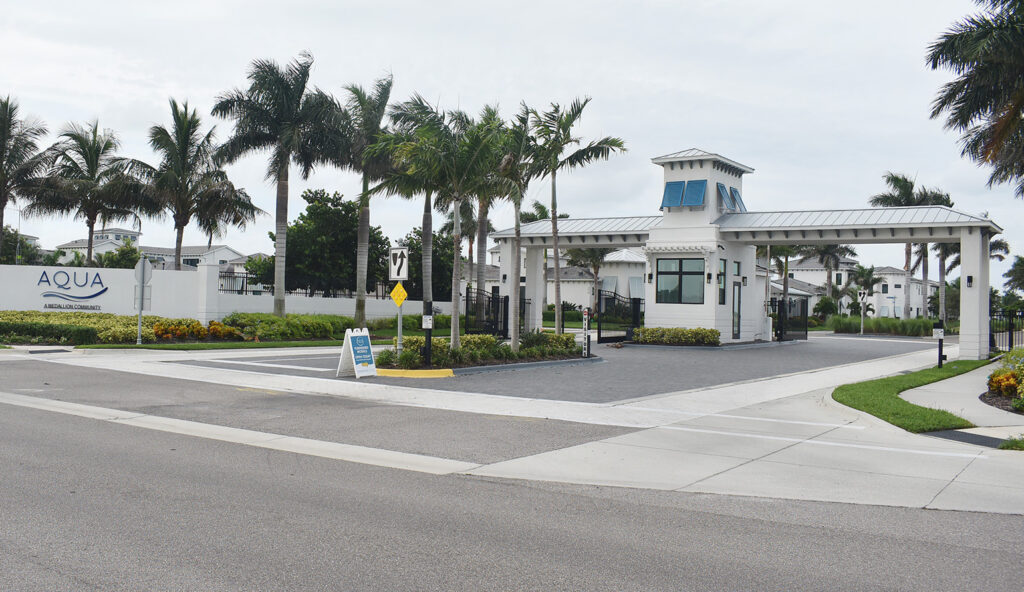
The partially completed, partially occupied, multi-phase development is located along the El Conquistador Parkway in unincorporated Manatee County.
According to Wikipedia, “A gabion wall is a retaining or erosion-control structure made of wire mesh cages (baskets) filled with rock, stone, or other rubble.”
The Army Corps public notice lists Carlos Beruff and Peter Logan as the applicants. The public notice lists Long Bar Pointe LLLP and CARGOR Partners VIII as the applicant companies.
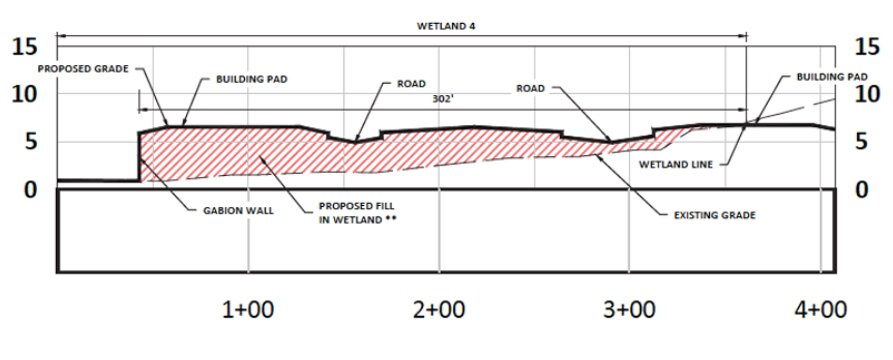
According to the public notice, “The applicant is requesting a DA (Department of the Army) permit to develop a 169.44-acre site in Manatee County, Florida. To facilitate this development, the applicant seeks authorization to discharge fill material [into] 3.07 acres of wetland systems, which includes 2.76 acres of freshwater wetlands and 0.31 acres of man-made agricultural conveyances.”
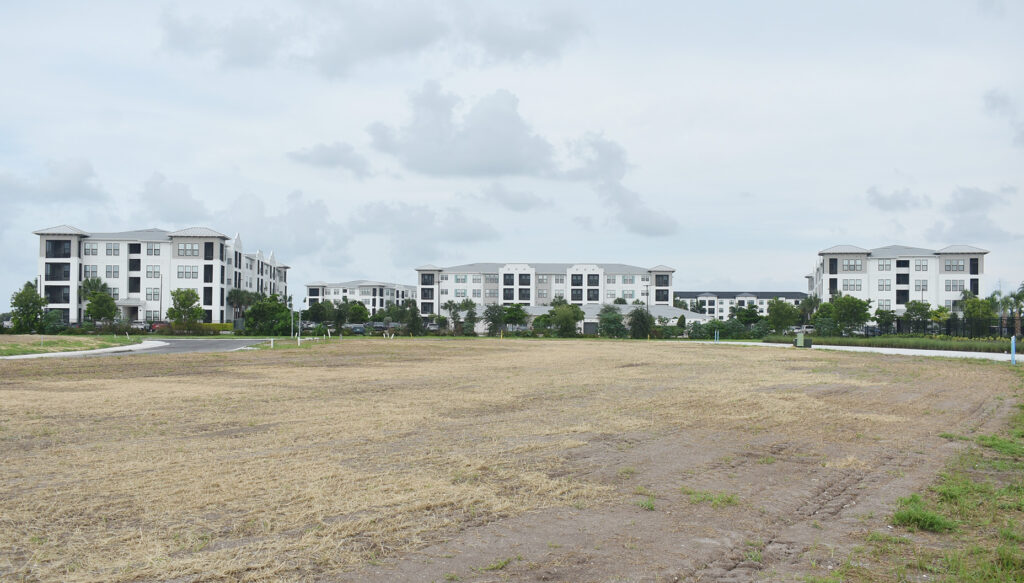
Regarding the development as a whole, the public notice says, “The design consists of approximately 2,468 residential units, including a mix of multistory townhomes and high-rise condominiums, along with 200,000 square feet of commercial space. Supporting infrastructure includes internal roadways, parking facilities, a dog park and a stormwater management system (wet detention ponds).”
Regarding the proposed gabion wall, the public notice says, “To minimize environmental encroachment and protect sensitive historic properties, the project would construct an 8- to 10-foot-high gabion wall along the waterward boundary of the development. This permanent vertical barrier reduces the required fill grading slope by 25 to 50 feet and, combined with a 50-foot permanent buffer zone.”
CORTEZ CONCERNS
On July 26, Cortez Village Historical Society (CVHS) Vice President Paul Dryfoos sent an email to Suncoast Waterkeeper representatives that said, “We in Cortez are concerned about the Long Bar Pointe application to the Army Corps of Engineers for a development that would entail filling over three acres of wetlands and constructing an 8- to 10-foot-high gabion wall along the waterway boundary. We note that Suncoast Waterkeeper has advocated against this type of encroachment in the past.”
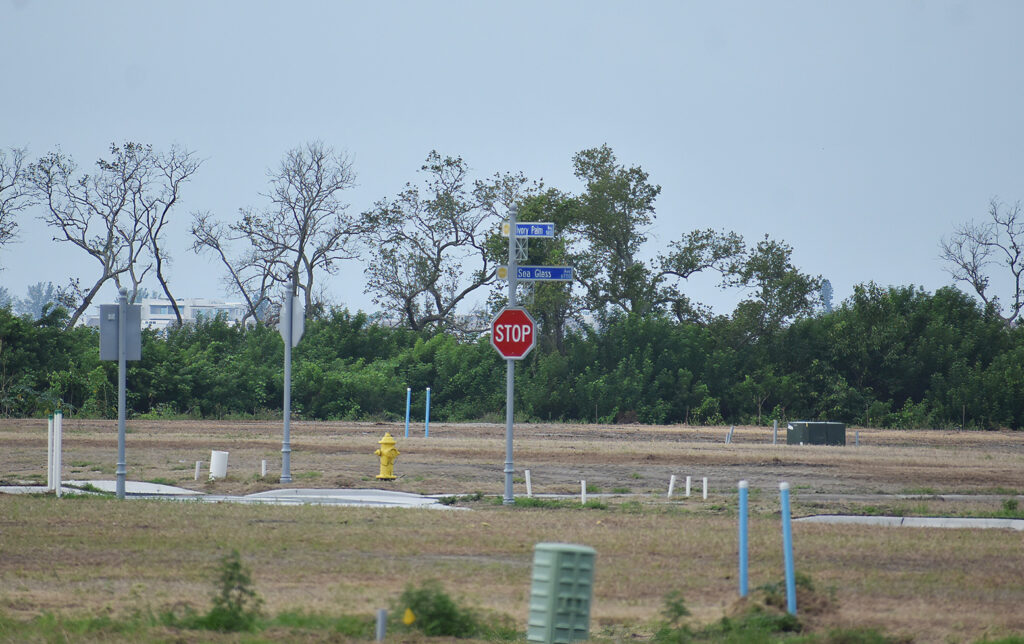
“From the Cortez perspective, this type of project directly impacts the immediate ecosystem that enables Cortez to survive as a working fishing community. Cortez villagers and friends have invested so much time, energy and resources securing the FISH (Florida Institute for Saltwater Heritage) Preserve. Now we see an adjacent critical wetland threatened by development and the permissive regulatory climate in Florida and Manatee County,” Dryfoos wrote.
“Public comment ends Aug. 7. We want to quickly mobilize our Cortez community and others, and we ask for your help in developing brief comments that can seed our community’s response. Our goal would be to mobilize several hundred comments through the CVHS and FISH member lists and Cortez-oriented Facebook groups to address the impacts of the proposed activity, as well as requesting a public hearing,” Dryfoos’ email said.
MCCLASH CONCERNS
On July 23, Bradenton Times Publisher Joe McClash, a former Manatee County commissioner, sent a 12-page document to Army Corps Jacksonville District Senior Project Manager Edgar Garcia.
In his Page 1 executive summary, McClash wrote, “These comments oppose issuance of the requested individual permit under Section 404 of the Clean Water Act and Section 10 of the Rivers and Harbors Act. The present record does not establish compliance with the mandatory U.S. EPA guidelines, does not support the Corps’ preliminary conclusions concerning indirect effects, historic properties, endangered species, mitigation or the public interest and contains material inconsistencies that prevent a reasoned decision.”
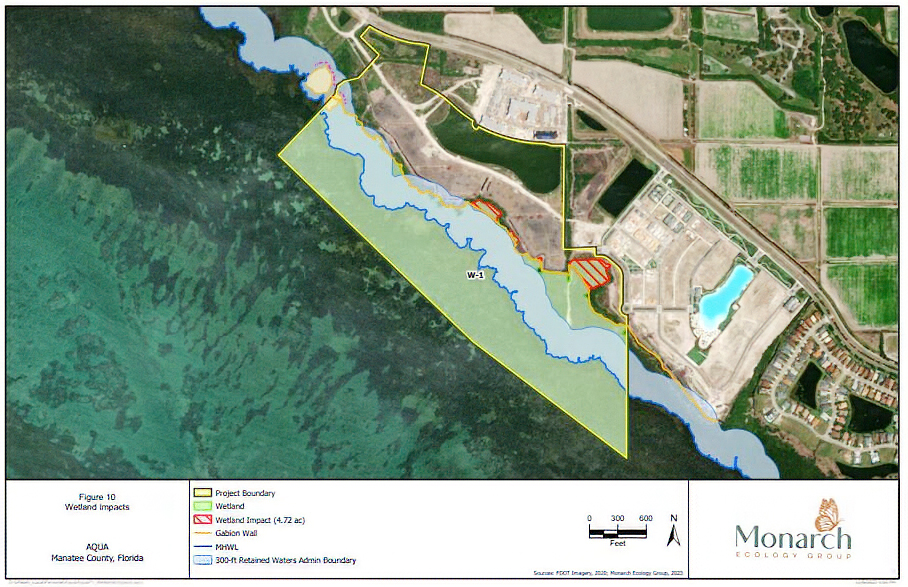
“The proposed non-water-dependent residential and commercial development – approximately 2,468 dwelling units and 200,000 square feet of commercial space – would place fill in 3.07 acres of aquatic resources and would construct an 8- to 10-foot-high gabion wall immediately landward of high-functioning tidal mangrove wetlands and National Register-eligible archaeological sites,” McClash wrote.
“The development’s purpose can plainly be achieved on uplands and through less damaging configurations. The applicant therefore bears the burden of rebutting the federal presumption that practicable, less environmentally damaging alternatives are available,” the summary says.
“The Corps should deny the permit unless and until the applicant supplies a complete alternatives analysis, reconciles contradictory descriptions of the wetland buffer and stormwater system, evaluates direct, indirect, secondary and cumulative effects on the entire connected wetland-estuarine system, provides a defensible mitigation plan using the federal watershed approach, completes required ESA, EFH and NHPA consultation and demonstrates that the project is not contrary to the public interest. The Corps should prepare an environmental impact statement or, at minimum, a full environmental assessment supported by independent technical review, and should conduct a public hearing,” McClash said in his executive summary.