

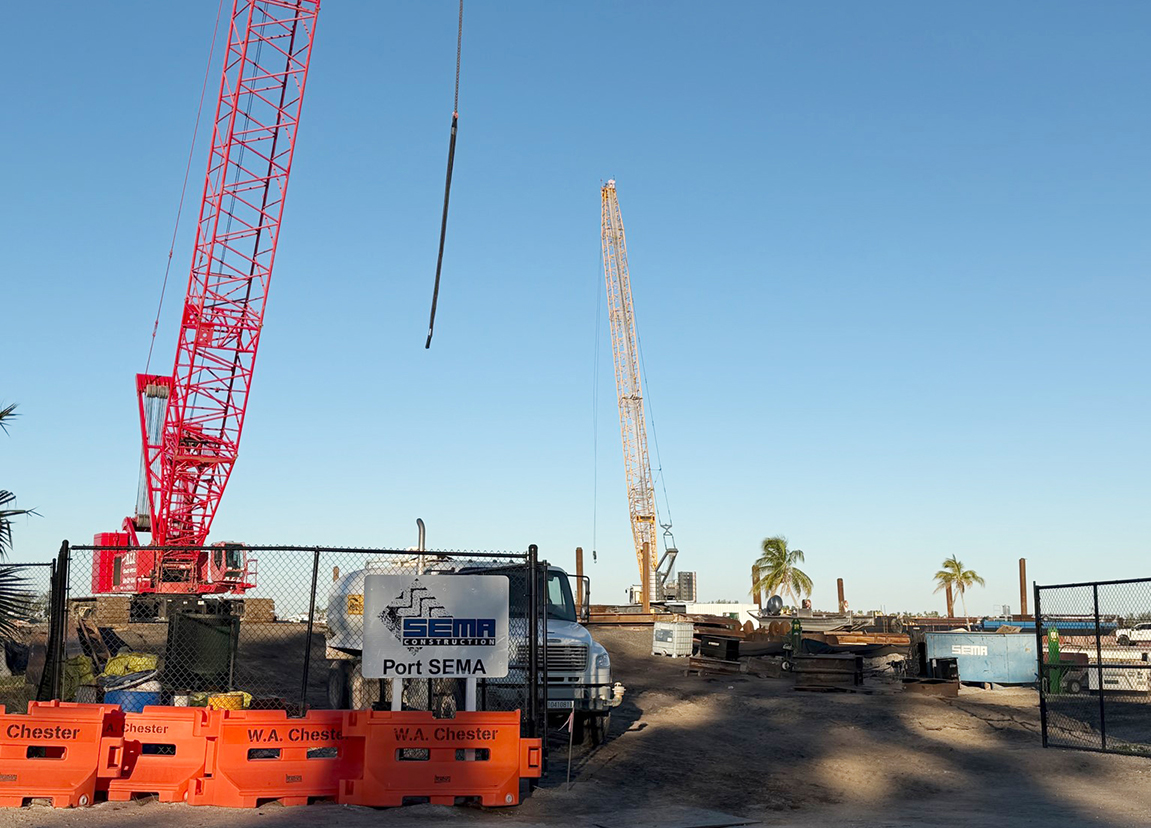
CORTEZ – Despite objections voiced by residents who said they were misled about how a portion of a county-owned property would be used, Manatee County commissioners voted 5-1 in favor of executing a license agreement with the Cortez Bridge contractor, SEMA Construction, to use county-owned land as a construction staging area for four years.
Commissioner Jason Bearden cast the lone dissenting vote during the Oct. 20 county commission meeting.
The license agreement with SEMA pertains to use of the former Seafood Shack property that the county purchased in 2024 for $13 million.
While briefing the county commissioners, Manatee County Utilities Department Chief Engineer Chad Butzow said the terms of the agreement with SEMA take into account a delay the county caused. Butzow said the county’s water main replacement project that involves installing a new water main under the Intracoastal Waterway is well behind schedule. The old water main conflicts with the pilings SEMA must drive for the first stage of the new bridge, which was supposed to begin in June.
In exchange for the use of the county-owned land, SEMA agreed not to seek delay-associated costs from the county or the state. Butzow estimated that figure to be approximately $1.4 million.
PAST AND FUTURE ALLOWANCES
On June 16, the county commission approved a temporary right of entry agreement with SEMA. On July 28, the temporary agreement was extended for an additional 60 days, through Oct. 16.
The temporary authorization allowed SEMA limited use of the property while staff continued working with SEMA to address the business terms and other concerns associated with the proposed long-term license agreement.
According to background information included in the Oct. 20 meeting packet, “Use of the county property provides SEMA with a staging area adjacent to the bridge project and reduces the need for large construction vehicles and equipment to repeatedly back into or out of the constrained FDOT right-of-way, reducing traffic interruptions and improving construction access.”
The background information notes the county entered into a utility work schedule with the Florida Department of Transportation (FDOT) that requires the county to perform certain utility relocation work before the bridge construction can begin.
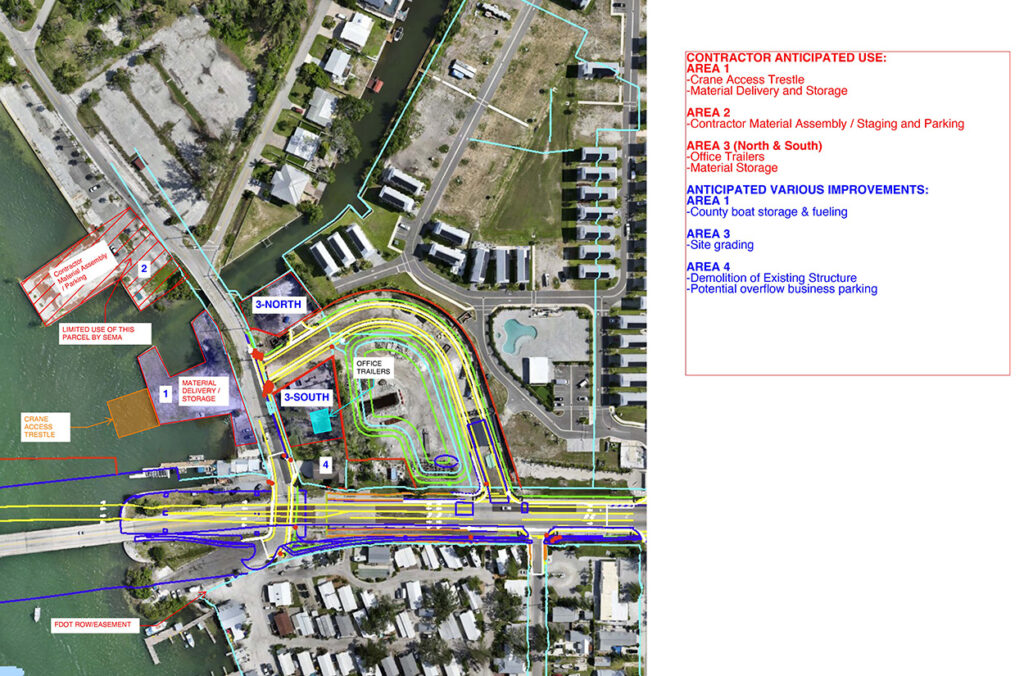
The new agreement obligates SEMA to construct a docking, storage and fueling area for the county’s Gulf Islands Ferry service, and to demolish and remove an existing house from the county property.
PUBLIC COMMENT
The staging area plan has changed since it was first presented to the county commission in June. At that time, the plan called for Parcel 2 of the county property to be used as overflow parking for the bridge construction workers.
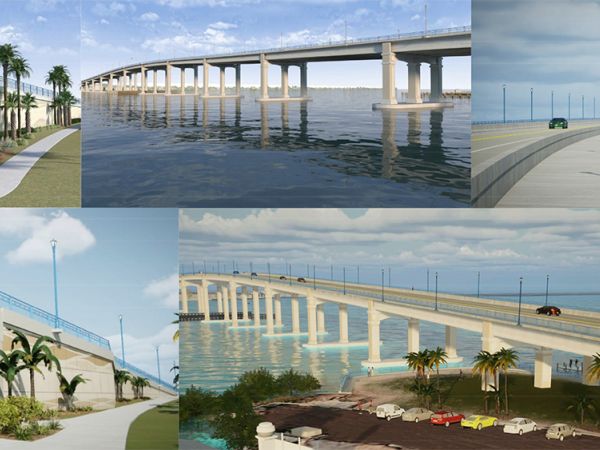
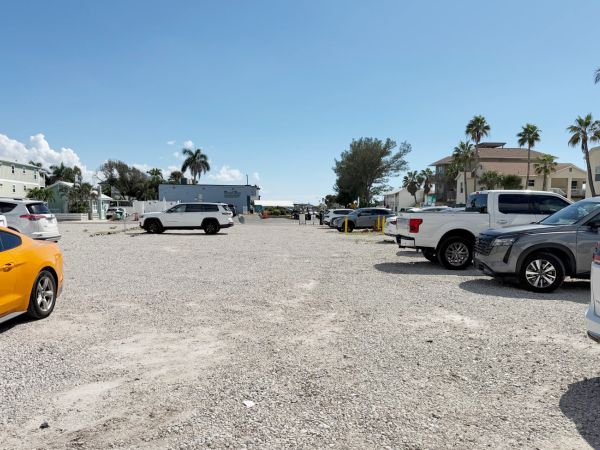
The new agreement covers two areas. Parcel 1, at the south end of the property, will be used for semi-permanent structures, including a crane access trestle. Located along the water and north of the humpback bridge on 127th Street West, Parcel 2 prompted the most debate.
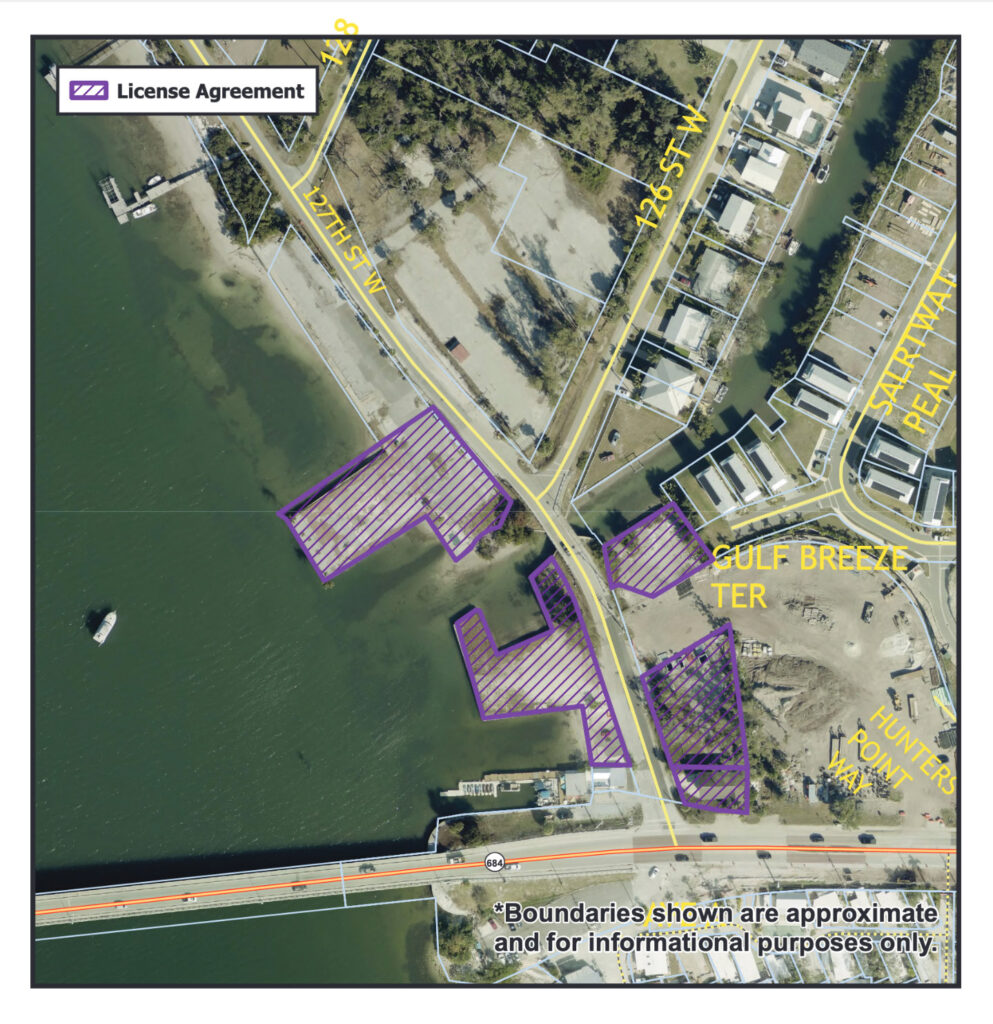
During the Oct. 20 meeting, SEMA representative Justin Oakes said Parcel 2 would serve mainly as overflow parking for employees and for material handling and storage. He said crews would also assemble items such as forms and rebar cages there and offload them directly onto barges. He said the area would be fenced, gated and posted to keep the public out.
Residents from the neighborhoods north of the bridge said the county and SEMA broke their earlier assurances. Mark Szilagy and Jim McConnell said planners and SEMA representatives met with residents on July 10. Szilagy and McConnell said they were told Parcel 2 would be used only for overflow parking of light vehicles, and the residents agreed to that. They said they learned only days before the meeting, from documents posted online, that the site map had been relabeled to include “contractor material assembly staging and parking.”
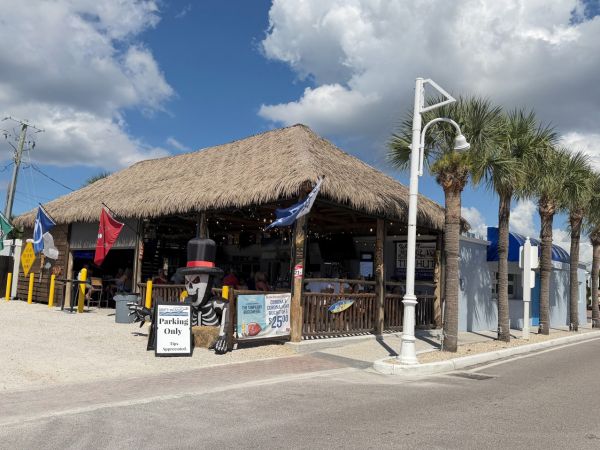
Oakes said the project is expected to require more than 3,000 truckloads during the 1,200-day contract period – an average of three to five truckloads per day. Without the use of Parcel 2, he said the contractor would have relied heavily on the state-owned right-of-way in front of Tide Tables restaurant, which would require daily lane closures on Cortez Road.
Szilagy said more than 300 residents must pass by the Parcel 2 construction area to enter and leave their neighborhoods, which he said offers only one way in and one way out to Cortez Road.
“We’ve lost our trust again,” Szilagy said, urging the county commission to restore the July terms.
Butzow acknowledged he had overlooked a July email from a neighborhood group objecting to any use of land north of the bridge.
Bearden pressed Oakes on when the staging plan changed. Oakes said he did not know the date and that SEMA did not intend to mislead anyone.
“My issue is transparency,” Bearden said.
Bearden said if the change was known months ago, the county should have discussed it with the residents and a compromise might have been possible.
Tide Tables co-owners Karen Bell and Bobby Woodson said using the state-owned right-of-way in front of their restaurant for construction staging would nearly put them out of business by taking away the restaurant’s parking. Woodson said the restaurant employs about 50 people and serves 500 to 1,000 customers a day. The new agreement avoids the use of the Tide Tables’ parking lot for staging activities.
Woodson also warned that more lane closures would back traffic up to 75th Street during the busy spring season. Bell and Woodson endorsed the commission’s approval of the license agreement with SEMA that allows Parcel 2 to be used for construction staging.
Joe Adorno is the president of Cortez Park Homeowners Inc., the entity that owns the Cortez Park mobile home community property and the neighboring Tide Tables’ property. Adorno said the restaurant is a major source of income for the association. He said trucks and construction equipment cannot share the Tide Tables driveway without disrupting the restaurant operations.
Commissioner George Kruse said he did not want to see the bridge project delayed further. He said denying SEMA’s request would push the work onto the restaurant’s parking area and that could lead to lane closures and long traffic backups.
“The best way negotiation works is everyone walks away a little bit unhappy,” Kruse said.
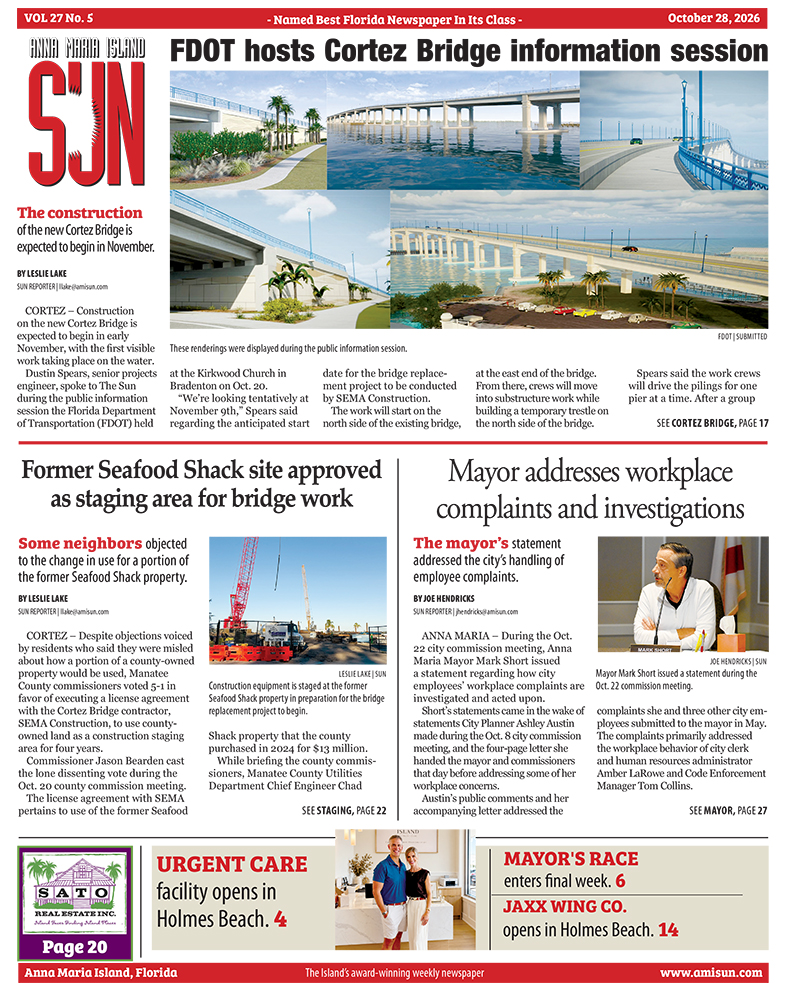
Related coverage: FDOT hosts Cortez Bridge information session