BY SHAWN MAYERS
AMI GARDEN CLUB MEMBER
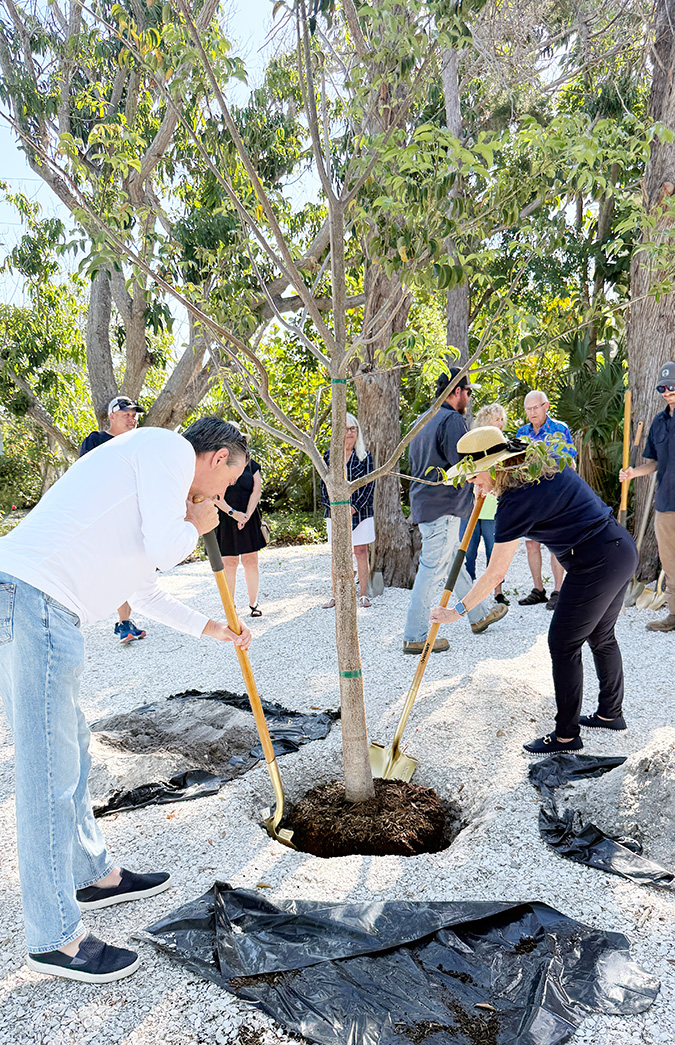
ANNA MARIA ISLAND – Arbor Day was celebrated on Anna Maria Island on Friday, April 24, and the Anna Maria Island Garden Club donated the native trees planted during the Arbor Day ceremonies held in Anna Maria, Bradenton Beach and Holmes Beach.
This year’s trees were selected for their suitability with the Island conditions.
The gumbo limbo is often called the “tourist tree” for its peeling red bark. The gumbo limbo is a native Florida hardwood with a broad, irregular canopy. It’s exceptionally tolerant of salt spray, sandy soils, and hurricane-force winds and its flexible branches bend rather than break. It’s also drought-tolerant once established, making it ideal for Anna Maria Island’s coastal conditions and storm exposure.
The silver buttonwood is a compact coastal shrub-tree with distinctive silvery-gray foliage. This Florida native thrives in the brackish, salty air of barrier islands. It tolerates poor, sandy soils and salt spray beautifully and its dense form makes it excellent as a windbreak or ornamental planting. It’s low-maintenance and is highly adapted to the Gulf Coast environment.
The sabal palm is Florida’s state tree and it’s one of the most salt-tolerant and wind-tolerant palms in existence. Its deep root system anchors it firmly in sandy soils, and it handles flooding, drought, and tropical storms with remarkable resilience. As a Florida native, it supports local wildlife and fits naturally into the barrier island landscape of Anna Maria Island.
The coconut palm is the iconic symbol of tropical beaches and it thrives in full sun, sandy soil, and high humidity – all defining features of Anna Maria Island. It has good salt tolerance and, once established, requires minimal care. Its graceful, arching form provides shade and a quintessential tropical aesthetic. It does best in South and Central Florida’s warm, frost-free climate, making Anna Maria Island an ideal location.
The sea grape is a beloved Florida coastal native that features large, round, leathery leaves that are highly resistant to salt spray and wind. It grows naturally along Florida’s shorelines and dunes, where it helps stabilize sand and protect against erosion — a critical function on a barrier island like Anna Maria. It also produces clusters of edible grape-like fruit that attract birds and wildlife.
All five of these trees share the key traits needed to thrive on Anna Maria Island: salt tolerance, wind resistance, and adaptability to sandy, well-drained soils.
Related coverage: Arbor Day celebrated with tree plantings