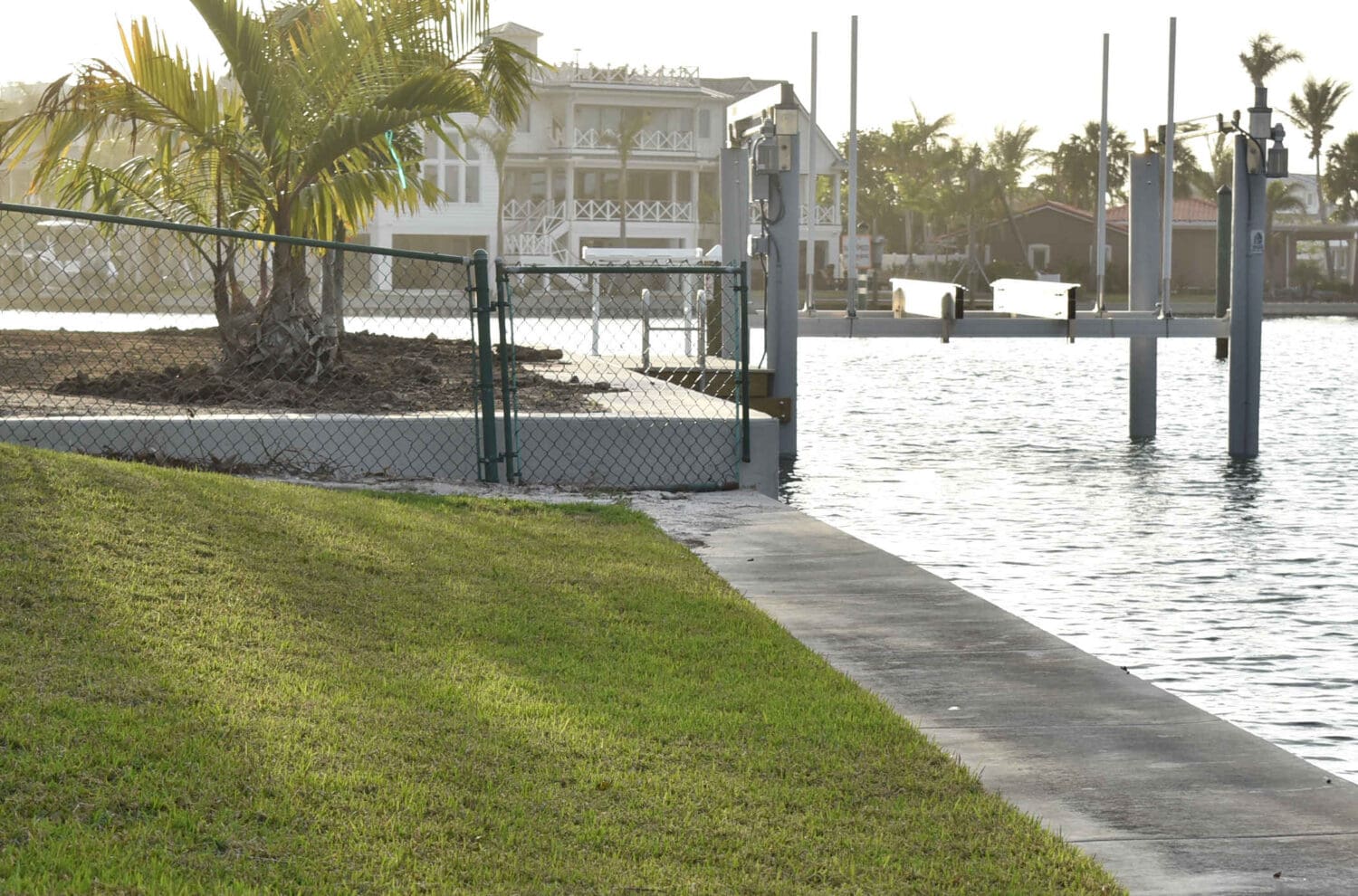
HOLMES BEACH – The efforts to revise the city’s seawall regulations remain a work in progress and seawall height allowances and the installation of adaptive seawalls are among the considerations being discussed.
On March 5, the Holmes Beach Planning Commission continued its review of the proposed and previously discussed revisions to the city’s seawall regulations. Director of Development Chad Minor and seawall consultant and engineer Joe Foster also participated in the discussion.
The city’s current seawall regulations do not establish a specific minimum or maximum height for the construction or replacement of a seawall but seawall height limits are tied to the North American Vertical Datum (NAVD). A vertical datum is a reference system used by surveyors, engineers and mapping professionals to measure and relate elevations to the Earth’s surface.
According to Foster, Holmes Beach currently has an average datum of +2.3 NAVD, which is 2.3 feet above the fixed datum point. He recommends increasing that to a +4 NAVD, which would be 4 feet above the fixed datum point.
Foster recommends adding the following language to the city’s seawall regulations: “The elevation for all seawalls, bulkheads and retaining walls fronting the bay shall be equal to or greater than elevation 4.0 NAVD 88. Unless the ground floor elevations of the subject house and the adjacent houses on each side is lesser in elevation. If the seawall cap elevation is determined that it cannot be raised, then the new seawall shall be designed and constructed at the time of the proposal in way that seawall cap elevation can be raised in the future.”
According to the six-page handout that Foster shared during the meeting, “This elevation provides additional resiliency to the property without significantly altering the community’s stormwater drainage.”
Foster said the elevation thresholds for seawall caps are an issue many Florida municipalities are struggling with and it’s become even more of a focal point in the wake of Hurricane Helene and other tidal events. He said many municipalities are incorporating NAVD standards into their seawall regulations. He also said seawall regulation revisions are being proposed statewide to help offset the projected sea level rise of 18 inches in the next 50 years.
“If I design a seawall today, I’m projecting a 50-year lifespan on it. So, what is this going to look like in 50 years?” Foster said.
He said public sentiment about higher seawalls has changed in recent years.
“This used to be a huge fight. Six years ago, people did not want to raise their seawalls. Now that’s completely opposite. In the past three years, there’s been a complete switch.”
Adaptive seawall caps
During the March 5 meeting, Foster provided an image of an adaptive seawall that featured an additional stem wall. A seawall cap is the top portion of the seawall. Allowing adaptive seawall caps that consist of an additional stem wall being constructed on top of an existing seawall is also being considered as part of the proposed Holmes Beach seawall regulation revisions that remain a work in progress.

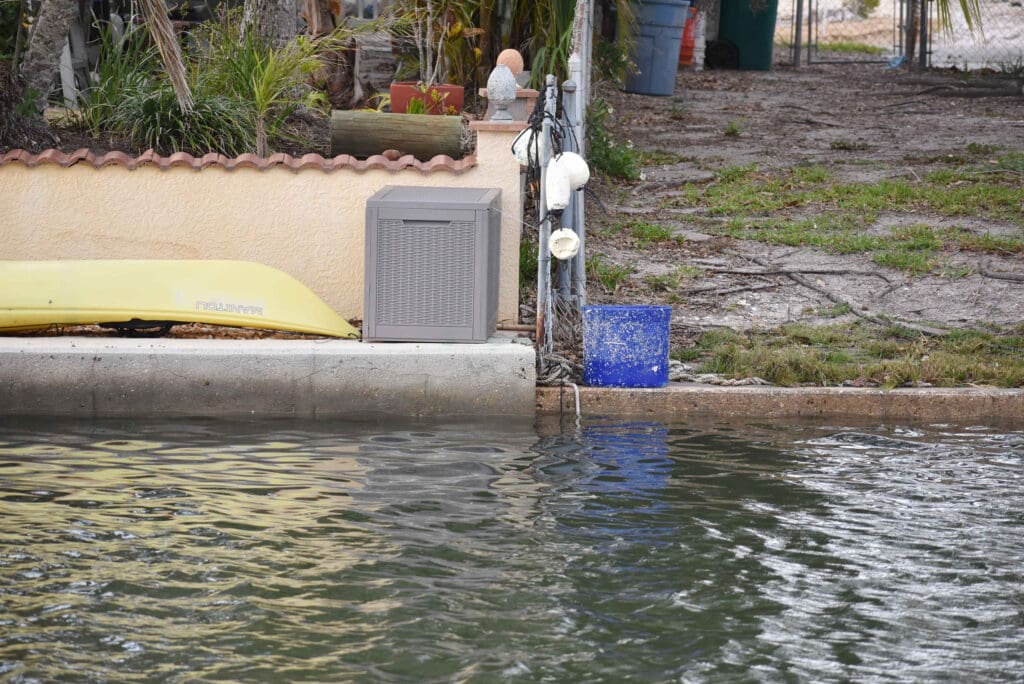
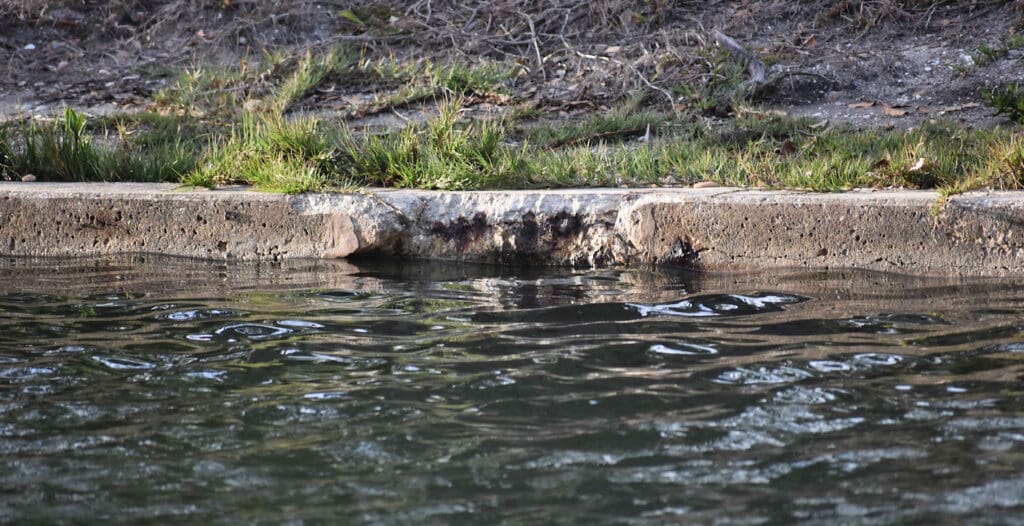
Planning Commissioner Lisa Pierce said she pulled her seawall permit in 2003 and her next-door neighbor recently had a new seawall installed. A visit to her property after the meeting revealed the neighbor’s new seawall is about 18 inches taller than her seawall. Across the canal from Pearce’s home, an older seawall sits even lower and shows signs of deterioration, which further illustrates the differences that exist from one seawall to another.
No final decisions have been made regarding the revisions discussed at the March 5 planning commission meeting and the proposed revisions will be discussed at a future city commission meeting or city commission work session.