HOLMES BEACH – Written by Holmes Beach residents Dick and Margie Motzer, a letter to the editor that recently appeared in The Sun resulted in an impromptu Holmes Beach Planning Commission discussion about the city’s noise ordinance.
The letter pertained to the city commission’s recent approval of the Island Bazaar site plan at Gulf and Marina Drives. The commission approval includes a stipulation that limits the volume of the miniature golf course’s ambient music to 50 decibels.
“That level of protection is now only in this one geographic region, at the old Wells Fargo location,” the Motzers’ letter said. “We think the city needs to take action to apply that same daytime 50-decibel level city-wide.”
Planning Commissioner Lisa Pierce mentioned the letter during the planning commission’s Jan. 15 meeting.
“I would say what’s good for the goose is good for the gander. That sounds like a good idea everywhere,” she said.
Holmes Beach Director of Development Services Chad Minor noted that the city’s standard daytime volume limit is 75 decibels.
City commissioners did not amend the noise ordinance when approving the Island Bazaar site plan, they simply included a volume stipulation specific to that property, he said.
The planning commission’s primary assignment is to review city matters for compliance with the city’s comprehensive plan, the document that sets forth the city’s overall vision for future development and redevelopment.
Minor said the city’s noise regulations are addressed in the Land Development Code (LDC) and the planning commission would need city commission authorization to review regulations contained in the LDC. Minor said the planning commission could send one of its members to a city commission meeting to request that authorization.
“I think 50 (decibels) is really low,” Planning Commissioner Richard Brown opined.
Planning Commissioner Steve Oelfke praised Island Bazaar developer Jake Spooner for being receptive to the city commission’s volume request, but he said other developers may not be as accommodating. Oelfke expressed support for reviewing the noise ordinance as it relates to the comprehensive plan.
The planning commissioners agreed to place Minor’s suggestion on the agenda for formal discussion at their Wednesday, Feb. 5 meeting.
BRADENTON BEACH – Barring a tied vote or some other complication, the winner of the Bradenton Beach mayor’s race will be known Tuesday evening after in-person voting concludes at 7 p.m.
In-person Election Day voting will take place Tuesday, Nov. 2 from 7 a.m. to 7 p.m. at the Bradenton Beach Fire Hall, 201 Second St. N.
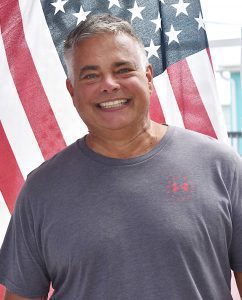
Incumbent Mayor John Chappie seeks a third consecutive term as Bradenton Beach mayor. First-time challenger David Galuszka seeks a first term as the city’s mayor.
The Sun recently interviewed both candidates separately. In a previous story, the candidates discussed their desires to serve, parking issues, vacation rentals and the lack of affordable workplace housing. In this story, the candidates share their views on golf carts and low-speed vehicles, noise ordinance enforcement, quality of life issues for permanent residents and why they should get your vote in the city election.
What can the city do about golf carts, low-speed vehicles and other alternative modes of transportation that slow vehicular traffic and create public safety issues?
Chappie: “We recently renewed our temporary micro-mobility moratorium and the three Island cities are starting to come together and have discussions about low-speed vehicles and golf carts. Public safety has to be a top priority and that gets back to enforcement. If the police department sees kids driving these things they need to pull them over. Everybody needs to be strapped in their safety belts and child restraints and car seats need to be used. If they can’t go the minimum speed limit when they’re fully loaded, then they need to stay off Gulf Drive. These things all need to be part of the overall ordinance that we’re working on that will be similar to what the other two cities are doing so we have consistency from city to city.”
Galuszka: “The businesses that rent the golf carts need to educate the users about the rules and regulations. As far as going too slow, I call it ‘enforced courtesy.’ Maybe we put up signs that say if there are cars behind you and you’re creating a backup, you should pull over or yield. In Anna Maria, the rental businesses are putting informational stickers in those rented vehicles. We should do the same so people know what the laws are. We should also have increased enforcement. On Bridge Street, I’ve seen golf cart operators that should not have been driving because they were very intoxicated – and drivers need to be at least 16 years old and have a valid driver’s license.”
Is the city doing enough to enforce the city noise ordinance in the residential neighborhoods that are often impacted by vacation rental guests?
David Galuszka seeks his first term as mayor. – Joe Hendricks | Sun
Galuszka: “I support the noise ordinance. I don’t think it’s enforced as it could be. Residents shouldn’t be subjected to this non-stop noise coming from these party houses. I’ve experienced it myself. We need to enforce our noise ordinance. Some residents I spoke with tell me they’ve called and nothing happens. A couple people I talked to said they called code enforcement only to get a full voicemail box. I personally emailed code enforcement six or seven days ago and still haven’t got a response. I don’t think that’s acceptable. There isn’t enough being done.”
Chappie: “A lot of people do not call in their noise complaints. I tell people all the time that if you have a noise problem, call the police department. We have a new chief and he and the police department know noise issues are one of the commission’s top priorities. If there’s a problem, they need to take care of it by issuing a warning or taking other measures. It’s an enforcement issue and our police chief knows this.”
What else can be done to protect the quality of life for the city’s permanent residents or attract more permanent residents?
John Chappie seeks a third consecutive term as mayor. – John Chappie | Submitted
Chappie: “We have the situation with the trash pickup and the piling up of trash has gotten worse. The trash company seems to be having difficulty finding enough employees to do the side-yard pickup that’s required in our Transient Public Lodging Establishment (vacation rental) ordinance. The tourists often bring the trash cans out to the street on their own and they end up sitting by the road for several days and the residents have to look at them. We’re cracking down on that. Our code enforcement officer has sent out letters and he’s putting people on notice. We had a meeting with WastePro management and we’re still having issues.”
Galuszka: “When it comes to comes to affordable housing, I’d like to meet with the developers and see if they’d be willing to provide a single unit out of the four or six units they have and rent that out at the current market rate for an annual rental – especially for the service workers and others who work out here.”
Why should the people of Bradenton Beach vote for you?
Galuszka: “I’ve been a public servant most of my life. I’ve not held an elected office, but in my career with military and the federal government as an air traffic controller there were a lot of responsibilities I had as an air traffic manager that parallel what the city government does. I was involved in seeking requests for proposals and labor negotiations with the union. I developed memorandums of understanding and letters of agreement. I dealt with red tape and bureaucracy. I would foster good working relationships with county commissioners and state legislators and I’d spend time getting a better grasp on how those governments work. I want to keep Bradenton Beach great and I envision opportunities to make it even better. I would bring a fresh voice and some new perspective to the city commission. I’m open to cooperation and listening to the ideas of others. I thrive on challenges and I’m willing to do the work. I’m retired and I have the time, energy and capacity to put 100% effort into being the mayor.”
Chappie: “I hope people will consider voting for me. I have been here basically all of my adult life. I know the community. I’ve been continuously active in the community for the past 37-38 years. I’ve been on numerous boards, committees and agencies. I’ve been an elected official at the city level as a commissioner, mayor and as a CRA board member and chairman. One-third of our city is county-owned property, including the public beaches and boat ramps. I’ve been a county commissioner and that gives me an understanding of working with the county and the county staff. That benefits our community, our residents and the rest of the Island community. I’ve made a lot of government contacts which have been extremely beneficial in knowing who to call and who to talk to to get things done for Bradenton Beach.”
HOLMES BEACH – More changes are on the way for the city’s noise regulations with the proposed addition of the term “plainly audible,” a requirement to face noise-producing electronics toward the rental units and a proposition to get a financial bond or some other financial security for unpaid noise citations.
Commissioners discussed the issue of excessive noise in residential communities during a July 27 work session. Despite Holmes Beach Police Chief Bill Tokajer saying the city’s current ordinance is working and is “a model ordinance” being emulated by other cities, commissioners are considering adding the current regulations to help curtail noise between houses.
One of the things already being used by police and code officers responding to noise violation complaints is “plainly audible.” Commissioners agreed that the term needs to be added to the current noise ordinance for clarification and enforcement.
Tokajer said he’s instructed officers arriving at a noise complaint to judge if the noise being heard would disturb them at night in their home. If so, he said officers can consider the noise complaint valid. Currently, officers use the plainly audible method in addition to noise meters and the seven noise standards already set out in the ordinance when responding to quiet hours noise complaints between 10 p.m. and 7 a.m. A motion to use the plainly audible standard during the day failed to achieve a consensus between commissioners.
With increased enforcement, Tokajer said officers have issued more tickets in 2021 than in 2020, with 37 noise citations issued through the end of June. He said officers issued 29 citations all year in 2020.
He added that officers received 330 calls for service for noise issues in 2020 and 164 through June 30 in 2021.
Commissioners agreed to move the first reading of the amended noise ordinance to a future meeting.
Other changes being considered to the city’s noise regulations include a requirement to face a noise-producing device, such as a stereo or boom box, toward the rental unit where it is located to reduce noise to neighboring properties, and the placement of a sign reminding visitors that they’re renting in a residential neighborhood outside by pools. Both changes are under consideration to be added to the city’s vacation rental ordinance.
Commissioners also instructed staff to look into options for obtaining a bond or some other financial security instrument for unpaid noise citations. Thus far, Tokajer said all noise citations issued have been paid. Commissioners agreed they’d like to get out in front of the potential problem of unpaid fines before it becomes an issue.
HOLMES BEACH – Excessive noise in residential areas is once again a hot topic of conversation in the Island’s largest city.
With the high tourist season in full swing, new visitors are coming in every day, some for several months and some for just a few days. The influx of visitors into residential areas where homes are built close together sometimes creates an issue for residents due to increased noise. City leaders enacted a noise ordinance more than a year ago with a public education component to help alleviate the issues for residents and remind visitors that they’re vacationing in a residential neighborhood.
The noise ordinance limits daytime noise to 65 decibels and nighttime noise, between the hours of 10 p.m. and 7 a.m., to 50 decibels. At 55 decibels, noise is described as a quiet conversation between two people or light traffic. At 65 decibels, noise should be at about the level of a normal conversation or regular vehicular traffic. And while the level of noise decreases the further away from it you are, in Holmes Beach’s residential areas, sometimes the furthest away you can get on your own property isn’t that far away at all. When noise becomes a problem, residents and visitors are encouraged to report the issue to the Holmes Beach Police Department.
Holmes Beach Police Chief Bill Tokajer said the correct way to report a noise complaint is to call the police department’s dispatcher directly at 941-708-5807. Do not call 911. By calling dispatch, Tokajer said it allows the call to be recorded, creating a record of the incident. Callers can give their name and address or be anonymous. Anonymous callers also have the ability to give their name and address but to remain anonymous on the police records. During the day, if available, code enforcement officers respond to noise complaints. At night, or during the day if code enforcement officers are not available, police officers respond to complaints.
When officers respond to a noise complaint, they take along one of the city’s two noise meters. Officers use the decibel measurement from the noise meter to determine if the noise observed is in violation of the city’s noise ordinance. When a caller identifies themselves to dispatchers when placing the noise complaint, officers can approach the home and, if permitted, observe the noise and take meter readings from where the complainant heard the excessive noise. If the complainant chooses to not identify themselves or does not allow officers onto their property, Tokajer said officers can still do the noise meter readings but they have to be done without officers trespassing on private property. That means potentially less accurate meter readings and that some readings can only be done from the street or an adjoining property. Tokajer said officers typically do four noise meter readings at different points on the property in question.
Regardless of whether or not the noise officers observe is found by the meter readings to be in violation of the noise ordinance, he said officers approach the residence in question and ask the occupants to keep the noise down. Noise complaints also are followed up on by officers the following day to see if there are any recurring issues, he added.
For noise to be in violation of the noise ordinance, Tokajer said the responding officers must observe the noise and it must be sustained noise. One scream from a pool area might not earn the occupants a citation but consistent screams over a period of time would. Tokajer said the noise meter picks up “peaks and valleys” in sound.
Though the city’s noise ordinance does allow for enforcement not through the noise meter readings but through seven observational criteria, Tokajer said officers only use the seven criteria to describe the incident when filling out a report instead of an enforcement tool because, if a citation is challenged, the meter reading has a better chance of holding up in court.
HOLMES BEACH – City commissioners want to give residents some relief from ongoing noise issues at rental properties in their residential neighborhoods. Unfortunately finding a solution that’s effective and legally enforceable is proving to be a difficult task.
Attorney Jim Dye presented commissioners with possible suggestions for the development of a nuisance ordinance to combat repeat noise ordinance offenders. The issue, Dye said, is that in order for a property to be considered a nuisance, there must be a violation notice issued or fine levied against occupants. Without a violation recorded, any calls to the property for noise issues won’t count toward whatever number of violations commissioners determine to constitute a nuisance. Police Chief Bill Tokajer said that out of the many calls for noise issues the department receives, only a few have resulted in violations and none so far this year have been issued at the same address.
Tokajer reported that out of 176 calls for noise issues to the police department, 16 resulted in citations and three involved the renters being evicted from the property.
“Once we issue a citation or knock on the door we don’t usually get a call to go back,” he said.
Currently, officers respond as quickly as possible to noise complaints with a noise meter. If the complainant identified themselves when calling, officers can go to the location where the noise was observed to take a decibel reading with the noise meter. Unfortunately for officers, Tokajer said the vast majority of calls, around 85 percent, are anonymous. In those instances, he said the only recourse for officers is to go to the property line in the front and back to take two meter readings in each location. If the noise is found to not be above 65 decibels during the day or 50 decibels after 10 p.m., officers still go knock on the door of the reported property to alert the inhabitants that a noise complaint has come into the department. If the decibel reading is over the day or nighttime limit, a citation is issued.
To help better enforce the city’s noise ordinance, Tokajer suggested allowing people who call in to complain about a noise issue to remain anonymous on police reports but also identify themselves to officers so that the responding officer can take a decibel reading from the area where the noise was observed. Commissioners agreed with the suggestion.
Code enforcement officer James Thomas holds one of the city’s two noise meters during a public forum at city field. – File Photo | Sun
Code enforcement officers also are going to properties where multiple noise complaints have been called in to welcome new renters on weekends and advise them of the city’s noise regulations. Tokajer said the program has been effective at reducing the number of calls to the department. Currently, 11 rental units are a part of the outreach program.
Commissioners instructed Tokajer to keep current programs in place to help enforce the noise ordinance and reduce disturbances to residents. They also asked him to work with Dye to develop a nuisance ordinance addressing not only noise but other chronic issues as well, such as improper dumping of materials, improperly placed garbage and recycling receptacles and vacation rental certificate program violations. Commissioners agreed to revisit the noise ordinance as quickly as possible to readdress the city’s decibel limits, nighttime hours and violation fines.
HOLMES BEACH – Commissioners aren’t sure how they’re going to amend the city’s noise ordinance to help residents with ongoing issues, but they all agree that something needs to be done.
After a lengthy discussion with legal counsel and suggestions offered by residents, Commissioner Judy Titsworth said she’d place discussion for amending the noise ordinance and public nuisance ordinance on an upcoming work session agenda.
Holmes Beach Police Chief Bill Tokajer agreed with commissioners. While he said officers are seeing some progress in reduction of noise complaints, none of the department’s efforts are working as well as he’d like.
Some of the HBPD’s efforts to quiet residential noise, particularly at vacation rental homes, including speaking with tenants and rental agents, handing out pamphlets on city regulations and placing window clings noticing renters of the city’s noise ordinance on doors leading out to pool areas.
A new program where Tokajer said the most positive impact is being had is where code enforcement officers greet renters when they arrive at one of seven identified problem houses. The officers welcome the renters, advise them of the city’s noise ordinance and remind them to be respectful of their residential neighbors while visiting. Tokajer said the program is working and has reduced calls at those houses to minimal levels.
When a noise complaint is called in, HBPD officers or code enforcement officers respond immediately. Upon arrival, an officer takes a reading using a noise meter from multiple areas on the property. If the noise rises above 65 decibels during the day or 50 decibels at night, it’s an automatic violation. Officers also can use seven standards defined in the noise ordinance to determine if the noise is too loud above the usual noise for the neighborhood and issue a warning or a citation.
“Noise is a very difficult thing to regulate,” Attorney Jim Dye said. He said he stands behind the city’s current noise ordinance, which has been found to be legally defensible if challenged in court.
One of the ongoing issues residents are having is with loud noise during daytime hours from children in pools at vacation rental properties.
“Kids in pools is a tough argument to make,” Dye said, adding it would be easier if the issue occurred in a 55 and older restricted community. “Kids in the pool may be part of the package with the caveat of if they’re louder than the surrounding noise.”
Tokajer said one of the issues facing officers responding to complaints is that the noise from the pools isn’t registering over the 65-decibel limit on the noise meter. He said while some loud noises, such as screams, last for only a few seconds unless the screaming is continuous, the ambient sounds in the neighborhood often register louder than the sounds of children playing. He said his officers do go to the home and ask the occupants to be mindful of the residential neighborhood and keep the noise down.
Some ideas commissioners are considering include lowering the decibel limits and altering nighttime and daytime hours. In a group statement, residents of Holmes Boulevard suggested decreasing daytime hours to 9 a.m. to 7 p.m. Currently, the city’s daytime hours are from 7 a.m. to 10 p.m. which Dye said is in line with most other communities. In Manatee County daytime hours are observed from 7 a.m. to 11 p.m. Sunday to Thursday and 7 a.m. to midnight on weekends.
Another suggestion is to amend the city’s public nuisance ordinance to allow for enforcement at repeat problem vacation rentals even if the occupants change weekly.
A third suggestion is to raise the fines given for noise violations. Several people spoke in favor of raising fine amounts, something commissioners were open to considering. Commissioner Jim Kihm thanked everyone who spoke and for providing commissioners not only with complaints but with possible solutions to the problems facing residents.
“We want to be a welcoming city,” he said, adding that he also hopes visitors will be respectful of their temporary neighbors in residential areas.
Commissioner Rick Hurst said he feels more education is necessary to make visitors aware of the city’s regulations.
“Ninety-five percent of people are good, they just don’t know,” he said.
HOLMES BEACH – Neighbors of vacation rental homes in this Island city are seeing one of their worst fears coming to pass.
Owners of two vacation rental properties have filed a lawsuit and injunction against their neighbors over noise complaints those neighbors have made.
When the city adopted a noise ordinance to help combat issues arising from neighboring noise interrupting the “peaceful enjoyment” of property, some property owners feared that calling in complaints to police could result in retaliation.
That retaliation occurred on April 6 when vacation rental owners Shawn and Jennifer Kaleta filed a lawsuit and injunction against neighboring property owners Richard and Marjorie Motzer.
The lawsuit alleges stalking and tortious interference based on a log of calls concerning noise complaints.
In the lawsuit, the Kaletas’ attorney, Aaron Thomas, alleges that the Motzers made 42 “unfounded” noise complaints to the HBPD concerning the Kaletas’ vacation rental property at 302 55th St. from April to December 2017. As a result of the calls, one guest of the property was given a citation from the police. While most of the calls were made anonymously to the police, the lawsuit contends that all of the calls were made by the Motzers. The suit also claims the Motzers are “aggressive” toward the Kaletas and guests at the property.
A vacation rental home at 302 55th Street, owned by the Kaletas, backs into the property of full-time residents Richard and Marjorie Motzer. – Kristin Swain | Sun
The lawsuit states that due to an increased police presence at the property prompted by noise complaints, the Motzers are stalking guests by harassment. The suit requests a temporary injunction to prevent the Motzers from calling in noise complaints or approaching guests at the neighboring property.
A count for tortious interference also is included in the lawsuit, alleging the Motzers knowingly sought to damage the Kaletas’ business endeavors at the property by making “unfounded noise complaints with the Holmes Beach Police Department knowing that the police department would send an officer to the property to make contact with the property owners or guests currently staying at the property to inform them of the city’s code/ordinances and provide guests with a brochure detailing the city’s code/ordinances, regardless of whether a noise violation was found to exist.”
In this matter, the Kaletas are seeking an award of damages along with repayment of court costs and attorney’s fees.
In the petition for a temporary injunction against stalking and tortious interference, Thomas claims the Motzers have given the same treatment to another neighboring vacation rental property owned by the Kaletas, 5501 Holmes Blvd., calling in 24 noise complaints with no violations issued by HBPD officers. Again, the calls were primarily made anonymously, however, the injunction asserts that it was the Motzers who made calls to the HBPD to intentionally harass guests at the property and interfere in the Kaletas’ business relations.
Full-time residents Richard and Marjorie Motzer’s home backs into two large vacation rental properties owned by Shawn and Jennifer Kaleta. – Kristin Swain | Sun
“At this time I don’t want to say anything because we’re looking at litigation,” Richard Motzer said when asked for comment.
HBPD Chief Bill Tokajer said his officers would continue to respond to any complaints at the properties.
“We will always respond to calls for service,” he said. “That’s our job and we’ll continue to do so.”
Privacy choicesWe use Google Analytics to understand readership and improve the website. Analytics cookies are optional and can be accepted or declined.Privacy Policy