

Tag: cobia

Spring fever? Go for cobia

Spring fever? Go for cobia

The first day of spring is March 20, and as local water temperatures warm with the approach of spring, local anglers need to be alert for cobia in area waters.
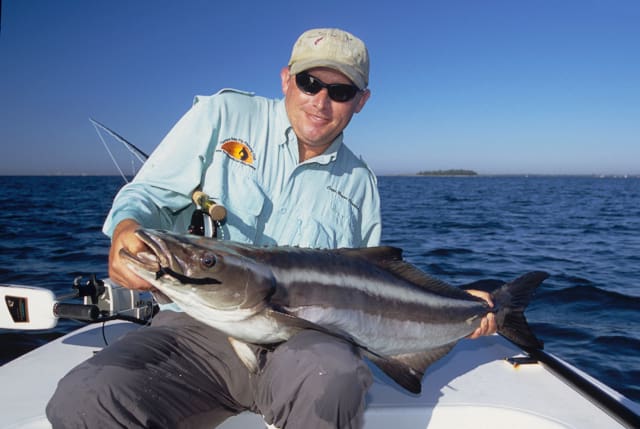
Often mistaken for shark, whose shapes and coloration they resemble, cobia are long and streamlined with a broad, flattened head. Their upper body is brown with a dark lateral line that extends through the eye to the tail. The brown color transitions to white on the belly.

Cobia range up to 6 feet long and can weigh more than 100 pounds. While most anglers target cobia in the Gulf, they range widely throughout local bays, particularly near local passes. Cobia spawn in the spring and early summer and feed on crabs, small fishes and squid.

The recreational and commercial bag limits for cobia in Gulf state wa­ters is one fish per person or two cobia per vessel per day. The minimum size limit is 36” to the fork of the tail.

Cobia have a way of surprising anglers, so it’s wise to have a rig ready should you encounter one. Fly anglers who target cobia opt for at least a 10-weight outfit, although it’s pos­sible to land smaller cobia on lighter outfits.

A favorite fly is a black bunny tied to resemble a small eel, one of their favorite foods. Anglers fishing conventional tackle most often use live baitfish and live crabs, another of their favorite foods. Cobia will also hit a variety of plugs and lures that imitate baitfish.

When fishing this spring, inspect any floating objects you come across like flotsam and buoys as well as structure including markers and artificial reefs.

Cobia are worthy adversaries for local anglers. They can show unexpectedly and be hard to target but put up a terrific battle. Smaller cobia make great table fare but make sure you limit your catch and carefully release any cobia you don’t intend to eat fresh.

Keep an eye out for cobia

Reel Time: Keep an eye out for cobia

As the waters cool in the Tampa Bay region, savvy anglers know it’s time to start looking for cobia in area waters.

These feisty game fish can grow to over 100 pounds, and 50- to 60-pound fish are common during the fall. While most anglers target cobia in the Gulf, the species ranges widely throughout local bays as well. Years ago, I was introduced to a cobia fishery I never knew about in upper Tampa Bay by Capt. Bryon Chamberlin of Land o’ Lakes.

That first day we launched near Apollo Beach and motored towards the Big Bend power plant, its twin stacks emitting plumes of steam silhouetted against a brilliant orange sky. That cold morning, the warm water discharge created steam that wafted over the chilly waters of Tampa Bay. The hope was that these warm waters would attract rays, jack crevalle, snook and our target, cobia. The strategy was to look for large eagle rays. Chamberlin knew that cobia “ride” their wings, looking for prey.

We had barely set up near the warm water when the wing tips of a large ray broke the surface about 100 feet away. Chamberlin dropped his trolling motor and quietly closed within casting distance. When the ray was 50 feet away, I made a cast and stripped the fly in the path of the ray as three large cobia came into view. A fish we estimated at 50-60 pounds attacked the black and purple bunny with a vengeance that surprised me, causing me to hold on too long and breaking my 16-pound tippet. I barely had time to recover and tie on a new fly before Chamberlin was moving towards another disturbance on the water. This one didn’t have a cobia in attendance, but in the next half hour, I had shots and refusals from four fish.

Chamberlin suggested a different pattern and I started to cut off the fly. For some reason, I waited a split second. Suddenly, a large brown shape morphed near the boat. Making a roll cast, I placed the fly 2 feet in front and watched as a large cobia inhaled the offering. This time I made a hard strip strike and relaxed my grip on the line as the fish bolted for the horizon. The cobia fought hard, making frequent head-shaking appearances at the surface followed by long runs into the backing. Thirty minutes later, Chamberlin lifted the 40-pound-plus fish for a few photos before we revived it and released it.

Unlike most fish, cobia are often easier to find and feed on a slack tide. When the tide is running hard, the rays feed on the bottom. When the tide starts to slow, the rays come back up to the surface and bring the cobia with them. Bright sunny days with light winds make for optimal conditions and could yield multiple shots.

This is definitely a hit-or-miss fishery, but it’s totally worth the effort when you have a chance at a 50-pound fish on a fly in Tampa Bay. Cobia can also be found along the beaches and over structure offshore in the fall. It’s a good idea to have a 10-weight outfit rigged and in the rod rack even if you’re not targeting cobia. They have a way of showing up suddenly and it’s an experience you won’t want to miss.

Reel Time: The cobia

Reel Time: The cobia

As local water temperatures fluctuate between seasons in the spring and fall, savvy anglers know to start looking for cobia in area waters.

Often mistaken for sharks whose shapes and coloration they resemble, cobia are long and streamlined with a broad, flattened head. Their upper body is brown with a dark lateral line that extends through the eye to the tail. The brown fades to white on the belly.

Cobia range up to 6 feet in length and can weigh more than 100 pounds. While most anglers target cobia in the Gulf, cobia range widely throughout local bays as well, particularly near local passes. They spawn in the spring and early summer and feed on crabs, small fish and squid.

Several changes to the management of cobia in state waters in the Gulf of Mexico went into effect Feb. 1. These changes were approved at the Florida Fish and Wildlife Conservation Commission (FWC) meeting last December.

The changes strive to enhance sustainable management of this fishery and were developed in coordination with anglers, charter captains and the Coastal Conservation Association, which had expressed concern about the fishery. The changes will apply to all state waters north of the Monroe-Collier county line. Those changes include:

  • Making the recreational and commercial bag limits for cobia in Gulf state waters the same by reducing the commercial limit from two to one fish per person.
  • Reducing the recreational and commercial vessel limit in Gulf state waters from six to two cobia per vessel, per day. The 33-inch minimum size limit changed to 36-inch fork measurement in March.

Cobia have a way of surprising anglers, so it’s wise to have a rig ready should you encounter one.

Fly anglers who target cobia opt for at least a 10-weight outfit, although it’s possible to land smaller cobia on lighter outfits. A favorite fly is a black bunny tied to resemble a small eel, one of their favorite foods. Anglers fishing conventional tackle most often use live baitfish and live crabs, another of their favorite foods. Cobia will also hit a variety of plugs and lures that imitate baitfish.

This is the beginning of tarpon season and anglers targeting tarpon should be on the alert for cruising cobia. Last week AMI Outfitters owner Steve Traves anchored his boat and jumped on my bow (following social distancing guidelines) on a sand bar bordering Tampa Bay. It wasn’t long before I spotted a cruising stingray with a nice cobia riding his back. Cobia use rays as camouflage darting off them to eat prey that rays spook. After positioning the boat ahead of the ray, Traves made a cast that landed just in front of the ray. He then stripped it to intercept the two fish and the cobia rushed over and ate the fly. Unfortunately, the cobia came straight at the boat and Traves was unable to set the hook.

Later that day I was anchored up along another edge when a manatee came cruising down the bar with a 30-pound plus cobia “glued” to his back. I made a cast to intercept the cobia but hooked the manatee instead. Fortunately, I was able to pull my anchor and get in front of the manatee, freeing my fly. I was able to get several casts to the cobia but this one wasn’t interested in eating.

Captain Justin Moore has been seeing cobia while tarpon fishing and advises anglers to pay attention to any floating objects like flotsam and buoys as well as structure including markers and artificial reefs. Cobia are a worthy adversary for local anglers. They can show unexpectedly and be hard to target but put up a terrific battle and the smaller ones make great table fare.