

EGMONT KEY – Egmont Key is a narrow barrier island and national wildlife refuge at the mouth of Tampa Bay, less than 3 miles from the north end of Anna Maria Island.
Reachable only by boat, it’s home to a historic lighthouse, the ruins of an old fort, nature trails, shorebirds, gopher tortoises and more.
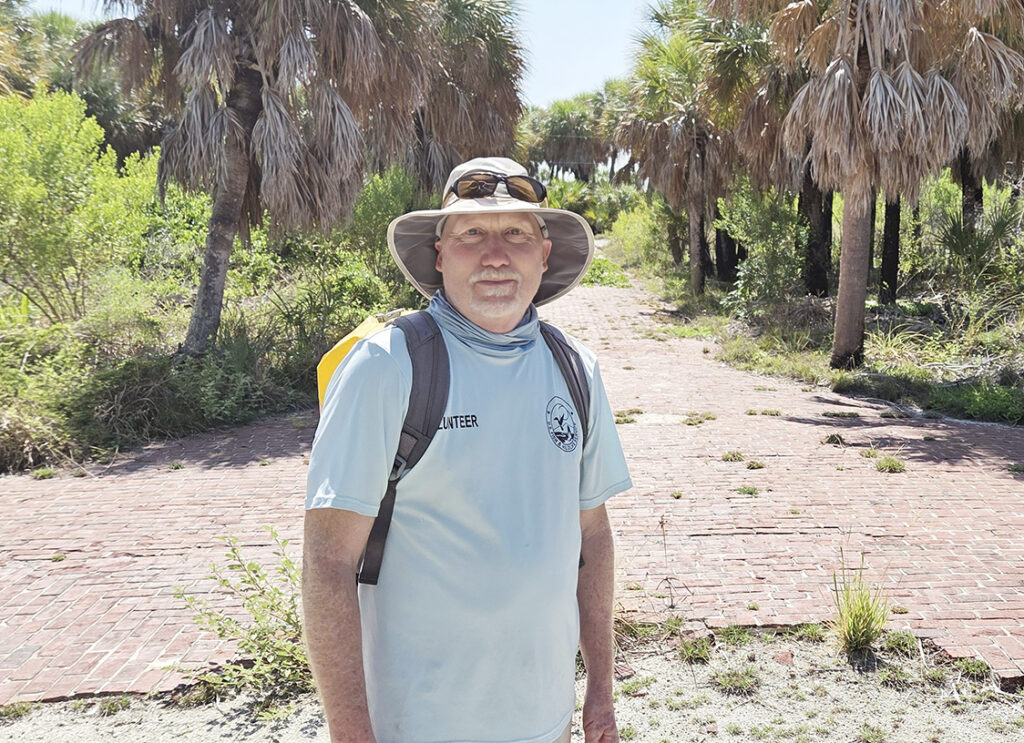
Pat Mundus is the president of the Friends of the Tampa Bay National Wildlife Refuges group. The first time he set foot on Egmont Key, he made himself a promise: “I said to myself, we’ve got to take care of this place,” he said.
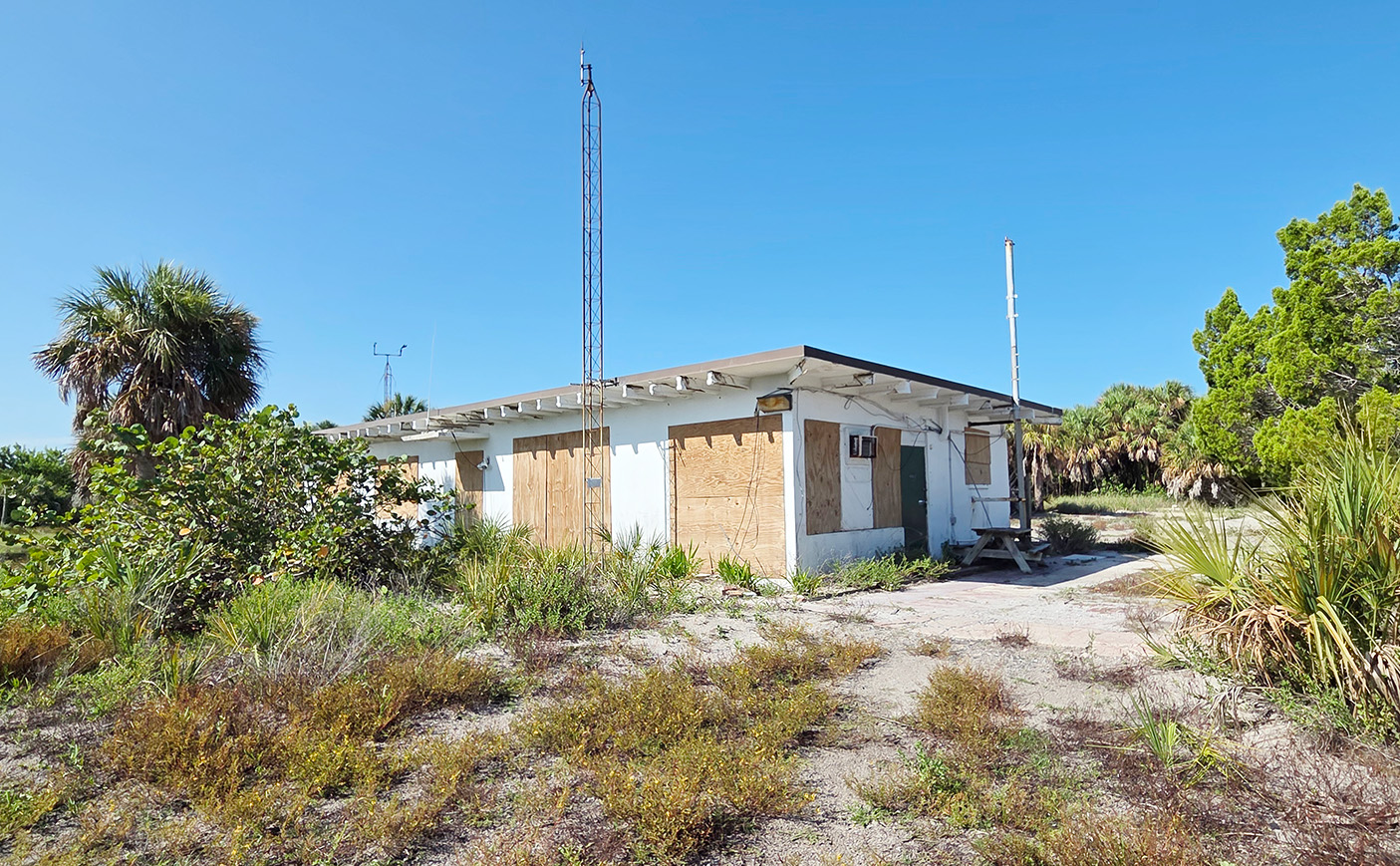
That promise is being tested. The back-to-back hurricanes in 2024 tore through Egmont Key and further reduced its human presence. The Florida Park Service ranger’s cabin was destroyed. The hurricanes wrecked the cottage compound that was nearly 100 years old. Before the hurricanes struck, the cottages housed the Tampa Bay harbor pilots who board incoming cargo ships and cruise ships to guide them through the bay’s channels. Because of the hurricane damage, the pilots no longer operate from Egmont Key.
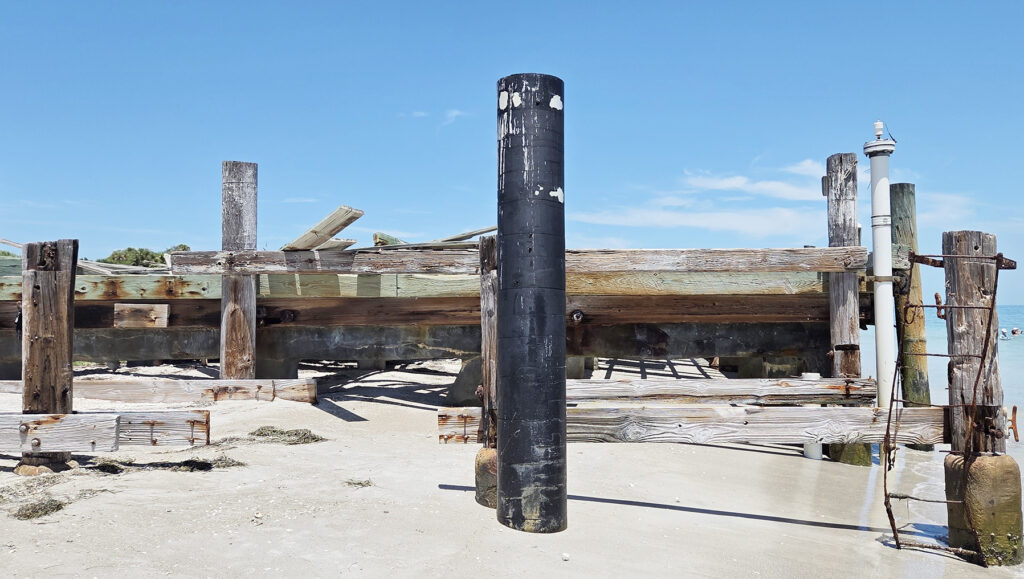
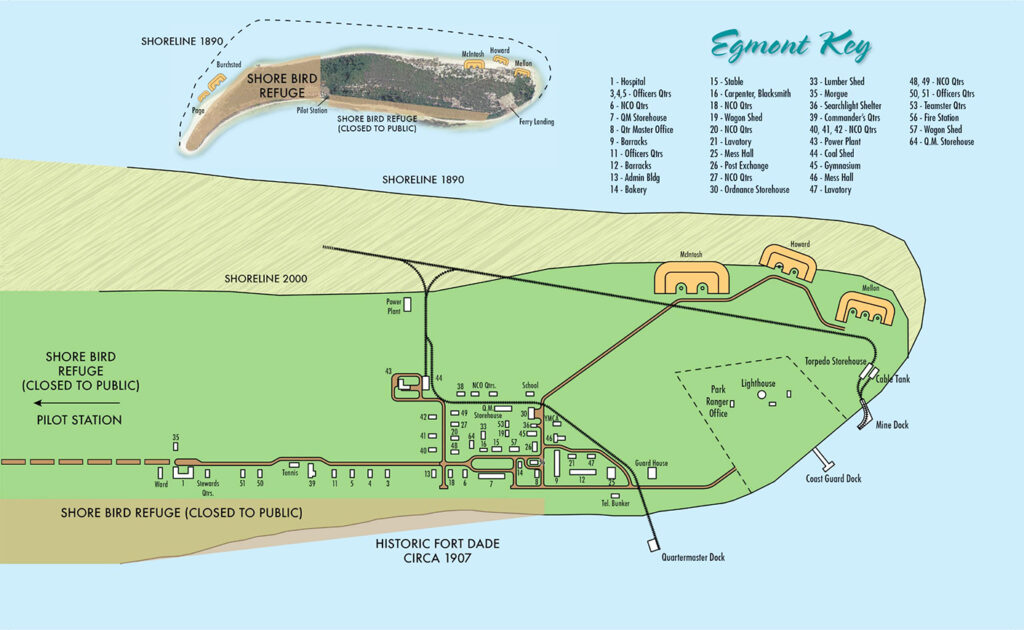
Many structures on Egmont Key were damaged or lost. The old guardhouse survived unscathed and now doubles as a historical site. The guardhouse is a restored 1899 Fort Dade building that once held prisoners.
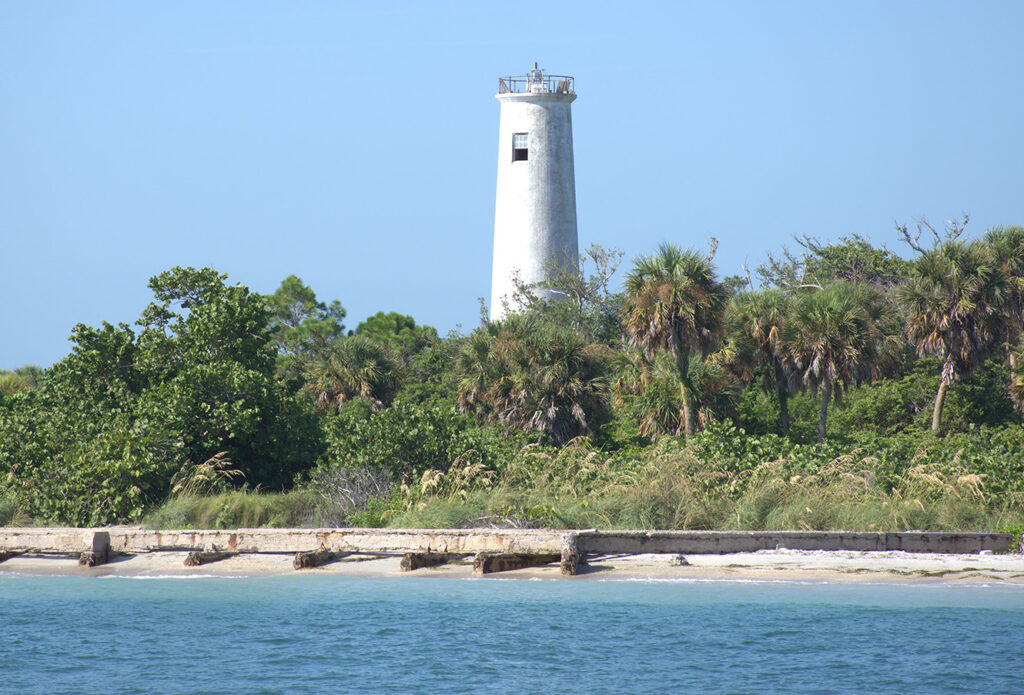
The lighthouse still stands and its light still works. Automated in 1990, the lighthouse light still flashes every 15 seconds, guiding ships into Tampa Bay.
“There’s no longer a 24/7 presence on the island,” Mundus said. “The biggest hit we took was we lost our full-time presence of somebody on that island.”
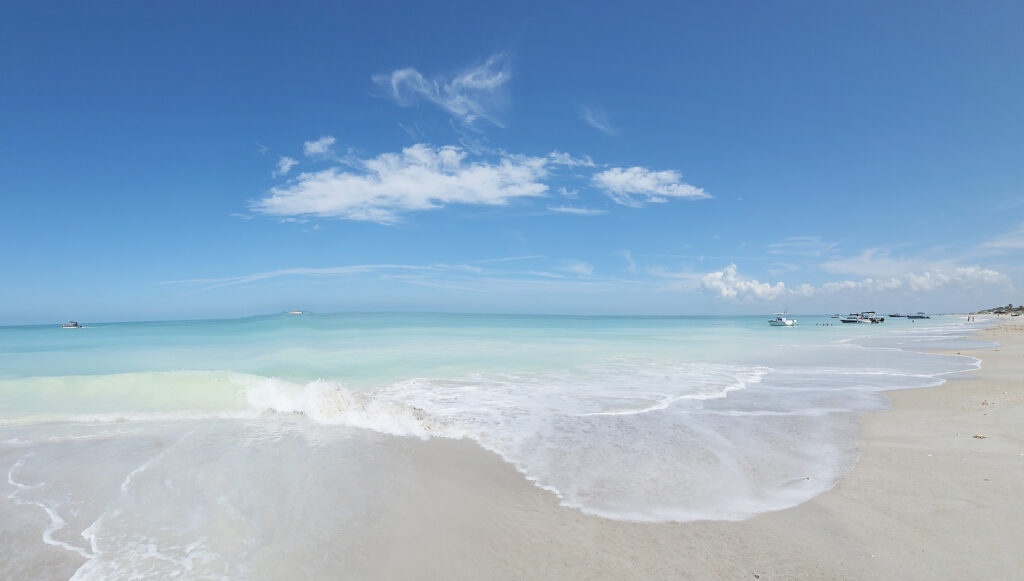
In the 1950s, Egmont Key covered approximately 500 acres. Today, it’s closer to 250 acres, according to the U.S. Fish and Wildlife Service. The erosion rate has increased and Egmont Key has grown thinner.
“It’s getting very skinny,” Mundus said. “I’m just not sure the island can survive without renourishment.”
He also said Egmont Key’s wildlife habitats are shrinking.
A short-term fix is in the works. The U.S. Army Corps of Engineers recently awarded a dredging and renourishment contract and that work is scheduled to begin soon. Approximately 700,000 cubic yards of dredged sand will be placed on Egmont Key’s eroding western beach as part of the renourishment project to be completed in November or December.
On a larger scale, the Army Corps of Engineers plans to deepen the Tampa Harbor shipping channel and use that sand to renourish the Egmont Key shoreline. Army Corps’ Public Affairs Officer J.P. Rebello said the federal agency plans to place an estimated 4.4 million cubic yards of dredged sand on Egmont Key between October 2029 and December 2030.
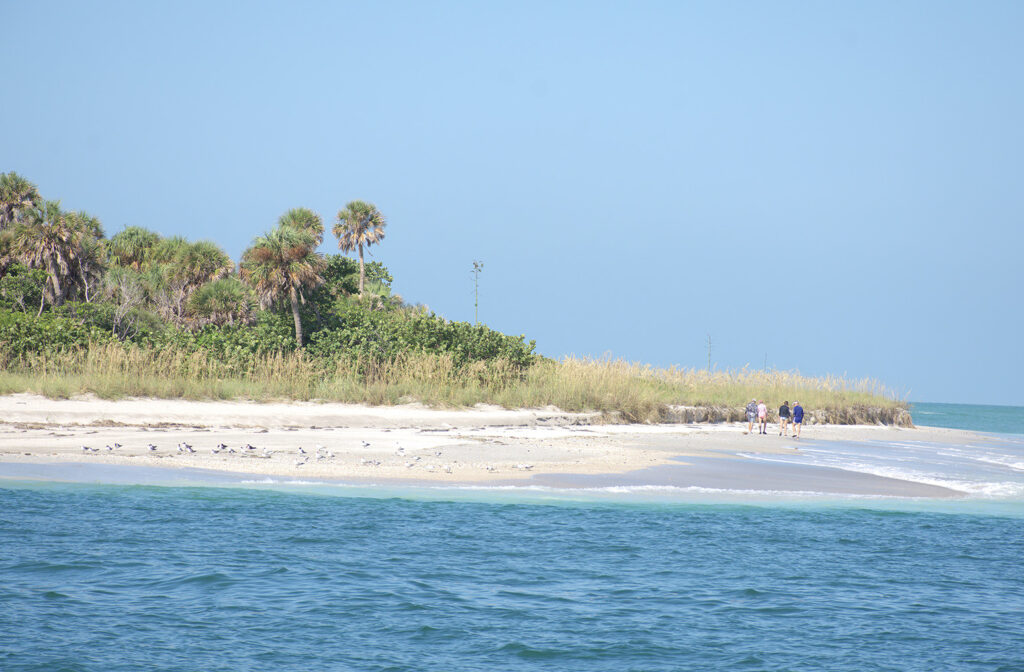
Erosion is only half the challenge. The southern third of Egmont Key is closed to the public and is designated as a protected bird sanctuary. Without a park ranger patrolling Egmont Key daily, enforcement of its restricted or closed areas has decreased and some visitors bring their dogs onto beach areas marked off for nesting birds.
Vandals have targeted the lighthouse, the buildings and the still-functioning, still-utilized vehicles that remain on Egmont Key. To help prevent vandalism, the Friends group is funding a shipping container to secure a golf cart and an ATV to be left on Egmont Key.
“It looks kind of abandoned. So, people don’t care,” Mundus said.
The group also works closely with the U.S. Fish and Wildlife Service, and Mundus said the wildlife numbers also reflect the strain being felt on Egmont Key.
Mundus said there were approximately 100 black skimmer nests on Egmont Key last year, and this year there have been about 10. He said royal terns and laughing gulls are still present but they are not nesting in meaningful numbers.
On a positive note, Mundus said the gopher tortoise population has rebounded faster than expected after the 2024 hurricanes. Eckerd College has tracked Egmont Key’s tortoise population since the early 1990s, and a survey conducted last summer found a strong adult population, but few young gopher tortoises.
Egmont Key remains open to the public year-round and visitors can reach it by private boat or aboard the Egmont Key Ferry that originates from Fort De Soto Boat Ramp in St. Petersburg daily. Ferry rides can be booked online at www.hubbardsmarina.com/egmont-key-ferry-cruise. Tickets are $45 for those who are 12 or older, $25 for ages 3-11 and free for those who are 2 or younger. Parking is $5.
“Due to the remote nature of the island, there is no drinking water on the island and there are no stores. Please remember to bring water, food and sunscreen when you visit,” the state park website says.
Related coverage: Young woman dies after fall on Egmont Key