public comments and procedures
HOLMES BEACH – City commissioners are considering reducing the time allotted for public comment given during public hearings from five minutes to three minutes. This is one of several potential procedural changes being considered.
The commissioners remain divided on the length of time that should be given for public comment, but they reached preliminary consensus on several other possible procedural changes aimed at making city meetings more efficient and more responsive to the public.
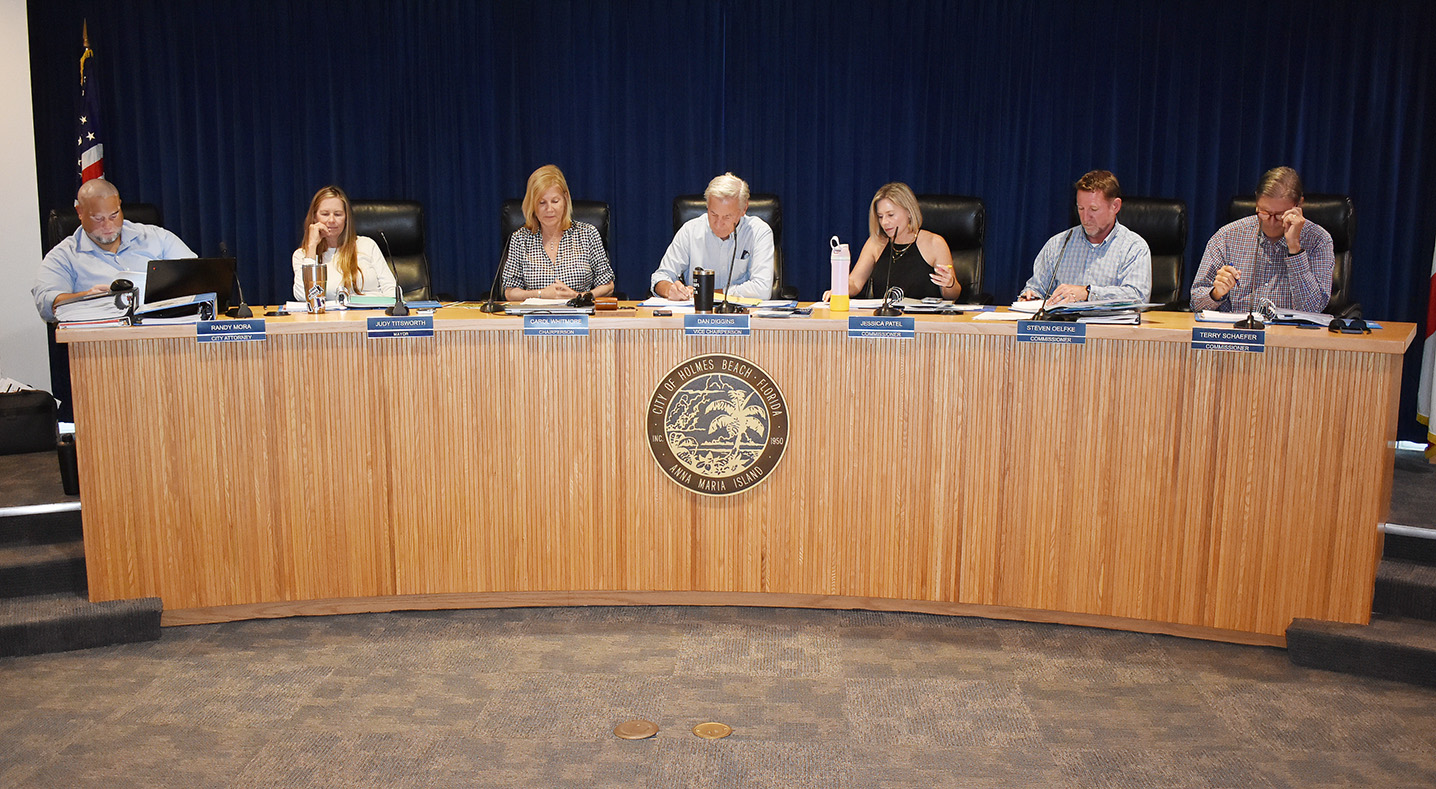
During the Tuesday, April 14, city commission work session, City Attorney Randy Mora, Mayor Judy Titsworth and the five commissioners spent nearly two hours discussing the city commission’s rules of procedure and how public comment is received and responded to. Several other possible procedural changes were also discussed, but no formal action was taken on these items that will be discussed again at a future meeting.
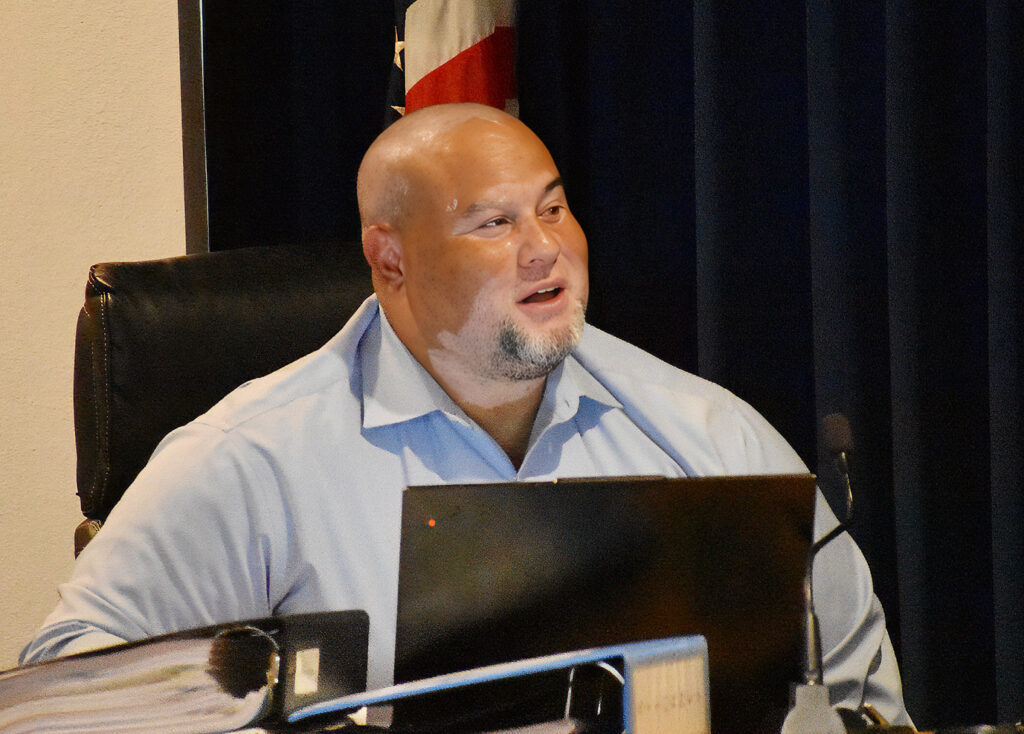
Mora said the city commission’s current rules of procedure were established by a city ordinance adopted in 2003. He noted the 23-year-old ordinance is somewhat outdated and it does not provide the ability for a commissioner to participate in a meeting remotely using Zoom teleconferencing software or other means of remote participation.
“Your rules of procedure are embedded in your code of ordinances,” Mora told the commission.
He said if they make no other procedural changes, the meeting procedures should be set forth in a new city resolution rather than a new city ordinance. He said revising a city ordinance requires legal notices, two public hearings and takes about two months to complete; whereas a resolution can be amended during a single publicly noticed meeting.
Public comment
Much of the work session discussion pertained to public comment.
Adopted in 2003, Section 2-185 of the city code ordinances says, “At each regular city commission meeting, the agenda will include time for public comments and questions. A maximum of three minutes per person will be allowed unless a greater amount of time is approved by motion of the commission. No action is required to be taken on comments from the public; however, matters which require commission attention may be placed on a future agenda. In appropriate situations, staff will be directed to provide a response to a citizen’s question within a reasonable amount of time.
Regarding public comment during public hearings, the code of ordinances says, “Presentations by the public, whether in favor or in opposition, shall be limited to five minutes; provided, however, the commission may grant additional time for good cause shown.”
Mora said the idea of the chair or the commission granting additional public comment time was a “hard no” to him because those discretionary time limits could be viewed as unconstitutional and construed as being favorable to some speakers and unfavorable to others.
The commission was in general agreement in regard to allowing public comment on non-agenda items at the beginning of each city commission meeting and then allowing public comment on specific agenda items as that item is discussed – a practice that currently only occurs during public hearings.
Public hearings are required for the adoption of new or amended city ordinances. Public hearings are required for site plan permit approvals, rezoning requests and certain other development and land use matters. Public hearings are also required for the adoption of the city’s annual budget.
Mora and the commission discussed increasing the regular public comment time limit from three minutes to five minutes to be consistent with the time allowed for public hearing comments.
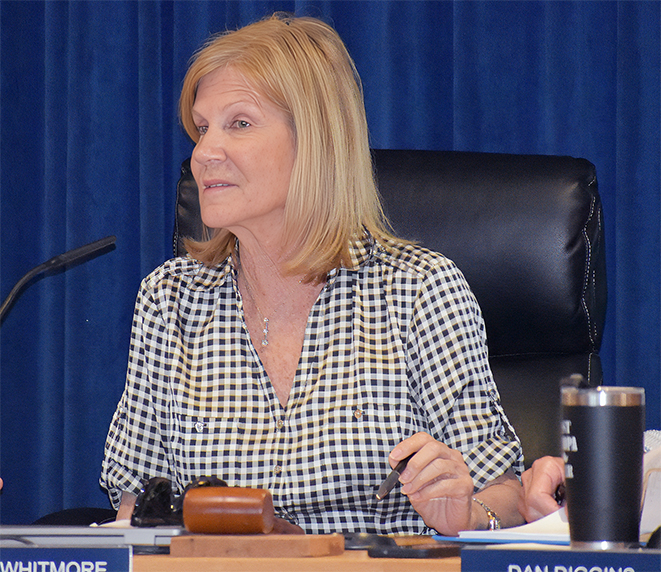
“Three minutes is way too short. I’d love to have that extended,” Whitmore said.
She said the current three-minute maximum speaking time is “totally archaic.”
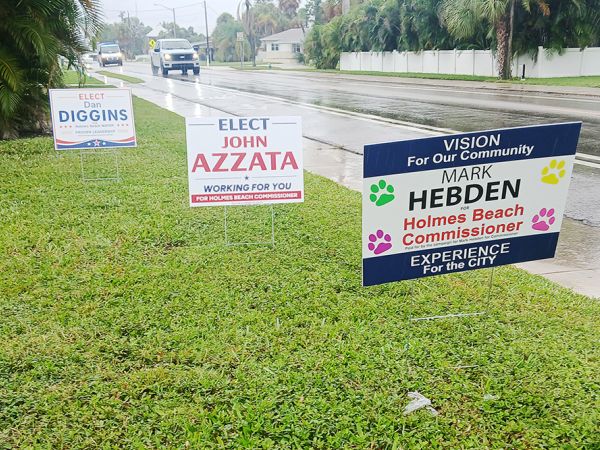
In contrast, Commissioner Dan Diggins said five minutes is a long time to speak.
It was also noted that someone representing a group of people is given additional speaking time; and Mora noted the public can also reach out to the mayor and commissioners via emails and phone calls.
Toward the end of the work session, Mora asked for a show of hands seeking non-binding commission consensus for a consistent public comment time of either three minutes or five minutes, regardless of whether the comments are made during a public hearing or not.
Diggins and commissioners Jessica Patel and Terry Schaefer rose their hands in favor of a three-minute limit per speaker for all public comment. Whitmore and Commissioner Steve Oelfke raised their hands in favor of a five-minute public comment limit.
Oelfke said people often run out of time in three minutes and that often leaves them feeling frustrated.
“I think the consensus direction for now seems to be three,” Mora said, noting that no final decision had been made and additional discussion will occur before any final decisions are made.
Commission responses
Oelfke said members of the public often provide their passionate views and opinions to the commissioners during public comment, but those views and opinions often result in no response or guidance received from the commission.
Oelfke said he wanted to discuss how the commission responds to public comments received.
“We continually had reminders that it’s not a back and forth during public comment, yet we still do it all the time. We don’t have to give a response, but I think we all felt like we wanted to be as open and friendly to the public as possible. I want to get some clarity so we could be on the same page.
Schaefer said, “I always believe if we had an answer, and it wasn’t subjective, we should give that answer. We can, and should, respond so the person who’s taken his or her time to come forward to address an issue walks out with at least the satisfaction that we’ve listened.”
Schaefer said there are many instances when that person who offered the public comment can be told the city is already aware of their concern or issue and is working on a solution.
Titsworth and Whitmore agreed that commission responses to public comment should occur only after public comment has been closed, so there’s not an endless back and forth between the speaker and the commission. The rest of the commission felt the same way.
Mora said his concern is the commissioner who responds to the public comment may not have the correct info available at that moment and it would behoove the city to take the time needed to research the matter before giving a response.
Consent agendas
The work session was scheduled in part because Diggins wanted to discuss ways to make the Holmes Beach meetings more efficient, and more time-efficient.
Diggins said the Anna Maria Commission utilizes a multi-item consent agenda that contains contracts, work agreements and other items that the commission can approve in a single vote, while still having the ability to pull any consent agenda for additional discussion and stand-alone approval or denial. The Bradenton Beach Commission and the Manatee County Commission also use multi-item consent agendas.
Schaefer said the Holmes Beach Commission discussed implementing a consent agenda a couple of years ago, but that conversation never led to any action. He said a consent agenda could help make the meetings run more efficiently.
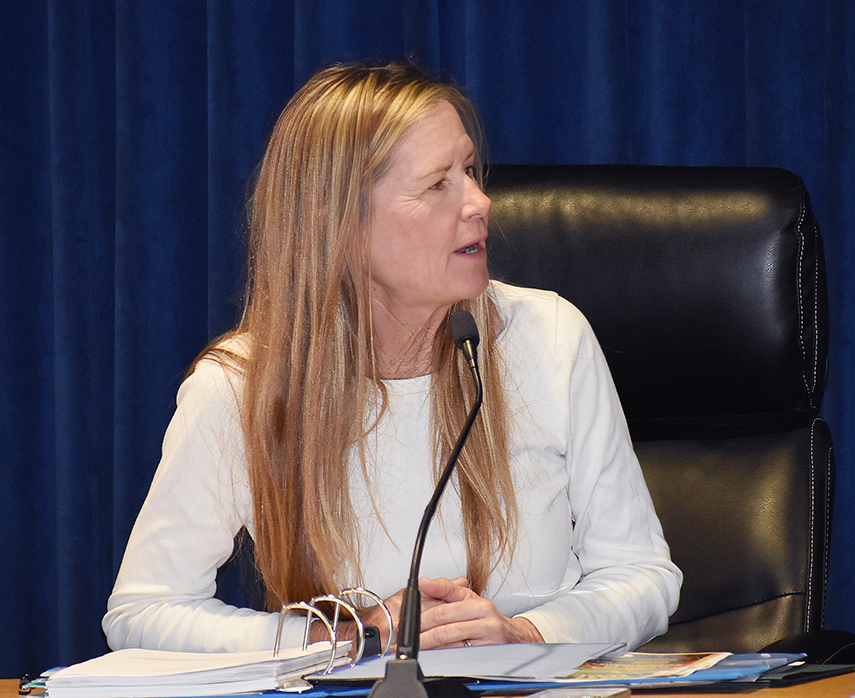
Mayor Titsworth said the inclusion of a consent agenda was on her to-do list at one point, but she never pursued it because it seems to her that at least one commissioner wants to review and question every contract and work order presented.
“I would love a consent agenda,” Titsworth said.
Charter review committee
Whitmore asked why the city hasn’t recently conducted a charter review, as required by the city charter every five years.
Titsworth said that’s because, according to the charter, charter review committee members are elected in Holmes Beach, rather than being appointed by the mayor and/or the commission. She said committee candidates have to run an election campaign to serve a position that only lasts for six weeks and there weren’t enough candidates during the most recent attempt to form a review committee.
Whitmore said, “It’s hell trying to get people to be on the charter review” because you need five citizens who are willing to run a campaign, comply with all of the campaign requirements and endure the expenses associated with running a campaign.
Patel suggested amending the city charter to allow the charter review committee members to be appointed rather than elected. This would require a charter amendment question being placed on the ballot and then being supported by more than 50% of the city’s registered voters. Patel mentioned trying to place that charter amendment question on the general election ballot in November.
Mora said Holmes Beach is “an anomaly” in Florida in terms of electing, rather than appointing, charter review committee members.
Work sessions
The commission is also considering doing away with stand-alone city commission work sessions and instead adding “items for discussion” (when needed) to the regular commission meeting agendas, with the understanding that no official action will be taken that day on an item presented for discussion only.